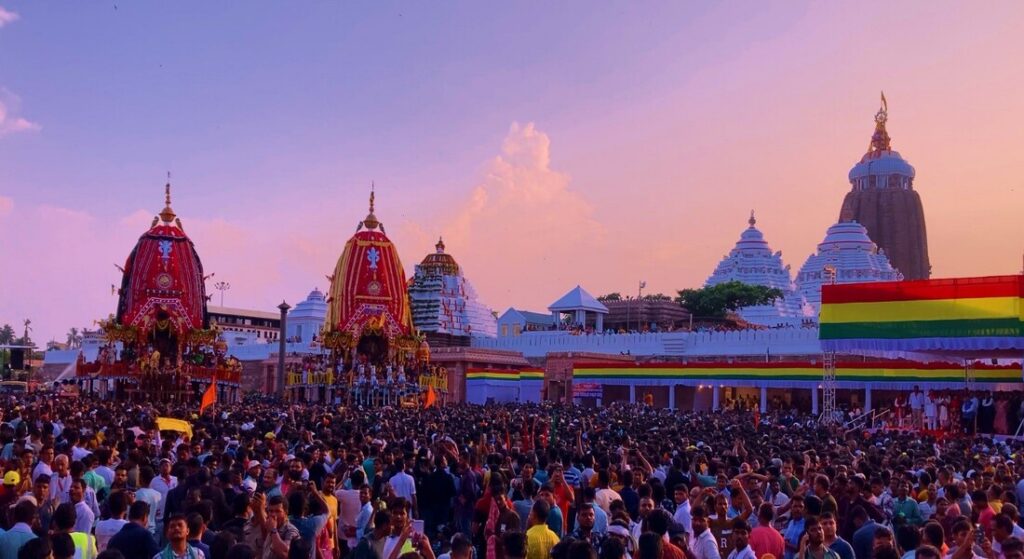

Maha Bishuba Sankranti or Pana Sankranti is the cultural identity and environmental consciousness of Odisha.
Before the World acknowledged, established, and celebrated ‘Earth Day’ in 1970 to raise awareness and protect the Earth’s natural resources, the Maha Bishuba Sankranti or Pana Sankranti, which marks the beginning of the Odia New Year, has been educating, advocating, and practising the ethos of protecting the Earth.
Environmental consciousness is reflected in the rituals and performances associated with this ‘Bishuba Sankranti’ in Odisha, which is celebrated with great devotion and traditional fervour across the state. Does this festival, which is deeply rooted in agrarian traditions and environmentalism, enhance our understanding of tackling increasing climate emergencies?
Celebrated on April 14 every year, it coincides with similar regional new year festivals across India, such as ‘Baisakhi’ in Punjab/ Nepal, ‘Pohela Boishakh’ in West Bengal/ Bangladesh, ‘Vishu’ in Kerala, ‘Bihu’ in Assam, and ‘Tamil Puthandu’ in Tamil Nadu.
Moreover, Bishuba Sankranti shares similar New Year festivals with agrarian societies across Southeast Asia, especially in paddy-cultivating regions such as Choul Chnam Thmey (Moha Sangkranta) in Cambodia, Songkran in Thailand, Thingyan in Myanmar, and Pi Mai in Laos.
How does the Maha Bishuba Sankranti, the name whose etymology can be traced to the Bishuba Rekha, the Equator, reflect the ethos of environmentalism?
There is no doubt that India has a rich tradition of understanding and knowledge of how society interacts with nature throughout the ages. Therefore, it is not surprising that many indigenous epics, religious rituals, and cultural practices, as well as popular stories and practices, are strongly associated with nature and the natural surroundings.
Similarly, Odisha, with its rich, enduring cultural heritage in festivals, arts, folklores, and oral traditions, provides a deep understanding of the importance of nature and natural surroundings to the advancement of present societies. In particular, the Pana Sankranti underscores the sanctity of nature and its interconnectedness with human beings.
It is believed that Pana Sankranti and its associated rituals are an attempt to minimise the impact of scorching heat on humans and other living beings on the earth. The use of a traditional ritual drink called ‘pana’ and the idea of the ‘Basundhara Theki’ have uniquely positioned this festival at the beginning of summer as a rich source of heatwave mitigation measures.
At the same time, water, being an integral part of the festival and its direct link to the epic Mahabharat, is also called ‘Jala (water) Sankranti’. One of the key rituals of this day is the preparation and sharing of ‘pana’, a traditional sweet and tangy drink made from the pulp of the bael (Aegle marmelos) fruit and other indigenous ingredients such as jaggery, yoghurt, coconut gratings, cottage cheese, and so on.
The refreshing traditional drink provides respite from the intense summer heat and dehydration during the first month of summer (Baisakh).
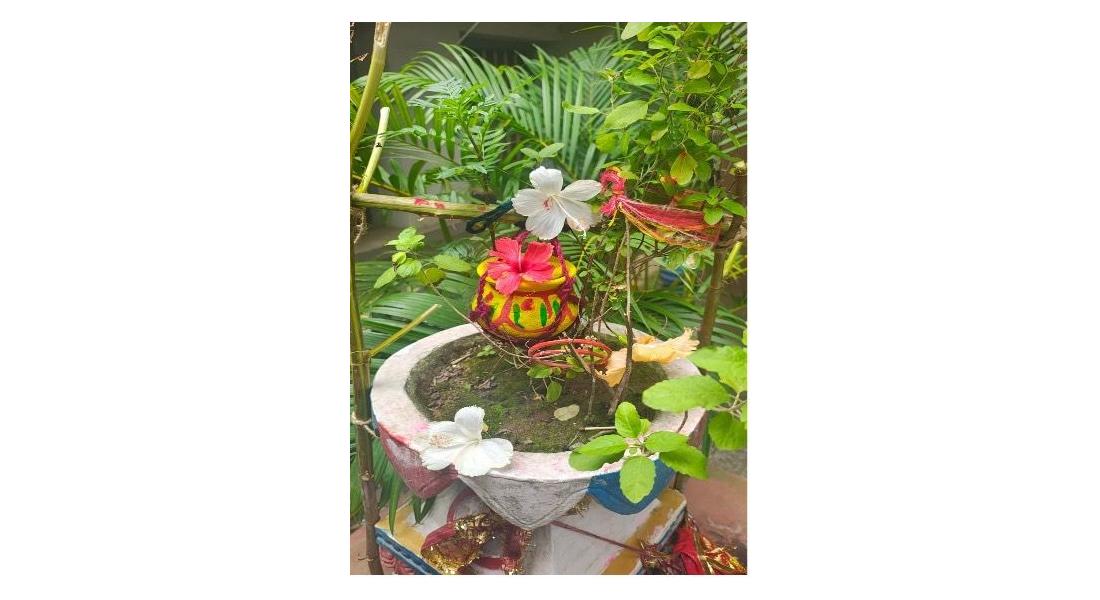
A unique and symbolic ritual performed on this day is Basundhara Theki (small earthen pot). An earthen pot filled with water (sometimes Pana) is hung usually over a Tulsi (holy Basil) plant, placed in a pot or elevated on a platform at the entrance (or balcony) of every Hindu household in Odisha.
A tiny hole at the base of the earthen pot with Duba Ghasa (commonly Bermuda grass) in the hole that allows water to drip slowly and continuously onto the plant as an offering to Mother Earth (Basundhara).
This auspicious act symbolises the flow of life and prosperity on the Earth. Offering water is not limited to the Tulsi plant. Besides temples, the Basundhara Thekis are placed above or near the Banyan and Peeple (sacred fig) trees to ensure their survival and growth during the summer season. The primary purpose of the water offering is to protect living beings during the driest time of the year.
Water scarcity in the summer is a reality. Furthermore, climate change exacerbates the availability of water for all living beings. Similarly, heatwaves are increasing in their frequency, intensity, and duration in India, particularly in Odisha. In fact, the India Meteorological Department has issued a yellow warning for extreme heat in 11 districts of Odisha from April 12 to 15. India’s climate will be warmer in the coming years.
Hence, the Pana Sankranti, as a festival, guides us toward various heatwave-mitigating measures. An example of judicious water usage and provision of water to all can help us address climate change-induced water insecurity. Sustaining the diversity of indigenous plant varieties during the summer with Basundhara Theki’s dripping water technology can scale up to larger areas to maintain biodiversity and increase tree cover.
In June 2024, 27 peacocks died in Delhi due to heatstroke. Many birds in urban areas die unnoticed during heatwaves from heatstroke. Ironically, there is no data available on the states or Union governments of such tragic incidents in the urban areas. Like the Basundhara Theki, people can keep water and grains in parks, rooftop or terrace gardens, balconies, and so on during the summer months and beyond to protect small avifauna and wildlife in the vicinity from heatwaves.
Can the local or district climate change or heatwave action plans include such distinct indigenous local mitigating measures of the festival and popularise them through various programs?
While several Jala Chatra (drinking water kiosks) and other hydrating drink stalls have been opened to minimise the heat impacts as the core compassionate symbol of the Maha Bishuba Sankranti across Odisha, the plastic waste scattered and piled up after the service near the stalls needs to be addressed.
Neither the service of providing drinking water stops at the end of the festival day. Also, if we can add gratitude for caring by providing innovative drinking water facilities, maybe on a small scale, for urban or peri-urban wildlife or stray animals throughout the summer seasons, India’s tradition of a symbiotic relationship with nature will continue.
The Pana Sankranti embodies the spirit of resilience, appreciation, and the deep connection between humans, nature, and the divine – a tradition that continues to thrive and enlighten across generations.
**
Dr Avilash Roul is a Senior Fellow at the Society for the Study of Peace and Conflict (SSPC), New Delhi. The views expressed are personal and do not necessarily reflect those of IndiaVerve.