
Baipariguda: Hidden deep in the hills of Koraput district, Sarukunda village under Dasamantpur block tells a story of isolation that goes beyond geography—one of complete educational exclusion.
Perched atop a hill and nearly 20 kilometres away from the block headquarters, the village can only be reached through a difficult route via Tanginiguda and Tapajodi, followed by a four-kilometre uphill trek through rugged terrain. With just 21 families, the village has remained cut off from basic services, including primary education.
For decades, no one in the village knew how to read or write. Even today, adults rely on thumb impressions instead of signatures. Education, for them, was not just inaccessible—it was absent. Among the residents, 24 children between the ages of five and sixteen had never been enrolled in any school, despite their interest in learning.
The situation persisted even as government systems existed on paper. Locals pointed out that despite being counted administratively, no effective steps had been taken by the education department to connect the children to nearby residential schools or provide any learning facility.
The turning point came after an IndiaVerve report titled “When Education Cannot Climb the Hill: A Village in Koraput Still Waiting for School” brought attention to the village’s condition.
After reading the report, a voluntary organisation named Gopabandhu Seva Parishad stepped in. Its president, Pradeep Kumar Maharana, initiated discussions with community members and quickly decided to establish a school in the village. The organisation, which has been working in the Baipariguda block of Koraput district, coordinated efforts to begin basic educational access.
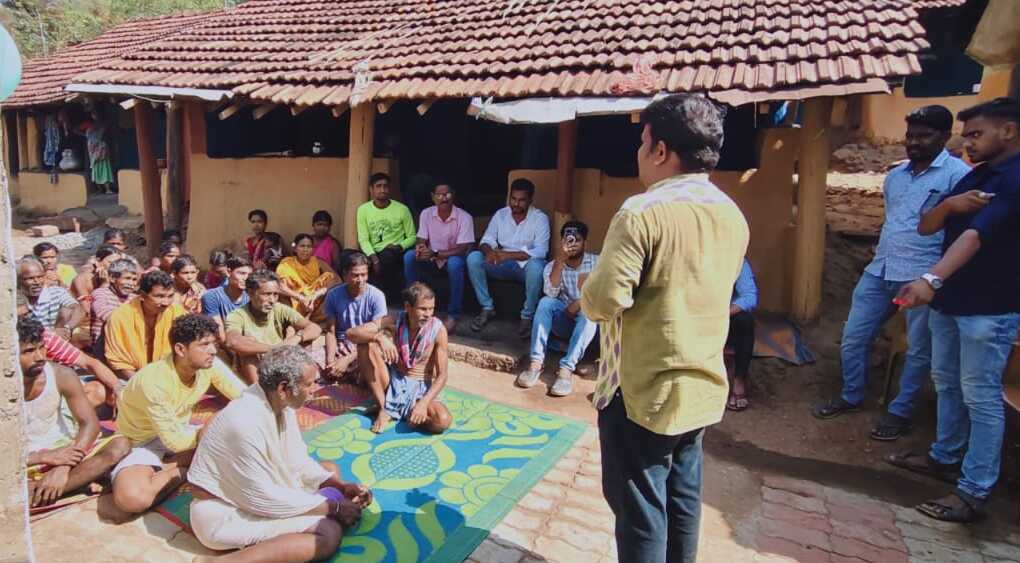
As a first step, a village meeting was organised involving local residents. A list of 24 children willing to study was prepared, and a local youth, Banamali Hantal, was identified and appointed as a teacher. The organisation committed a monthly honorarium of ₹2,000 for his services.
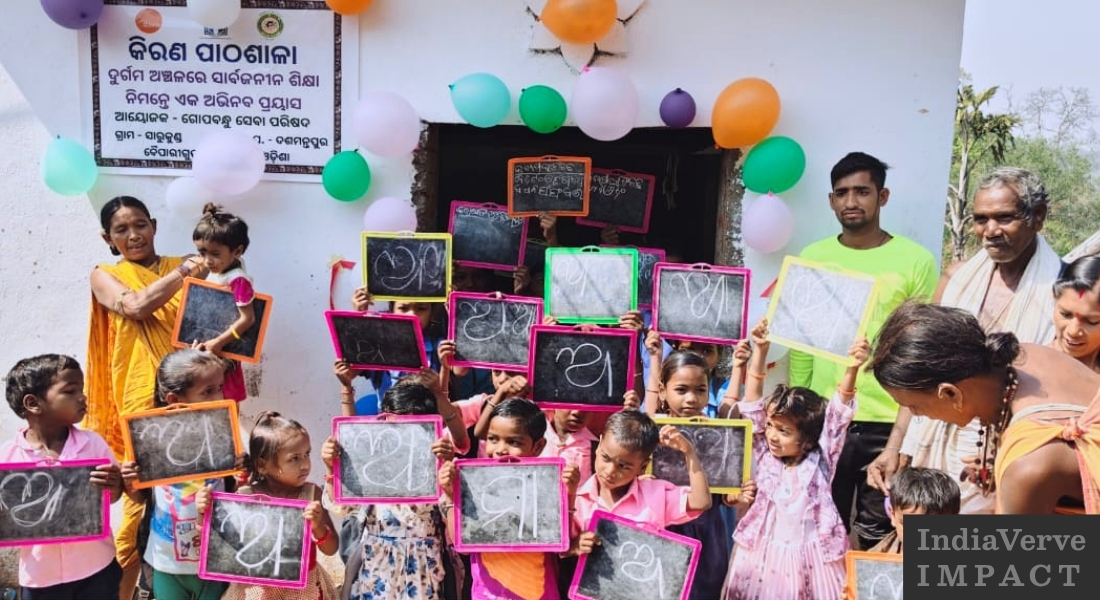
With the support of villagers, groundwork began for constructing a school building. However, as construction would take time, classes were immediately started in a temporary structure in the village. Basic materials such as slates, chalk, bags, and mats were arranged through community support and voluntary contributions.
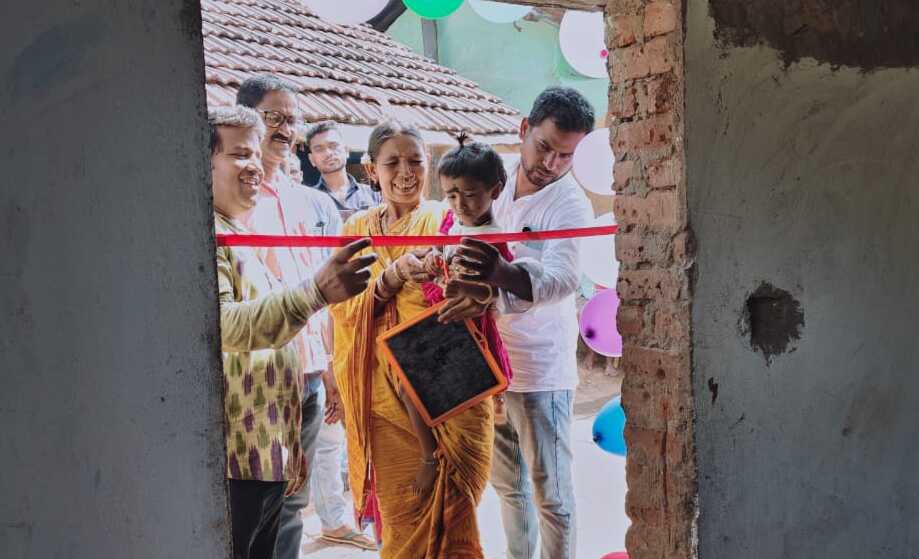
The inauguration of the learning centre turned into a moment of celebration for the village. All registered children, along with men and women from the village, gathered to mark the beginning of formal education in Sarukunda. The event was attended by Gopabandhu Seva Parishad president Pradeep Kumar Maharana, Zilla Parishad member Rajeswar Mahuria, Sarbeswar Barada (the author whose report brought the issue to light), and other members of the organisation.
The excitement among children was visible from the very first day. Eight-year-old student Moti Gouda and seven-year-old Babusan Khil, when asked about their aspirations, responded with smiles: “We will study… and when we grow up, we will work.” Their words reflected both innocence and a newfound possibility.
For the elders, the moment was deeply emotional. Villagers including Madhu Khil, Gopi Hantal, and Hiranya Goleri expressed their happiness, saying, “We remained illiterate all our lives, giving thumb impressions instead of signatures. But our children should at least learn to read and write.” They described the day as one they would always remember.
They also expressed gratitude to those who helped initiate the school, acknowledging the collective effort that brought education to their doorstep for the first time. The school opening event concluded with simple celebrations, including distribution of chocolates and shared food among villagers.
Zilla Parishad member Rajeswar Mahuria termed the situation a serious concern, noting that it was unfortunate that an entire village remained outside the ambit of education for so long. He said the matter would be raised at the district level and efforts would be made to establish a government school in the village.
Speaking about the initiative, Pradeep Kumar Maharana said the organisation acted as a medium after learning about the issue through the report. “In today’s time, it is unacceptable that children remain deprived of education. That is why we decided to take immediate steps,” he said.
He added that while temporary arrangements have been made, sustained support will be necessary to ensure continuity and expansion of educational access in the village.
Sarukunda’s story is not just about a remote settlement finally getting its first classroom. It is a reminder that even today, access to education can depend on visibility—and that change often begins when someone chooses to act. In the quiet hills of Koraput, where silence once defined everyday life, the sound of children learning has finally begun.