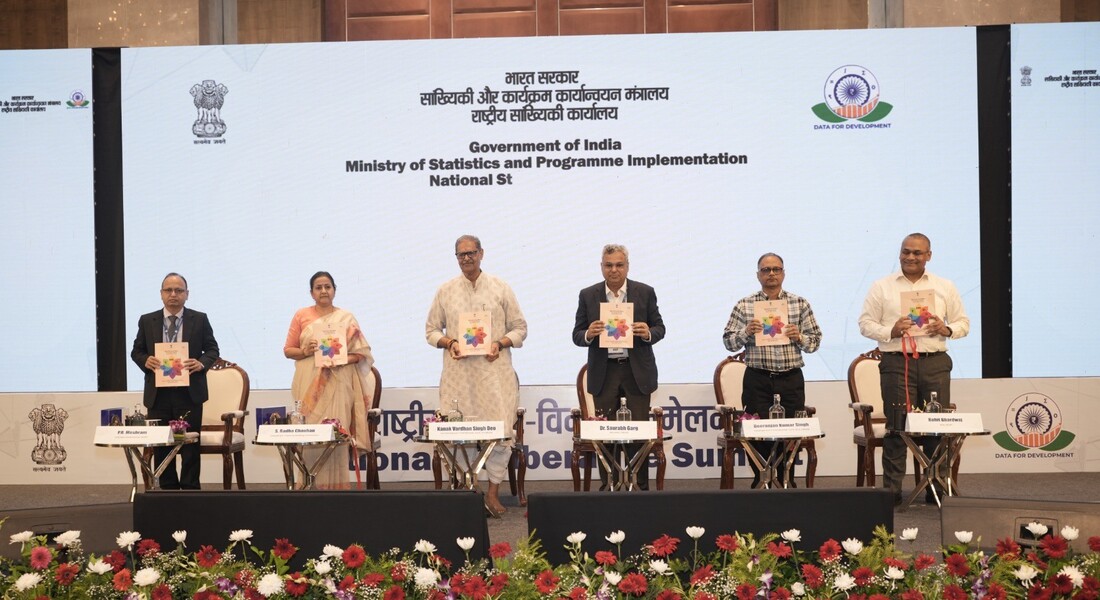

Bhubaneswar: The Ministry of Statistics and Programme Implementation (MoSPI) held a high-level National Deliberative Summit on “Harmonizing Administrative Data for Governance” in Bhubaneswar, on April 29–30, bringing together key stakeholders to push for unified data systems aimed at improving policymaking and governance.
The one-and-a-half-day summit focused on building consensus among states, Union Territories, central ministries, researchers, and international and private sector experts on standardising administrative data frameworks. Around 300 participants from more than 25 states and UTs took part in discussions on creating interoperable systems to enable more efficient and evidence-based governance, according to an official statement.
The event was inaugurated by Deputy Chief Minister Kanak Vardhan Singh Deo, alongside senior officials including S. Radha Chauhan, Saurabh Garg, and Odisha Development Commissioner-cum-ACS Deoranjan Kumar Singh.
Officials from MoSPI underlined the Centre’s commitment to supporting states in strengthening data systems. In his remarks, the Secretary of MoSPI stressed the need for breaking data silos and promoting open, standardised, and interoperable systems across sectors. He also noted that data is increasingly being recognised as an economic asset under the System of National Accounts 2025 framework.
Singh Deo highlighted the growing importance of data-driven governance in achieving long-term development goals, including the vision of Viksit Bharat @2047 and Odisha’s own developmental roadmap. He emphasised the need for responsible use of data with a balance between transparency and confidentiality.
The Capacity Building Commission Chairperson underlined the importance of strengthening governance structures and institutional readiness to make data suitable for artificial intelligence applications, calling for procedural reforms to improve efficiency.
Kumar Singh pointed to the need for timely and accessible data at the grassroots level, noting that gaps in field-level information continue to pose challenges for effective decision-making.
The summit concluded with a strong push towards creating a common framework for administrative data sharing, aimed at improving coordination between institutions and enhancing governance outcomes across the country.