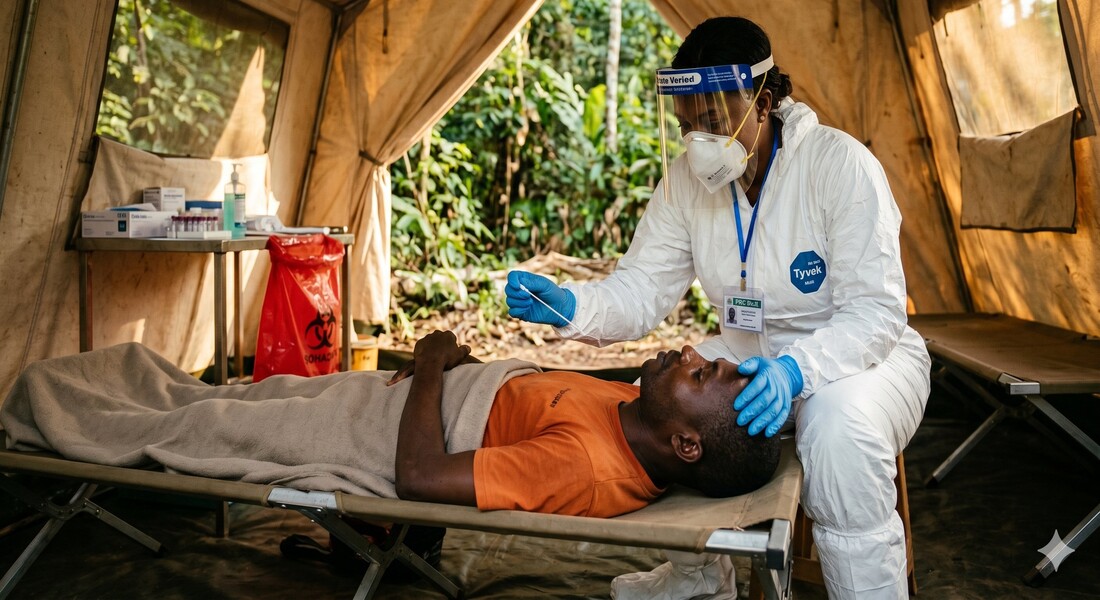

New Delhi: A fresh Ebola outbreak in the Democratic Republic of the Congo (DRC) has triggered regional concern after health authorities confirmed dozens of deaths in the country’s conflict-affected Ituri province, an area known for heavy cross-border movement and mining activity.
Officials said at least 65 people have died, while 246 suspected infections have been identified so far. The outbreak has largely affected Mongwalu and Rwampara health zones, with additional suspected infections emerging in nearby Bunia, according to theguardian.com.
The situation has also spread beyond the DRC’s borders. Authorities in Uganda confirmed an Ebola-linked death in Kampala involving a man who had recently travelled from Congo, raising fears of wider regional transmission.
Public health agencies are closely monitoring the outbreak because the affected areas serve as active transit corridors connecting the DRC with Uganda and South Sudan. Frequent travel linked to trade and mining operations is expected to complicate containment measures.
According to the Africa Centres for Disease Control and Prevention (CDC), laboratory testing in the DRC detected Ebola virus samples linked to the Bundibugyo strain. Unlike the more common Zaire strain previously seen in the country, the Bundibugyo variant currently has no licensed vaccine, creating an additional challenge for health responders.
Health experts noted that Ebola spreads through direct contact with infected bodily fluids, including blood and vomit, and can also spread during the handling of bodies during funeral practices.
The DRC has experienced multiple Ebola outbreaks since the virus was first identified there in 1976. However, officials indicated that the current strain is comparatively rare, with only two previous Bundibugyo outbreaks recorded in the country in 2007 and 2012.
Africa CDC Director General Dr. Jean Kaseya said regional coordination had become critical because of extensive movement between affected zones and neighbouring countries. The agency is expected to hold emergency discussions with authorities from the DRC, Uganda, and South Sudan alongside the World Health Organization and pharmaceutical firms to strengthen the response strategy.