On a warm afternoon in Baikunthwa village in West Champaran, a small patch of land tells a larger story about the future of farming. In these tiny fields, multiple crops grow at once—some underground, some at the surface, others climbing upward—turning a once uncertain livelihood into a steady stream of income for small farmers.
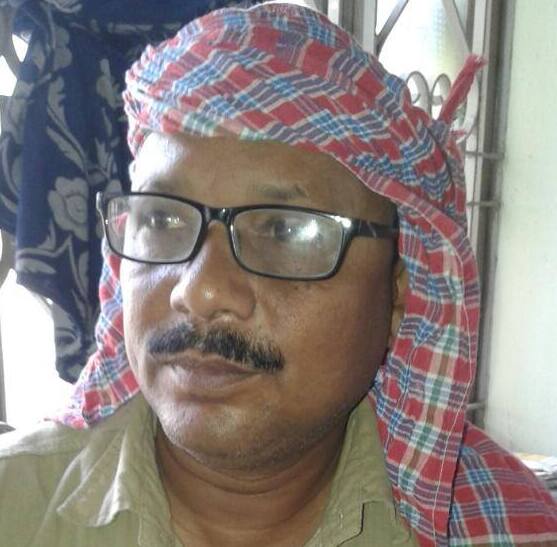
Gopal Prasad, a small farmer with a family of seven, stands in his field and smiles with satisfaction. His words are simple but powerful: “If farming is done like this, some earning will always keep coming.” For him, farming was once uncertain, dependent on one crop and one season. But after adopting multi-layer vegetable cultivation his thinking, as well as his income, both changed.
This shift is particularly significant in Bihar, where most farmers operate on small and fragmented landholdings. Traditional single-crop farming often leaves families vulnerable to seasonal income gaps. These multi-layer farming supported by Samagra Sikchhan Evam Vikas Sansthan (SSEVS) and NABARD are emerging as a low-cost, high-efficiency model that can improve both income stability and land productivity, with farmers reporting nearly threefold income compared to single-crop practices.
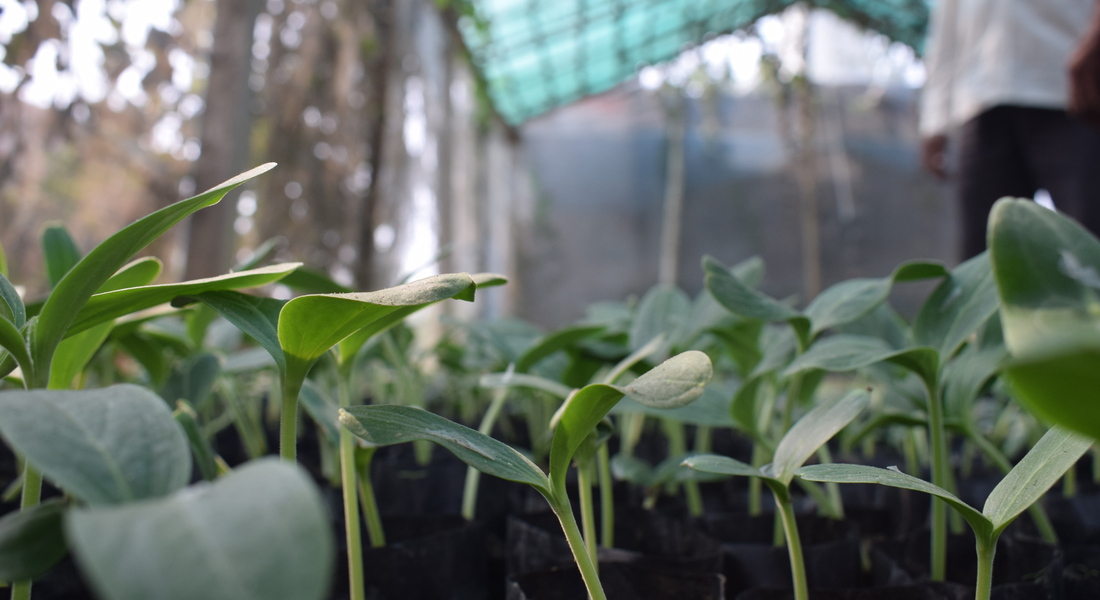
On just 2 kathas (around 150–200 sq meters) of land, Gopal’s field now tells a different story. Radish grows under the soil, spinach and coriander spread across the ground, and bitter gourd climbs above on bamboo structures. Even after harvesting one crop, the field never looks empty. Something or the other is always growing, always ready to harvest. This means money is not coming once in a season, but every few days.
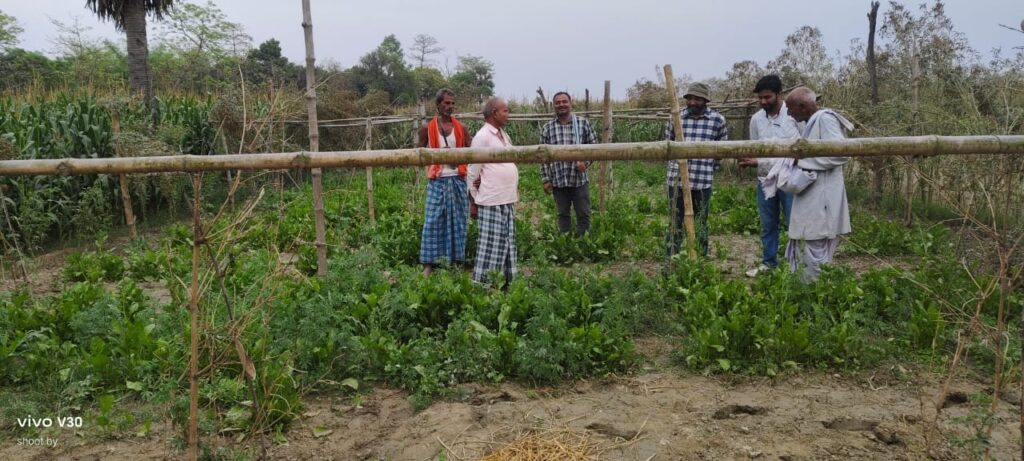
During the Zaid season (March to June), Gopal earned around ₹35,000 from multiple crops like bitter gourd, radish, coriander, and leafy vegetables. And still, his elephant foot yam crop is standing in the field, promising future income. For a small farmer, this is not just income—it is security.
Just a few steps away, another farmer, Premchandra Prasad, shares a similar journey. With a similarly small landholding, he once struggled to make ends meet. Today, his field looks like a well-planned system where every inch of land is working. Bitter gourd vines hang above, leafy vegetables grow below, and yam quietly develops underground.
He explains with a calm confidence, “Now, every two days, I earn something. Earlier, we had to wait for one full crop.” From leafy vegetables alone, he earned ₹12,000, while bitter gourd brings him around ₹1,000 every two days, depending on market prices. For him, the crop is not just produce—it is like a small daily income system running from his own land.
What is even more interesting is his decision-making. When asked why he did not take seeds for the next season, he simply said that his current crops are still giving income and the yam will give good returns during Diwali. This shows a shift, from being just a farmer to thinking like a planner.
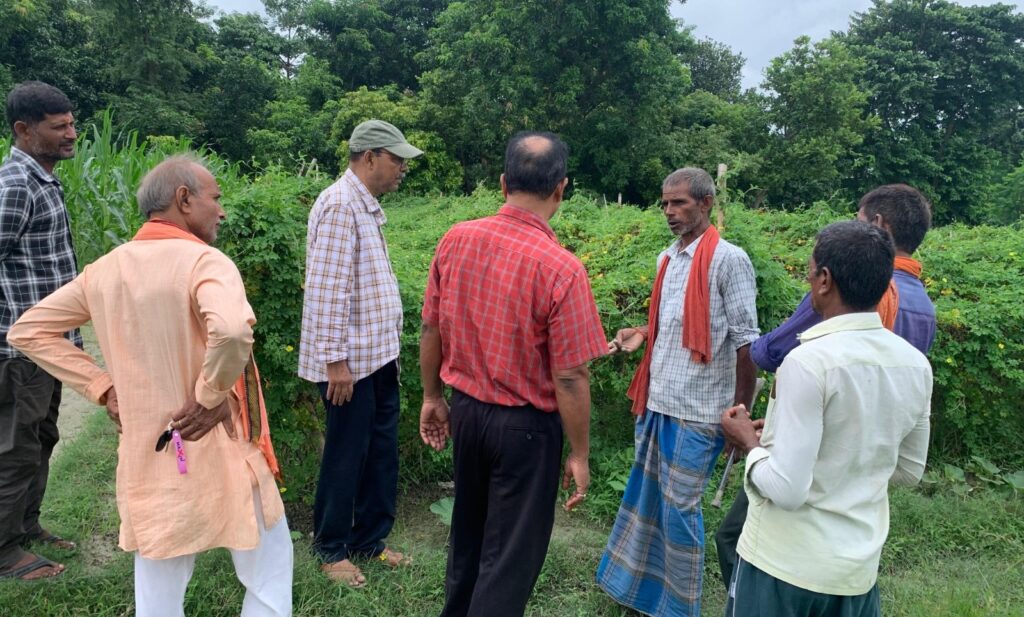
The change is not limited to one or two farmers. During the field visit on 26 March 2026, NABARD officials, including DGM Shardanath and DDM Kameshwar Singh, observed that farmers across the village have started adopting this model successfully. In many fields, 5 to 6 crops were growing together in different layers—below ground, on the surface, and vertically. This has increased land productivity and ensured that harvesting happens regularly instead of once in a season.
Currently, around 100 farmers are connected with this initiative, and the methodology is gradually being replicated in other districts such as West Champaran, Madhubani, Sitamarhi, and Muzaffarpur, indicating its wider relevance and scalability.
Farmers shared openly that this method has reduced their risk. If one crop fails, others still give income. It has also improved household nutrition, as different vegetables are available throughout the season. Most importantly, it has changed their confidence. Farmers now feel that even small land can give big results if used wisely.
The role of SSEVS in this journey is clearly visible in every field. From providing quality seeds to regular field guidance and training, the organisation stayed closely connected with farmers. Whether it was pest management, sowing techniques, or introducing new crops like improved varieties of elephant foot yam, the support was continuous and practical. This handholding approach ensured that farmers were not just trained, but continuously supported through each crop cycle. This built trust, and today farmers are ready to invest in such practices even on their own.
During the visit, NABARD officials appreciated the visible change and encouraged farmers to think ahead—especially towards forming a Farmer Producer Company (FPC) so that they can collectively sell their produce and get better prices. The idea of working together is slowly taking root, just like the crops in their fields.
This model, if scaled, could offer a practical pathway to strengthen rural livelihoods without requiring large landholdings or heavy capital investment.
As green layers of crops continue to rise across Baikunthwa’s fields, they signal more than agricultural change. They point to a quiet shift in rural aspiration—where even the smallest plots are no longer seen as limitations, but as opportunities waiting to be cultivated.
***
Anil Lucas is an ex-defence personnel who discovered his interest in the development sector and is currently associated with SSEVS, working on rural livelihoods and community initiatives. Views expressed are personal and do not necessarily reflect those of IndiaVerve.