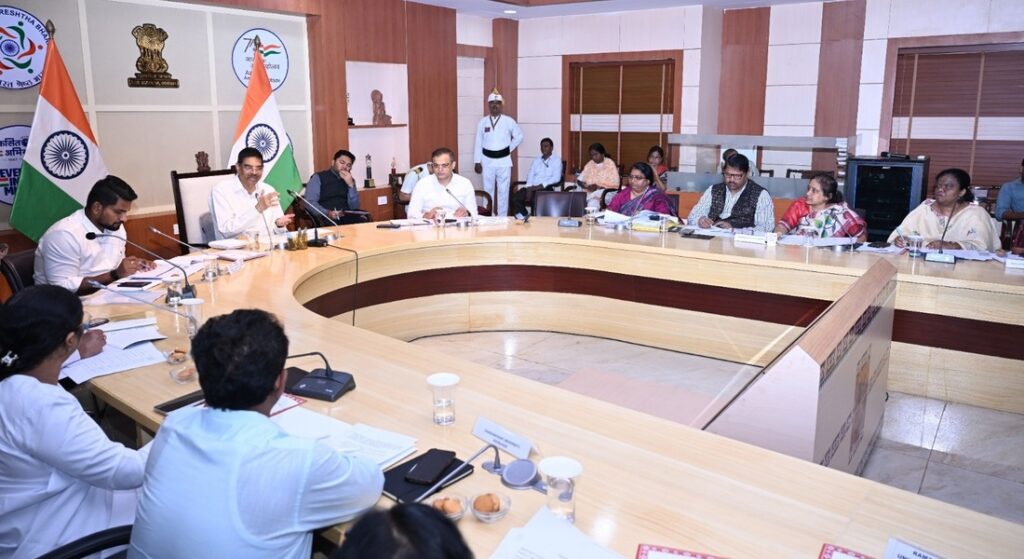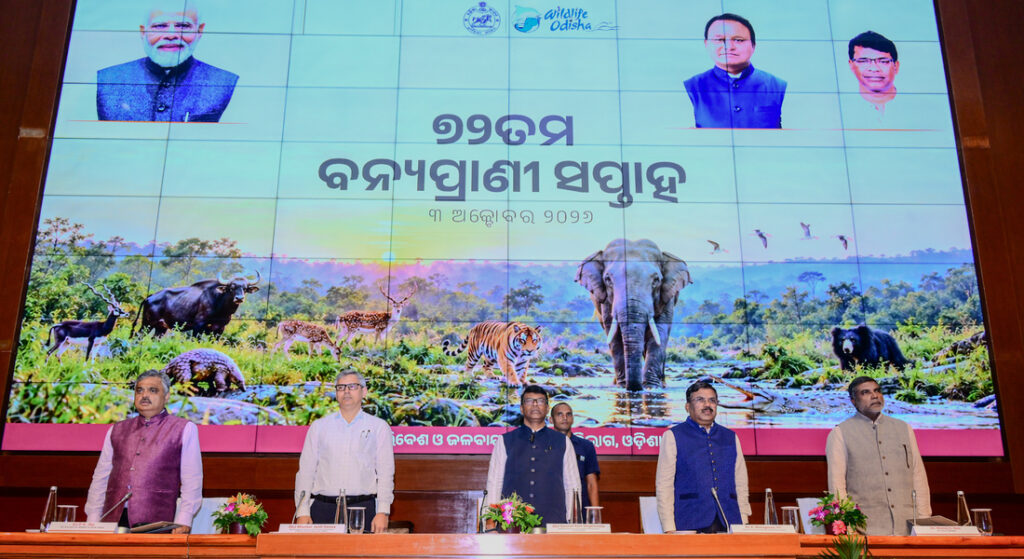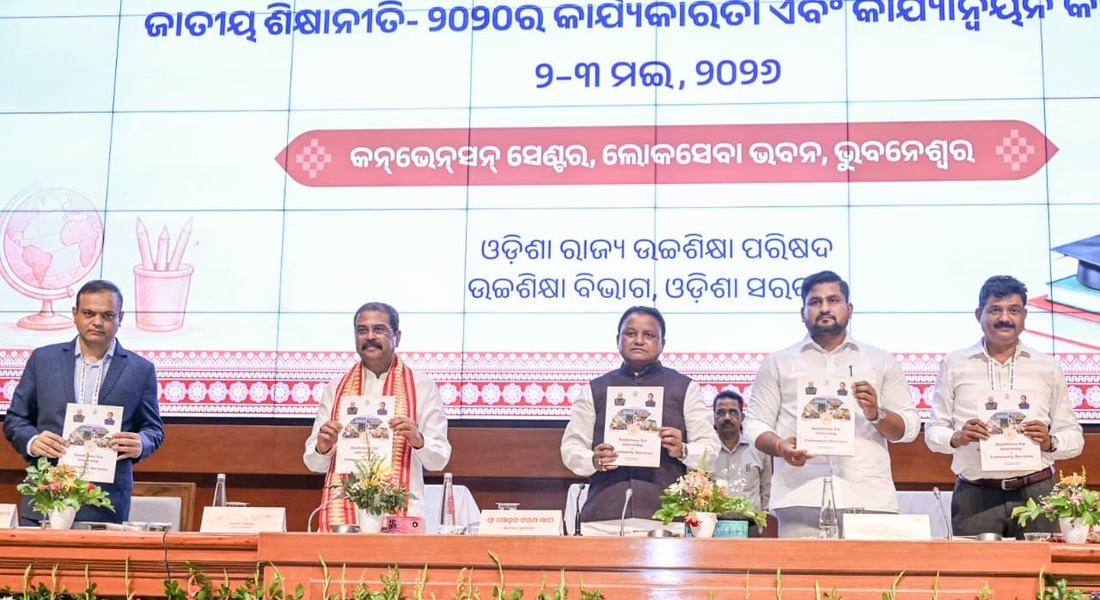

Bhubaneswar: The Odisha government on Saturday outlined an ambitious roadmap to transform the state into a national “knowledge hub”, with Chief Minister Mohan Charan Majhi calling for a “transformational shift” in the education ecosystem under the National Education Policy (NEP) 2020.
Addressing a two-day national workshop on NEP implementation at the Convention Centre in Bhubaneswar, the Chief Minister emphasised that education reforms remain a top priority for the state. He said the policy is not merely a government document but a broader mission to position India as a global knowledge capital, adding that students must become “industry-ready” and capable of competing globally.
Union Education Minister Dharmendra Pradhan, who attended the workshop, highlighted Odisha’s unique blend of culture and education, stating that the state reflects a rare harmony between the two. He praised the contributions of literary figures such as Sarala Das, Fakir Mohan Senapati, and Bhima Bhoi, noting their role in shaping India’s civilisational identity. He also pointed out that nearly 70 per cent of Odisha’s population is below 44 years of age, presenting a significant opportunity for innovation and skill development.
Pradhan further said that education today extends beyond degrees to capability building, and called for increasing Odisha’s Gross Enrolment Ratio (GER) from the current 23 per cent to above the national average of 29 per cent by 2036.
Highlighting the government’s financial commitment, the state has allocated Rs 41,273 crore for the education sector in the 2025–26 financial year. The Chief Minister said this investment would strengthen infrastructure and create a strong foundation for the future of Odisha’s youth, with a focus on achieving global standards.
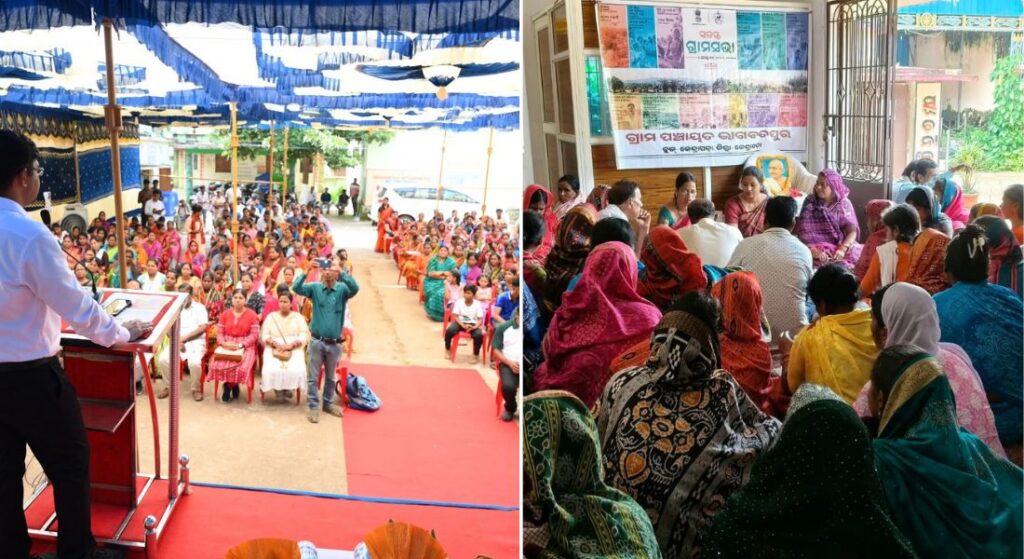
To bridge the rural-urban education gap, the government has launched the ‘Godabarish Mishra Adarsh Vidyalaya’ initiative with an estimated outlay of Rs 12,000 crore. Under the scheme, modern schools will be established in all 6,794 gram panchayats, equipped with advanced classrooms, laboratories, and sports facilities to ensure access to quality education in rural areas.
In a move aimed at promoting social equity, the government has introduced 11.25 per cent reservation for SEBC students in higher education. Additionally, financial assistance is being extended to Scheduled Tribe students under the ‘Shaheed Madho Singh Haath Kharcha Yojana’ to reduce dropout rates and improve retention.
The state has also taken steps to promote mother-tongue learning by signing an agreement with IGNOU to introduce technical and higher education courses in Odia, aimed at removing language barriers and improving comprehension among students.
During the event, the Chief Minister launched the ‘ShaktiShree’ mobile application and unveiled the Chief Minister’s Internship Guidelines to strengthen youth empowerment and employability.
The workshop brought together policymakers, academicians, and stakeholders to deliberate on strengthening Odisha’s education framework, with the initiative expected to contribute to building a knowledge-driven society aligned with the state’s long-term development vision.