
New Delhi: A new study by the Council on Energy, Environment and Water (CEEW) has projected that better management of organic waste generated in Indian cities could create a market opportunity worth nearly USD 51 billion by 2047, while generating large-scale employment and emissions reductions.
The study, titled “Organic Waste Circular Economy for Viksit Bharat: Jobs, Investment, and Emissions Pathways to 2047”, said India’s urban organic waste sector could create around 26 lakh direct jobs under an enabling policy environment focused on waste collection, segregation, and scientific processing.
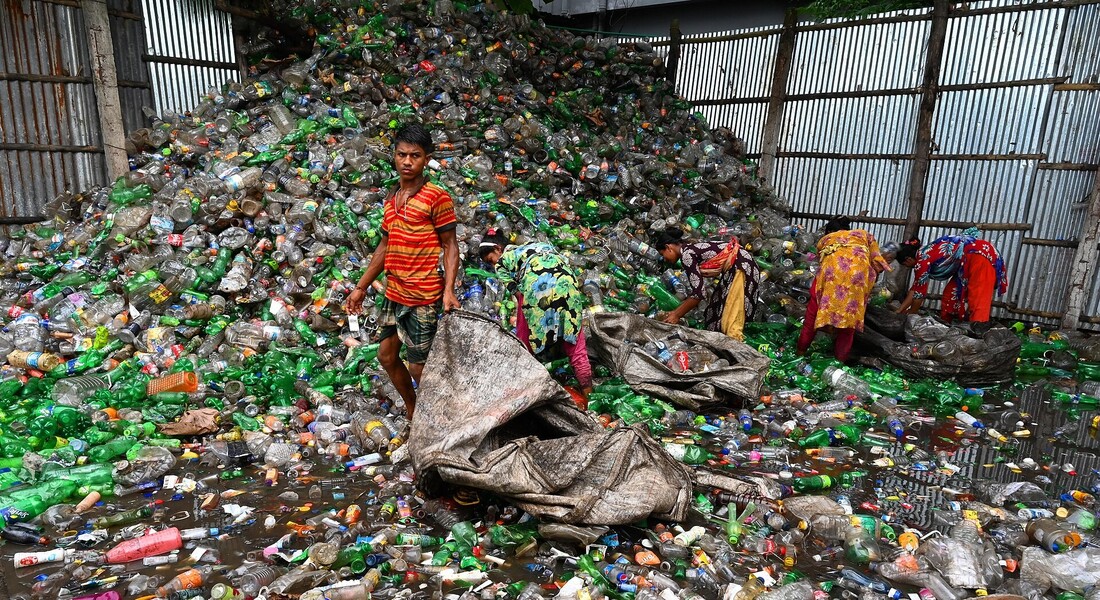
According to the report, India’s cities currently generate nearly 171,000 tonnes of municipal solid waste every day, with organic waste accounting for almost half of the total. The study noted that urban organic municipal waste generation could rise to nearly 208 million tonnes annually by 2047.
Researchers said organic waste such as kitchen waste, fruit and vegetable waste, horticulture waste, and biodegradable material could be converted into compost, biogas, and biomethane through improved waste-processing systems.
The study assessed three future pathways for India’s urban organic waste sector – a business-as-usual scenario, an accelerated policy scenario, and an ambitious green transition scenario.
Under the accelerated policy pathway, where 95% of urban organic waste is processed through composting and biomethanation after full collection, India could reduce net emissions by nearly 68 million tonnes of carbon dioxide equivalent by 2047, the CEEW said in a press release.
The study also estimated that scaling up organic waste processing infrastructure would require cumulative investments of around USD 24 billion by 2047.
Manjinder Singh Sirsa, the Minister for Environment, Forest & Wildlife, Government of NCT of Delhi, in a note addressed to the launch event, said waste-to-resource systems aligned with the vision of energy self-reliance and could contribute to cleaner air and reduced fossil fuel dependence.
The report highlighted that open waste burning contributes significantly to PM2.5 pollution in Indian cities, while unmanaged organic waste increases methane emissions and contamination risks.
Prarthana Borah, Fellow, CEEW, said waste management should be treated as part of clean-air infrastructure and stressed the need for year-round local systems for segregation, collection, processing, and monitoring.
The study noted that India’s Solid Waste Management Rules, 2026, which came into effect in April this year, mandate segregation of waste at source and processing of wet waste through composting or biomethanation facilities.
According to the report, composting currently accounts for around 96% of India’s organic waste treatment capacity, while biomethanation contributes only about 4%.
The study further said India’s waste-sector emissions increased by 226% between 1994 and 2020, making it one of the fastest-growing contributors to national emissions.
Under the most ambitious green transition pathway assessed in the study, complete collection and processing of urban organic waste with greater reliance on biomethanation could expand the market opportunity to nearly USD 62 billion and reduce emissions by around 101 million tonnes of carbon dioxide equivalent by 2047.
The report recommended improving source segregation, updating waste generation data, adopting quality-based procurement systems, strengthening workforce training, and developing reliable markets for compost and bio-CNG products.