
New Delhi: India on Wednesday welcomed the decision of the International Energy Agency (IEA) to release emergency oil stocks amid supply disruptions caused by the ongoing conflict in the Middle East.
The government of India said it is closely monitoring the situation and remains prepared to take appropriate steps to support global energy market stability.
India participates in international energy cooperation as an associate member of the IEA. Officials said the country supports coordinated global efforts to stabilise oil markets during the current crisis.
The IEA on Wednesday announced that its 32 member countries unanimously agreed to release 400 million barrels of oil from their emergency reserves. The decision aims to address disruptions in global oil supply linked to the war in the Middle East, according to an official statement.
The move followed an extraordinary meeting of IEA member governments convened by the agency’s Executive Director. The meeting reviewed market conditions and discussed options to manage supply disruptions arising from the conflict.
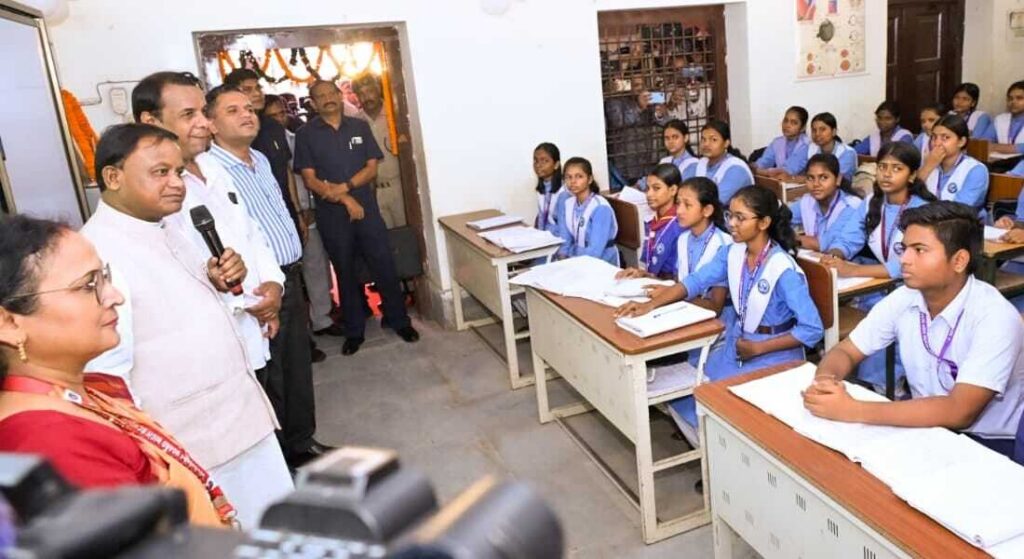
Meanwhile, the government organised an inter-ministerial briefing at the National Media Centre on the evolving developments in West Asia. Senior officials from the Ministry of Petroleum and Natural Gas, the Ministry of External Affairs, the Ministry of Ports, Shipping, and Waterways, and the Ministry of Information and Broadcasting addressed the media.
The briefing focused on energy supply preparedness, maritime safety, welfare of Indian nationals abroad, and communication measures taken by the government in response to the situation.
Crude oil supply remains secure: Officials from the Ministry of Petroleum and Natural Gas said India’s crude oil supply remains secure despite disruptions in the region.
India consumes around 55 lakh barrels of crude oil every day. Through diversified procurement strategies, the country has secured supply volumes that exceed what would normally arrive through the Strait of Hormuz during this period.
India currently imports crude oil from around 40 countries. As a result of diversification, nearly 70% of crude imports now arrive through routes outside the Strait of Hormuz. Earlier, this share was about 55%.
Two additional crude cargoes are already on their way to India and will arrive in the coming days. Officials said this will further strengthen the country’s supply position.
Refineries across the country are also operating at very high capacity utilisation levels. In some cases, refineries are running above 100% capacity to maintain supply.
Steps to address gas supply disruptions: India’s total natural gas consumption stands at about 189 MMSCMD. Of this, 97.5 MMSCMD comes from domestic production.
However, about 47.4 MMSCMD of supply has been affected due to force majeure conditions. Officials said procurement through alternative suppliers and routes is underway to offset the disruption.
Gas companies have secured additional LNG cargoes from new sources, and two LNG shipments are already on their way to the country.
The government also issued a Natural Gas Control Order on 9 March 2026 under the Essential Commodities Act to manage gas supplies and protect priority sectors.
Domestic PNG supply and CNG for vehicles will continue to receive 100% supply without any cuts.
LPG production increased: India imports about 60% of its LPG consumption. Around 90% of these imports normally arrive through the Strait of Hormuz, which has been affected by the current situation.
On March 8, 2026, the government directed refineries and petrochemical complexes to maximise LPG production by diverting propane, butane, propylene, and butenes streams to the LPG pool.
Officials said these measures have increased domestic LPG production by about 25%. The entire domestic LPG output is now being directed towards household consumers.
For non-domestic LPG users, the government has prioritised essential sectors such as hospitals and educational institutions.
A three-member committee of Executive Directors from Indian Oil Corporation, Hindustan Petroleum Corporation Limited, and Bharat Petroleum Corporation Limited has been formed to review LPG allocations to restaurants, hotels, and other commercial users. The committee will ensure fair and transparent distribution of available supplies.
Monitoring maritime safety: The Ministry of Ports, Shipping, and Waterways also briefed the media on the maritime situation in the Persian Gulf region.
Officials said 28 Indian-flagged vessels are currently operating in the Persian Gulf region. Out of these, 24 vessels are located west of the Strait of Hormuz with 677 Indian seafarers onboard. Four vessels are located east of the Strait and carry 101 Indian seafarers.
Authorities are closely monitoring the safety and security of these vessels and crew members.
A 24-hour control room has been operational in the ministry and the Directorate General of Shipping since February 28, 2026 to track developments and coordinate assistance when required.
The Directorate General of Shipping also issued advisories directing Indian-flagged vessels and Indian seafarers to adopt enhanced security measures and follow reporting protocols, including submission of crew details.
Focus on the Indian diaspora: The Ministry of External Affairs provided an update on the situation of Indian nationals in the region.
Officials said India has a large diaspora of about one crore people in the Gulf Cooperation Council countries. Ensuring their welfare and safety remains a priority.
Narendra Modi has spoken to leaders of several Gulf and West Asian countries, including the United Arab Emirates, Qatar, Saudi Arabia, Oman, Bahrain, Kuwait, Jordan, and Israel.
The external affairs minister has also maintained regular contact with his counterparts in these countries as well as with Iran.
Indian diplomatic missions in the region continue to issue advisories to Indian nationals. Ambassadors and Consuls General are also engaging with community members to ensure their safety and security.