
Bhubaneswar: The rainfall situation across Odisha remains under control, with rain activity significantly reduced in most parts of the State.
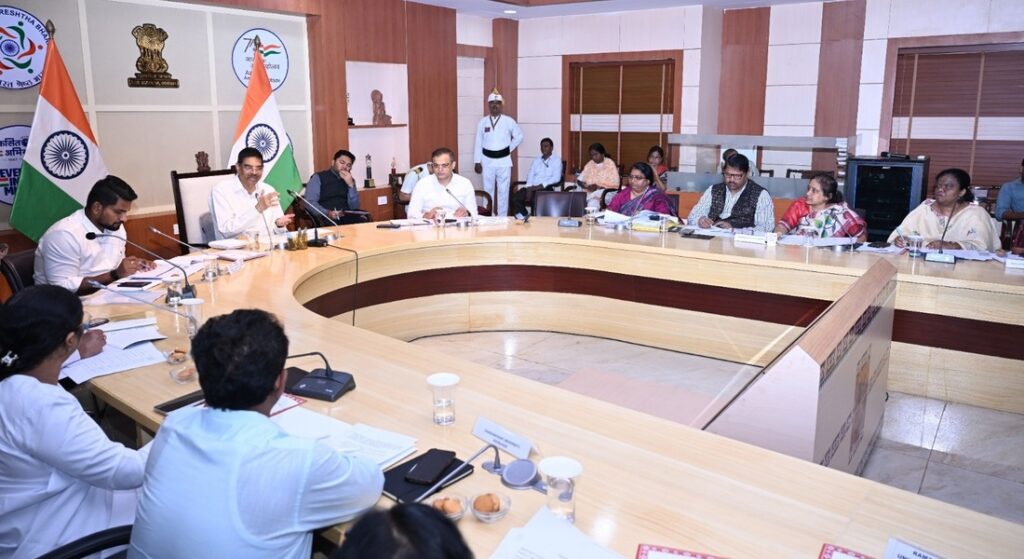
However, the State government continues to keep a close watch on the situation through the State Emergency Operation Centre (SEOC), in coordination with District Emergency Operation Centres, while district administrations remain alert to localized flooding, waterlogging and other weather-related eventualities.
According to the India Meteorological Department (IMD), light to moderate rain or thundershowers are likely at one or two places over all districts of Odisha.
A Yellow Warning has been issued for Baleshwar, Bhadrak, Jajpur, Kendrapada, Jagatsinghapur, Cuttack, Kendujhar and Mayurbhanj.
Odisha recorded an average rainfall of 1.1 mm during the 24 hours ending at 8.30 am on Tuesday. The highest rainfall of 45.0 mm was recorded in Banki-Dampada Block of Cuttack district, while 12 blocks received more than 10 mm of rain.
Among the districts, Cuttack recorded the highest average rainfall at 9.5 mm, followed by Puri at 6.3 mm, Gajapati at 4.9 mm, Khordha at 2.9 mm, Dhenkanal at 2.5 mm, Koraput at 2.4 mm and Malkangiri at 1.9 mm.
The cumulative rainfall recorded across the State from September 1 to September 29 stood at 316.2 mm, against the normal average of 233.4 mm, resulting in a surplus of 35.5 per cent.
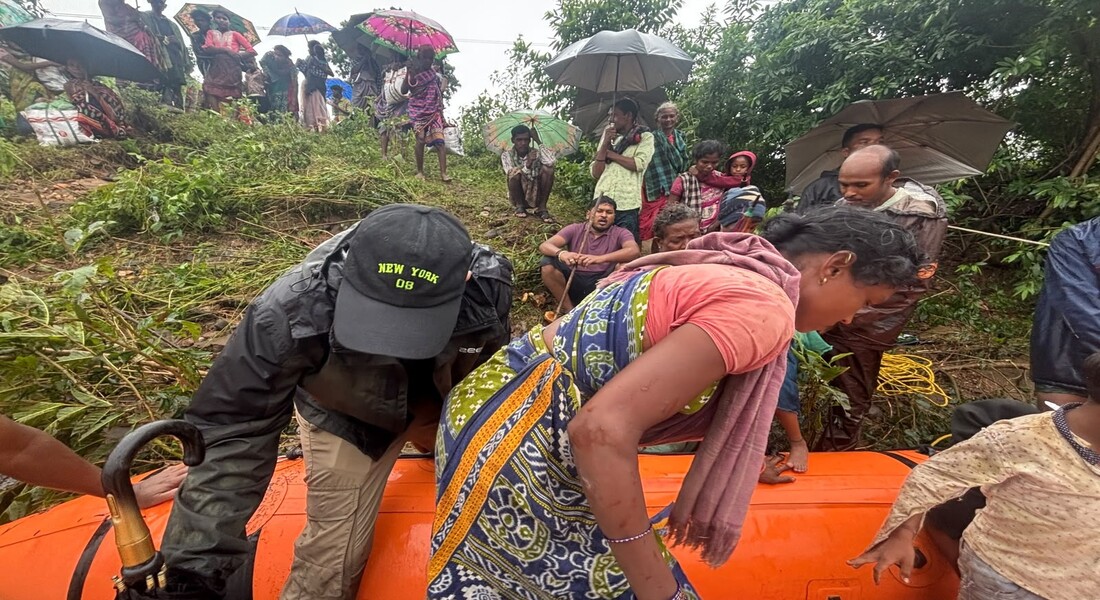
As part of the preparedness and response mechanism, 43 ODRAF and NDRF teams are currently deployed across the State. The deployment comprises 36 ODRAF teams and seven NDRF teams. Of these, 14 teams are deployed in Baleshwar, nine in Bhadrak, four in Koraput, four in Jajpur, three in Jagatsinghpur and two in Nabarangpur.
Reserve teams have been positioned at OSAP 6th Battalion, Cuttack and NDRF 3rd Battalion, Mundali.
The trained response teams remain ready to undertake rescue, evacuation and emergency response operations depending on the ground situation.
District administrations have continued precautionary evacuation and relief operations in affected areas. A total of 13,221 people have been evacuated, while 49 relief camps have been opened across the reported affected districts to provide necessary assistance.
The district-wise assessment shows that Baleshwar, Nabarangpur, Jajpur, Bhadrak, Sambalpur, Bargarh, Kandhamal and Jagatsinghpur have reported affected areas.
In Baleshwar, six blocks, 72 Gram Panchayats and 479 villages have been affected, with a total affected population of 48,560. As many as 7,452 people have been evacuated, and 15 relief camps are operational.
Nabarangpur has reported one affected block, two Gram Panchayats and two villages, with 85 people affected. Two relief camps remain operational to assist the affected population.
In Jajpur, two blocks, 12 Gram Panchayats and 36 villages have been affected, covering a population of 5,059. A total of 3,876 people have been evacuated, with 19 relief camps operational.
Bhadrak has reported five affected blocks, 57 Gram Panchayats and 172 villages, with an affected population of 18,691. The affected families are being provided food and relief measures for their homes.
In Sambalpur, one Urban Local Body and two wards have been affected, with 215 people affected. As many as 93 people have been evacuated, and three relief camps are operational.
Bargarh has reported one affected block, two Gram Panchayats and four villages, with 978 people affected. All 978 affected people have been evacuated, and four relief camps are operational.
In Kandhamal, one block, two Gram Panchayats and two villages have been affected, with a total affected population of eight.
Jagatsinghpur has reported two affected blocks, six Gram Panchayats and eight villages, affecting 1,188 people. A total of 822 people have been evacuated, with six relief camps operational.
The Government has also arranged cattle feed for affected districts. A total of 907.04 MT of cattle feed has been supplied, including 400 MT to Baleshwar, 380.5 MT to Bhadrak, 67.74 MT to Jajpur, 40 MT to Mayurbhanj and 18.80 MT to Koraput.
There is currently no fishermen warning.
The SEOC is monitoring the situation round the clock in coordination with all DEOCs. District administrations have been advised to take appropriate measures in the event of localized flooding of roads, waterlogging in low-lying areas, and closure of underpasses, particularly in urban areas.
District authorities are also maintaining vigilance over possible minor damage to kutcha roads and vulnerable structures, landslides, as well as damage to horticulture and standing crops caused by inundation.
With rainfall activity significantly reduced and the overall situation under control, the State government and district administrations continue to remain prepared to respond promptly to any localized situation. Public safety remains the foremost priority, with continuous monitoring, timely evacuation, and coordinated response measures being carried out across the State.