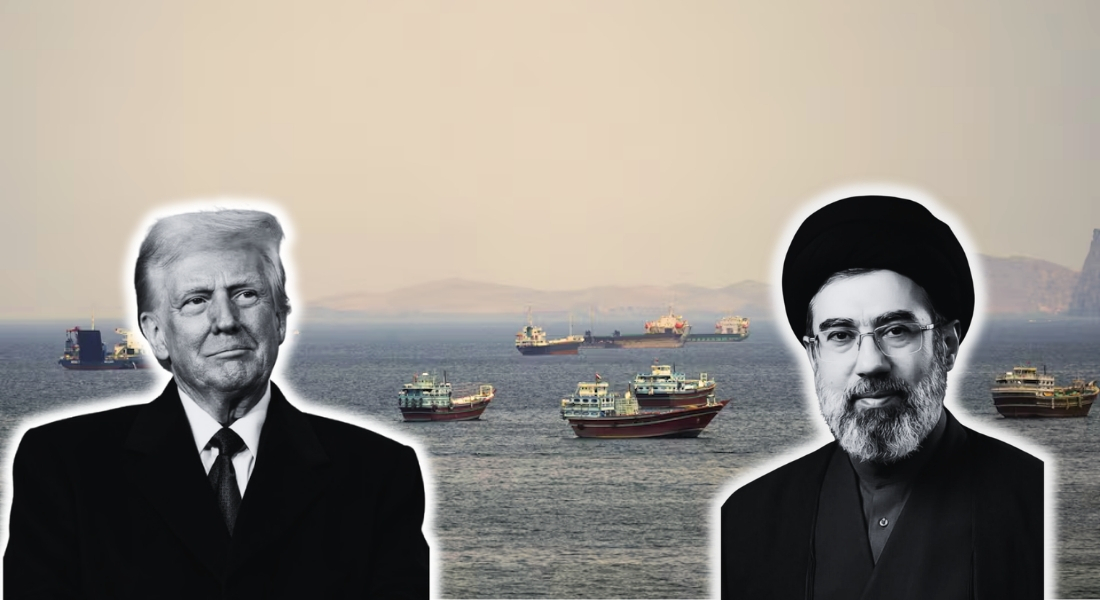

Iran vows to defend nuclear capabilities as US blockade escalates tensions and pushes oil prices higher
New Delhi: Tensions in the Persian Gulf have sharply escalated after Iran’s Supreme Leader issued a strong warning against the United States, declaring a “future without America” in the region, even as Washington signalled that its naval blockade of Iranian ports could continue for months, deepening a high-stakes standoff with global economic implications.
In a statement read on state television, Iran’s Supreme Leader Mojtaba Khamenei said the country would continue to protect its “nuclear and missile capabilities” as national assets. “Ninety million proud and honourable Iranians… will protect them just as they protect the country’s waters, land and airspace,” he said.
Khamenei also issued sharp remarks against the United States, stating that “the bright future of the Persian Gulf region will be a future without America.” He further added that external powers “have no place” in the region, saying they belong “at the bottom of its waters.”
The remarks come at a time when tensions remain high following the ongoing standoff over the strategically critical Strait of Hormuz, through which a significant portion of global oil trade passes.
Echoing a similar position, Iran’s President Masoud Pezeshkian criticised the US naval blockade, calling it illegal and counterproductive. “Any attempt to impose a maritime blockade… is contrary to international law… and is doomed to fail,” he said, warning that such actions would only deepen instability in the region.
On the other hand, US President Donald Trump indicated that the blockade could continue for an extended period. In remarks cited in reports, Trump said the move was more effective than military strikes, adding, “They are choking like a stuffed pig. And it is going to be worse for them.” He also suggested that the blockade could last for months if necessary.
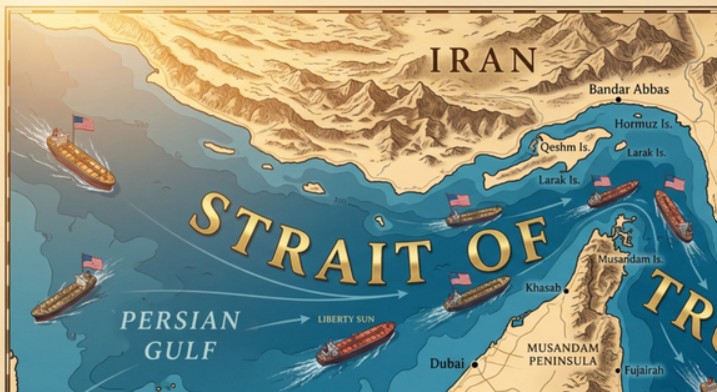
In a separate development, Trump reposted an image on his social media platform that depicted a modified map renaming the waterway as the “Strait of Trump,” reflecting the intensifying rhetoric surrounding the crisis.
The prolonged standoff has already had a significant impact on global energy markets. Brent crude prices have surged sharply, crossing $120 per barrel and reaching their highest levels in over four years, as concerns grow over supply disruptions and the continued closure or restriction of the Strait of Hormuz.
Diplomatic efforts to resolve the situation appear stalled, with reports indicating ongoing disagreements over Iran’s nuclear programme and broader regional security issues. Russian President Vladimir Putin has also cautioned against further escalation, warning of “damaging consequences” if hostilities resume.
The current tensions trace back to the outbreak of conflict earlier this year following US and Israeli strikes on Iran, and despite a fragile ceasefire, both sides remain locked in a high-stakes confrontation with significant regional and global implications.