
US Vice President JD Vance on Sunday left Islamabad after high-stakes negotiations between the United States and Iran ended without a breakthrough, underscoring persistent divisions over Tehran’s nuclear ambitions and regional security issues.
The talks, which stretched for nearly 21 hours, marked the first direct engagement between the two countries in more than a decade and the highest-level contact since the 1979 Islamic Revolution. Despite the diplomatic significance, both sides failed to reconcile differences on key demands.
Speaking after the discussions, Vance indicated that the negotiations had stalled due to Iran’s unwillingness to accept core US conditions, particularly commitments related to nuclear weapons. He reiterated that Washington’s primary objective remains ensuring that Iran does not develop or acquire the capability to rapidly build a nuclear weapon.
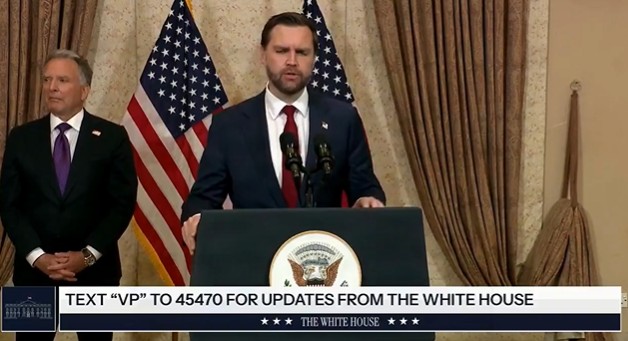
Vice President JD Vance gives an update in Pakistan:
— The White House (@WhiteHouse) April 12, 2026
"The simple fact is that we need to see an affirmative commitment that they will not seek a nuclear weapon, and they will not seek the tools that would enable them to quickly achieve a nuclear weapon." pic.twitter.com/il4THN5DwV
According to Vance, he remained in close contact with US President Donald Trump throughout the talks, with nuclear non-proliferation emerging as the central point of contention. He stressed that the US had clearly outlined its “red lines” during the discussions, CNBC reported.
Iranian state media, however, presented a contrasting account, attributing the breakdown to what it described as “unreasonable” and “excessive” demands from Washington. Reports suggested that Tehran had engaged in continuous negotiations to protect its national interests but found US conditions unacceptable.
The discussions also revealed sharp disagreements over broader geopolitical issues, including control and access to the Strait of Hormuz, a critical maritime route through which nearly a fifth of global energy supplies pass. The waterway has remained a focal point in the ongoing conflict, contributing to volatility in global oil markets.
Additional sticking points reportedly included Iran’s demands for the release of frozen assets held abroad, war reparations, and a wider regional ceasefire. US officials denied agreeing to financial concessions, further complicating the negotiation landscape.
The Islamabad talks were held under tight security, with Pakistan playing a key mediating role. The negotiations saw participation from senior officials on both sides, including US envoy Steve Witkoff and Iranian leaders such as parliamentary speaker Mohammad Baqer Qalibaf and foreign minister Abbas Araqchi.
While Iran had earlier signalled that technical-level engagements could continue, the immediate outcome reflects a diplomatic impasse at a critical juncture. The failure to reach an agreement raises concerns over the stability of a fragile ceasefire and the future of maritime access in the Strait of Hormuz.
Adding to the tensions, conflicting claims emerged a day before the talks concluded over US naval activity in the Strait of Hormuz. The US military stated that two of its warships had transited the strategic waterway as part of efforts to begin clearing sea mines and restore safe navigation.
However, Iran strongly rejected these claims, asserting that no American vessels had entered the strait and reiterating that control over maritime passage rests with its armed forces. The contradictory narratives highlighted the fragile ground realities even as diplomatic efforts were underway in Islamabad.