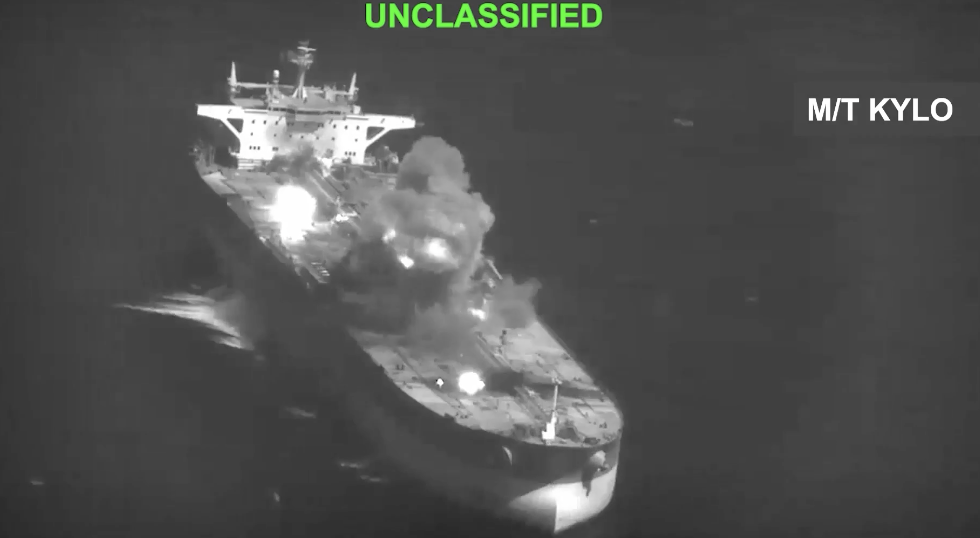
Washington: The US carried out a coordinated air and ground operation in Venezuela early Saturday, striking multiple strategic locations in Caracas and detaining President Nicolás Maduro and his wife Cilia Flores, in what US officials described as a short-duration but high-impact mission that sharply escalates Washington’s long-running confrontation with the Maduro government.
President Donald Trump later confirmed on X that Maduro and Flores were taken into US custody and removed from Venezuelan territory shortly after the operation.
Maduro and his wife were brought to the Metropolitan Detention Center in Brooklyn late on Saturday after completing initial processing in Manhattan. Their transfer by helicopter drew public attention as the aircraft passed prominent New York landmarks, while crowds gathered outside the facility, reacting with a mix of cheers and protests, according to a Foxnews report. Maduro is expected to stay in federal custody as he prepares to face narcoterrorism- and weapons-related charges in the Southern District of New York.
Maduro is expected to face longstanding federal charges linked to narcotics trafficking and corruption. These cases had remained dormant while he remained in power.
Separately, the developments prompted swift international reactions. The United Nations voiced alarm over the use of force and warned of potential consequences for regional stability.
The Secretary-General of the UN António Guterres said that he is deeply alarmed by the recent escalation in Venezuela.
Stephane Dujarric, spokesman for the Secretary-General, said in a statement: “Independently of the situation in Venezuela, these developments constitute a dangerous precedent. The Secretary-General continues to emphasize the importance of full respect – by all – of international law, including the UN Charter. He’s deeply concerned that the rules of international law have not been respected.”
Russia condemned the action as a violation of Venezuelan sovereignty, while officials aligned with Maduro demanded confirmation of his safety and denounced the US move as an unlawful intervention.
In a post on X, the Foreign Ministry of Russia, said: “We highlight the need to create conditions for resolving any existing issues between the US and Venezuela through dialogue.”
⚡️In view of the confirmed reports about Venezuelan President Nicolas Maduro and his spouse being in the US, we strongly urge the US leadership to reconsider their position & release the legitimately elected president of a sovereign country and his spousehttps://t.co/mZPc8wZEZ9 pic.twitter.com/9VSgpdeSnp
— MFA Russia 🇷🇺 (@mfa_russia) January 3, 2026
China, one of the long-standing strategic partners of the Venezuela, also condemned the US action, and called it “a blatant use of force against a sovereign state and action against its president.”
“Such hegemonic acts of the U.S. seriously violate international law and Venezuela’s sovereignty, and threaten peace and security in Latin America and the Caribbean region,” a Chinese foreign ministry spokesperson was quoted as saying by the state media Xinhua late on Saturday.
The Trump administration, meanwhile, defended the operation by reiterating accusations that Maduro led a regime involved in criminal activity and severe human rights abuses. Officials argued the action was intended to dismantle a hostile power structure and protect US interests. At the same time, the operation sparked debate within the US, with some lawmakers raising questions about legal authority and the broader foreign policy implications.
With Maduro no longer in control, Venezuela now faces deep political uncertainty. Attention has shifted to the question of leadership inside the country and the international response to his removal, while legal proceedings in the United States are expected to shape the next phase of an already volatile situation.