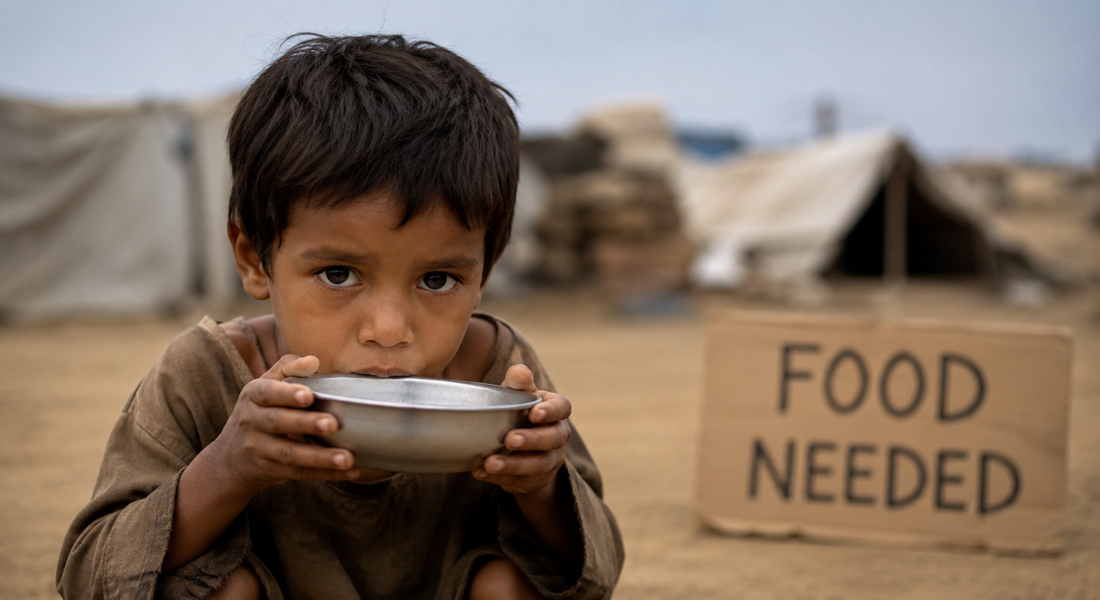

New Delhi: Global hunger declined for the third consecutive year in 2025, but nearly 645 million people remained undernourished, and the world is still off track to achieve the goal of ending hunger by 2030, according to a new report released on Tuesday by five UN agencies.
The State of Food Security and Nutrition in the World 2026 report estimated that 7.8% of the global population experienced hunger in 2025, down from 8.1% in 2024 and 8.6% in 2022. The number of people affected fell by nearly 14 million compared with the previous year and by 43 million from 2022, indicating a gradual recovery after recent global crises.
The report, jointly prepared by the Food and Agriculture Organization, International Fund for Agricultural Development, UNICEF, World Food Programme and the World Health Organization, said the gains were encouraging but remained fragile due to conflicts, climate-related shocks and declining international development and humanitarian assistance.
While Asia and Latin America and the Caribbean continued to record improvements in food security, Africa remained the worst-affected region. The continent accounted for about 309 million hungry people in 2025, exceeding Asia’s estimated 292 million. Although the proportion of Africans facing hunger declined marginally to 20% from 20.3% in 2024, rapid population growth kept the total number of undernourished people at the highest level worldwide.
The report also found that access to adequate food remains a major challenge. Around 2.1 billion people, or 25.8% of the world’s population, experienced moderate or severe food insecurity during 2025. Although this represented an improvement from recent years, the figure remained above pre-pandemic levels.
Food insecurity continued to vary widely across regions. More than half of Africa’s population faced moderate or severe food insecurity, compared with 20.3% in Asia, 22.9% in Latin America and the Caribbean, and 8.7% in North America and Europe.
Rural populations remained more vulnerable than urban communities, while women continued to experience higher levels of food insecurity than men, although the gender gap narrowed slightly.
The report warned that ongoing geopolitical conflicts could reverse recent gains. It projected that between 510 million and 520 million people could still face hunger by 2030 because of the impact of the Middle East conflict on food prices through rising energy and fertiliser costs. The projections do not account for additional risks such as extreme weather events, including El Niño, which could further worsen global food security.
Progress in improving nutrition also remained slow. The report said the world is unlikely to meet the 2030 targets for reducing child stunting, wasting, overweight and low birthweight, while improvements in exclusive breastfeeding remain insufficient. Anaemia among women aged 15 to 49 years continued to increase, and adult obesity rose from 12.1% in 2012 to 16.2% in 2024.
Globally, only 30.8% of children aged between six and 23 months receive a minimally diverse diet, while around 150 million children under the age of five continue to suffer from stunting. Child stunting has declined in Africa, and Asia is on track to meet its target by 2030, but anaemia among women remains a growing concern across most regions. Child overweight is also increasing rapidly in Oceania.
The report also highlighted the rising cost of healthy diets. It estimated that the average global cost of a healthy diet increased to 4.28 purchasing power parity dollars per person per day in 2025, up from 3.44 PPP dollars in 2021. Even so, the number of people unable to afford a healthy diet declined from 2.97 billion in 2021 to 2.69 billion in 2025.
The report concluded that recent improvements demonstrate progress is achievable, but warned that ending global hunger will require stronger political commitment, sustained investment and coordinated international action.
It said conflicts, climate shocks and funding shortfalls continue to threaten the gains made so far and could delay efforts to achieve the Sustainable Development Goals by 2030.