At IndiaVerve, we go beyond the noise to bring you meaningful stories of change, resilience and progress—from India to the world stage. Our mission is to bring readers credible, wide-ranging coverage across politics, business, sports, culture, society and more.

Amaravati confirmed as Andhra Pradesh capital after gazette notification

New Delhi: Amaravati has been officially confirmed as the permanent capital of Andhra Pradesh following the assent of President Droupadi Murmu to the Andhra Pradesh Reorganisation (Amendment) Act, 2026, and the subsequent publication of the Gazette notification by the government of India.

The amendment modifies provisions of the Andhra Pradesh Reorganisation Act, 2014, explicitly stating that Amaravati shall be the capital of the state. The Act is deemed to have come into force with retrospective effect from June 2, 2024.

The legislative change brings clarity to the long-pending capital issue that emerged after the bifurcation of Andhra Pradesh and the creation of Telangana in 2014. It also effectively overrides the previously proposed three-capitals model, which had faced legal challenges.

Under the amended provisions, the term “Amaravati” includes the notified capital city area under the Andhra Pradesh Capital Region Development Authority framework.

In a post on X, Chief Minister N Chandrababu Naidu expressed gratitude to Murmu and the Union government led by Prime Minister Narendra Modi, as well as Members of Parliament and citizens who supported the move. He described the development as the fulfilment of a long-standing aspiration of the people, particularly farmers of the Amaravati region.

Deputy Chief Minister of Andhra Pradesh Konidala Pawan Kalyan said the decision marks a turning point for the state, noting that April 6 will be remembered as the day Amaravati received official recognition as the capital. He highlighted the role of farmers and citizens who supported the capital region over the years.

The government has called for collective efforts to accelerate development in Amaravati and realise the long-term vision for the state’s growth.
Odisha signs MoU to introduce financial literacy in PM Shri schools

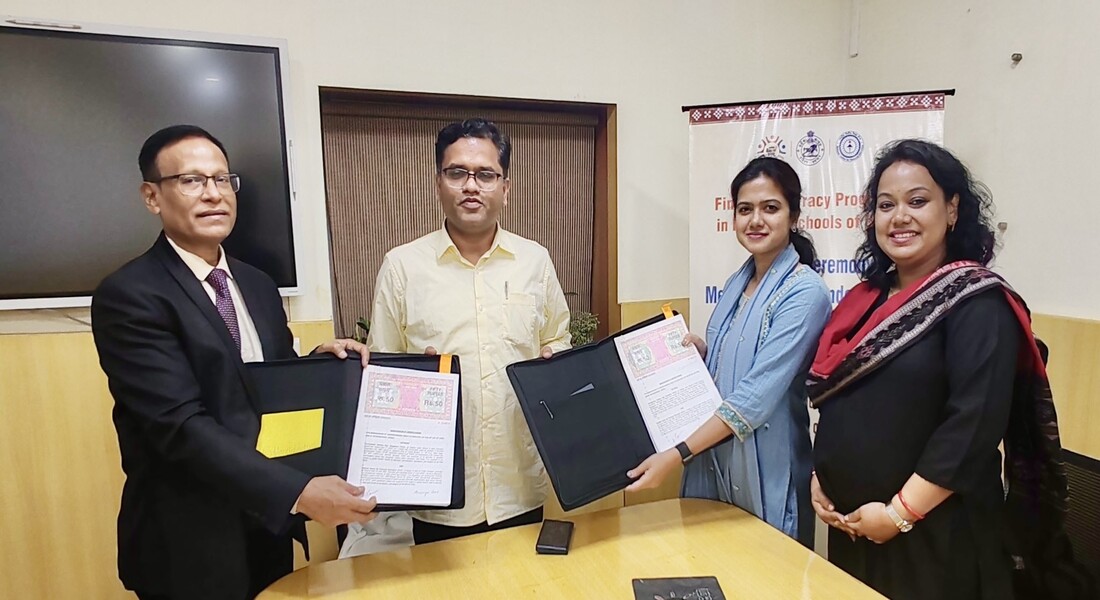
Bhubaneswar: In a significant step towards strengthening practical education, the Odisha government has signed a Memorandum of Understanding (MoU) to introduce financial literacy among school students across the state.

The agreement was signed between the Panchasakha Siksha Setu Organisation (PSSSO) and the National Centre for Financial Education (NCFE) to roll out a structured financial literacy programme for students from Class 6 to 10 in PM SHRI schools.

The MoU was formalised in the presence of Dr N. Thirumala Naik, Commissioner-cum-Secretary of the School and Mass Education Department. The agreement was signed by Ananya Das, Member Secretary of PSSSO and State Project Director of OSEPA, and Alok Chandra Jena, Director and Chief Executive Officer of NCFE.

As per the agreement, the programme will be implemented in 736 Pradhan Mantri Schools for Rising India (PM SHRI) schools across all 30 districts of Odisha, in alignment with the National Education Policy 2020.

The initiative aims to equip students with essential financial knowledge and skills, enabling them to make informed financial decisions and develop a sense of financial responsibility from an early age.

Students will be introduced to key concepts such as money management, savings, budgeting, banking, investment, taxation, financial transactions, and responsible financial behaviour. The programme is designed to build a strong foundation in financial literacy while also fostering entrepreneurial thinking among young learners.

To ensure effective implementation, teachers will undergo specialised training in financial literacy before the programme is introduced in classrooms. This will enable educators to deliver the curriculum in a structured and impactful manner.

Under the initiative, selected schools will also be recognised as “Money Smart Schools” by NCFE, further encouraging institutional participation and excellence in financial education.

The collaboration marks a key milestone in the state’s efforts to enhance the quality of education and integrate skill-based learning into the school system. It also reflects Odisha’s focus on preparing students for real-world challenges by equipping them with practical financial knowledge and life skills.

India marks major nuclear milestone as PFBR attains first criticality

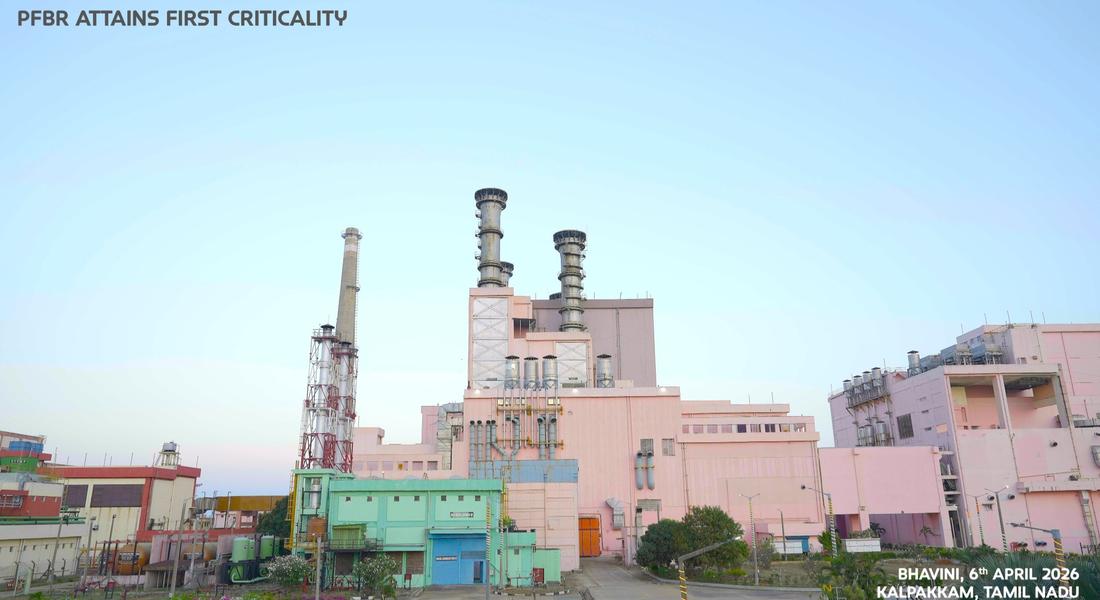
New Delhi: India has marked a significant milestone in its civil nuclear programme as the indigenously developed Prototype Fast Breeder Reactor (PFBR) at Kalpakkam in Tamil Nadu attained first criticality, signalling the start of a controlled nuclear fission chain reaction.

Prime Minister Narendra Modi congratulated the country’s scientists and engineers, calling the achievement a defining step in India’s nuclear journey.

In a post on X, he said the development reflects steady progress in the second stage of India’s three-stage nuclear power programme and highlights the country’s scientific and engineering capabilities.

The 500 MWe PFBR has been designed and built by Bharatiya Nabhikiya Vidyut Nigam Limited. The reactor is capable of producing more fuel than it consumes, making it a key component in India’s long-term nuclear energy strategy, particularly given the country’s limited uranium and abundant thorium reserves.

The milestone was achieved in the presence of Ajit Kumar Mohanty, the Chairman of the Atomic Energy Commission and the Secretary of the Department of Atomic Energy (DAE).

In a video message, he described the development as a historic step in the peaceful use of atomic energy. He said it marks India’s entry into the second stage of the nuclear programme envisioned by Homi Jehangir Bhabha.

Dr Mohanty noted that the PFBR uses fuel derived from reprocessed spent fuel from first-stage pressurised heavy water reactors. The reactor will also enable recycling of spent fuel, helping close the second-stage fuel cycle and paving the way for utilisation of India’s thorium reserves in the third stage.

“The prototype first breeder reactor utilizes fission material recovered from the reprocessing of spent fuel from first-stage pressurized heavy water reactors. The prototype first breeder reactor will produce more fuel than it consumes. The spent fuel generated in the prototype first breeder reactor will, in turn, be processed and recycled back into the reactor, thereby enabling closure of the second stage fuel cycle,” Mohanty said in the message.

The development is expected to strengthen India’s clean energy roadmap and support its commitment to achieving net-zero emissions by 2070.

Indian Army unveils UAS roadmap to boost drone capabilities

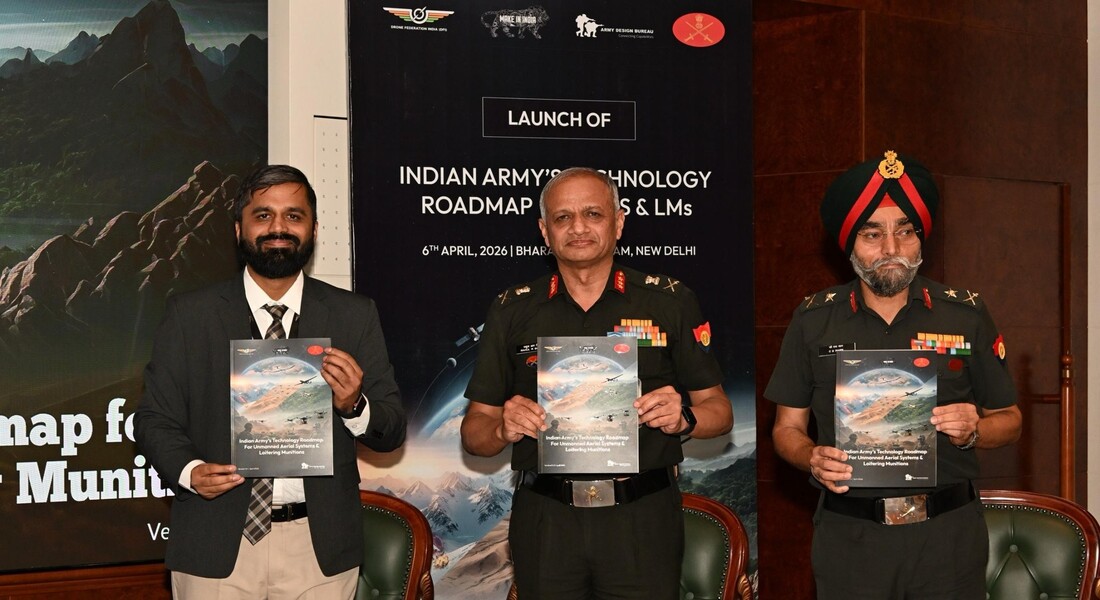
New Delhi: The Indian Army has released a comprehensive document outlining its future requirements for Unmanned Aerial Systems (UAS) and loitering munitions, marking a key step in strengthening India’s defence technology ecosystem.

Titled ‘Indian Army’s Technology Roadmap for Unmanned Aerial Systems and Loitering Munitions’, the document was released in New Delhi on Monday by Lieutenant General Rahul R Singh, Deputy Chief of the Army Staff (Capability Development and Sustenance).

In a post on X, the Army stated that the roadmap provides long-term visibility of its capability needs in the unmanned systems domain.

It added that the document offers clear and actionable guidance to industry, academia, and research institutions, enabling them to align investments and technological efforts with identified priority areas.

According to the Army, the roadmap will act as a bridge between operational requirements and technological development. It said the initiative would help ensure that India’s drone ecosystem evolves in a structured and demand-driven manner.

Lieutenant General Singh highlighted the changing nature of modern warfare and noted that the role of drone technology has expanded significantly. He said recent conflicts had shown the importance of maintaining a balance between large-scale deployment and precision targeting.

The event saw participation from stakeholders across the armed forces, defence industry, start-ups, and academic institutions. The Army said the gathering reflected a whole-of-nation approach to building a resilient and self-reliant drone ecosystem under the Aatmanirbhar Bharat initiative.

The roadmap categorises unmanned systems into five segments – surveillance, loitering munitions, air defence roles, special operations, and logistics- indicating a shift towards integrated and multi-role deployment across varied operational scenarios.