At IndiaVerve, we go beyond the noise to bring you meaningful stories of change, resilience and progress—from India to the world stage. Our mission is to bring readers credible, wide-ranging coverage across politics, business, sports, culture, society and more.

NHRC takes suo motu cognizance of two Odisha school incidents

Bhubaneswar: The National Human Rights Commission (NHRC) on Friday took suo motu cognizance of two separate media reports from Odisha involving deaths and serious injuries of schoolchildren, and has issued notices to the state government seeking detailed reports within two weeks.

In the first case, the Commission acted on a report stating that a 12-year-old boy died and more than 100 students fell ill after allegedly consuming stale food at the hostel of Kakabandh Ashram School in Mayurbhanj district on April 14. The victim was reportedly a Class 5 student of a school run by the ST and SC Welfare Department of the Odisha government.

According to the report, 67 students were in serious condition and were shifted to Baripada Medical College and Hospital, while 41 others were admitted to a Community Health Centre. The Commission observed that if the reports are true, they raise serious concerns of human rights violations.

It has sought a detailed report from the chief secretary of Odisha and the superintendent of police, Mayurbhanj, including the status of the investigation and the health condition of the affected students, according to an official statement.

In a second incident, the NHRC took cognizance of a media report stating that two girl students died after an iron gate collapsed on them at a government primary school in Gajapati district on April 15. The incident reportedly occurred while the children were playing near the school entrance.

The Commission noted that the report, if accurate, indicates serious human rights concerns and has issued notices to the chief secretary of Odisha and the superintendent of police, Gajapati, seeking a detailed report within two weeks.

As per the report published on April 16, 2026, the children were trapped under debris and were later declared dead at a nearby hospital after being rushed by locals.

Odisha governemnt announces early summer vacation amid severe heatwave

Bhubaneswar: The Odisha government on Friday announced an early summer vacation in view of the severe heatwave currently being witnessed across the state.

Chief Minister Mohan Charan Majhi said the decision was taken following a proposal from the School and Mass Education Department.

The chief minister made it clear that the safety of children cannot be ignored.

He announced that all government, government-aided, and private schools in Odisha will remain closed from April 27.

However, previously scheduled examinations, census work, and other official tasks will continue as planned, according to the decision.

Temperatures across the state are soaring, with no respite from the heat expected in the near future.

FM Sitharaman chairs high-level meet on AI-linked cyber threats

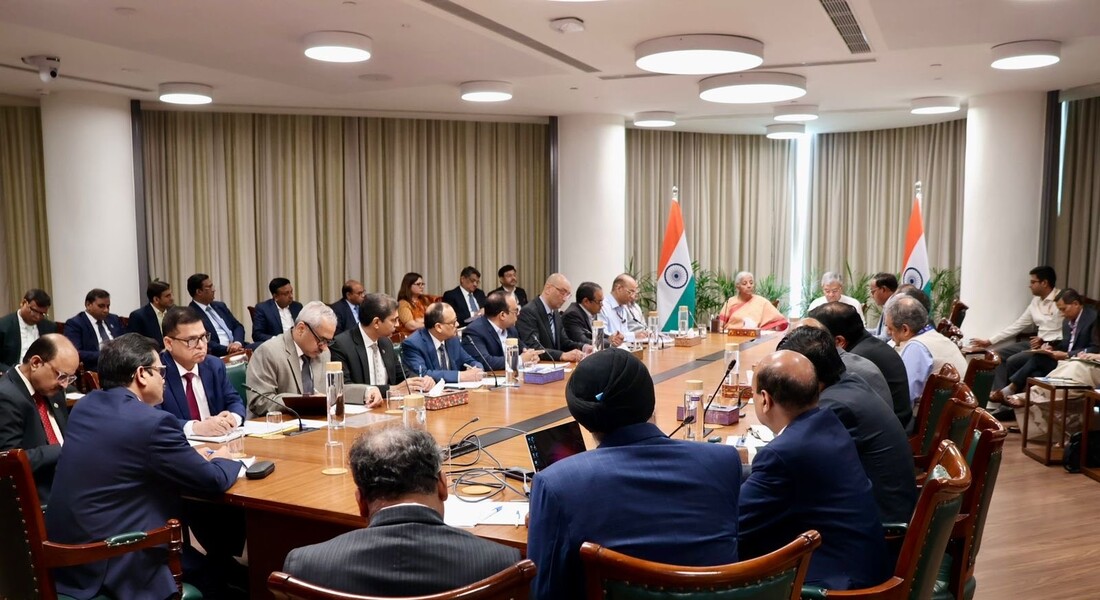
New Delhi: Union Finance and Corporate Affairs Minister Nirmala Sitharaman has chaired a high-level meeting with key stakeholders to assess the potential impact of emerging threats linked to recent developments in Artificial Intelligence (AI).

The discussions focused particularly on concerns surrounding the possible misuse of such technologies to exploit software vulnerabilities.

The meeting was held in the presence of Union Minister for Electronics and Information Technology, Railways, and Information & Broadcasting Ashwini Vaishnaw.

It also brought together senior officials from the government and the banking sector, including representatives of the Department of Financial Services, Indian Computer Emergency Response Team, the Reserve Bank of India, National Payments Corporation of India, as well as managing directors and CEOs of scheduled commercial banks.

During the meeting, Sitharaman acknowledged the progress made by banks in strengthening cybersecurity systems and protocols, but noted that emerging AI-driven threats present unprecedented challenges requiring heightened vigilance, preparedness, and stronger coordination across institutions.

She advised the Indian Banks’ Association to develop a coordinated institutional mechanism to ensure a swift and effective response to such risks, the Ministry of Finance said in a lengthy post on X.

Banks were also directed to engage top cybersecurity professionals and specialised agencies to continuously upgrade their defensive and monitoring capabilities.

Emphasising the need for immediate action, the finance minister instructed banks to promptly report any suspicious activity or cyber incidents to relevant authorities, including CERT-In, and to maintain close coordination with all concerned agencies.

She further stressed the importance of adopting proactive and pre-emptive measures to secure IT infrastructure, safeguard customer data, and protect financial resources.

The meeting also underlined the need to establish a robust system for real-time threat intelligence sharing among banks, CERT-In, and other stakeholders to ensure early detection and timely dissemination of information across the financial ecosystem.

Odisha begins shaping long-term disaster resilience framework through key consultation

Bhubaneswar: Odisha State Disaster Management Authority (OSDMA), in collaboration with the Asian Disaster Preparedness Center, has initiated efforts to shape a long-term disaster resilience framework for Odisha, with a two-day high-level consultation focusing on future risks, preparedness, and institutional strengthening.

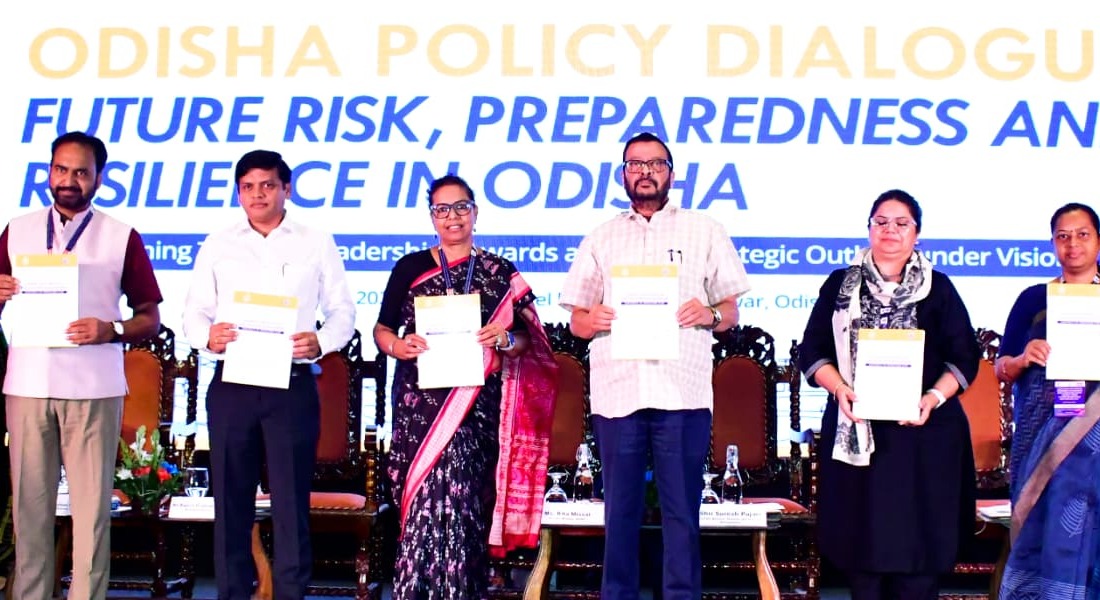
The consultation, titled “Future Risk, Preparedness and Resilience in Odisha – Strengthening Thought Leadership Towards a 10-Year Strategic Outlook under Vision 2036 & 2047,” was inaugurated in Bhubaneswar, bringing together policymakers, experts, and global stakeholders.

Minister for Revenue and Disaster Management, Suresh Pujari, inaugurated the event and stated that the state’s disaster management model has received global recognition. He emphasised that Odisha’s consistent ability to respond effectively to disasters is rooted in collective institutional efforts.

The consultation aims to develop a structured roadmap to enhance Odisha’s resilience to emerging risks, particularly those linked to climate change, rapid urbanisation, and evolving socio-economic conditions. It reflects the state government’s continued push to strengthen preparedness systems and future-proof its disaster response mechanisms.

Among those present were Rita Mishal of the National Disaster Management Authority, along with senior officials of OSDMA and representatives from national and international organisations, highlighting the collaborative approach being adopted.

Deliberations during the sessions focused on critical areas, including future risk assessment, technology integration, institutional capacity building, financial resilience, and community participation. Experts underscored the importance of strengthening early warning systems, improving information dissemination, and enhancing community-based disaster management practices.

The discussions also outlined a larger institutional vision, with plans to develop the State Institute of Disaster Management into a Centre of Excellence for training, research, and knowledge creation, aimed at building long-term capacity across sectors.

Officials indicated that the outcomes of the consultation will feed into future policy formulation and strategic planning, helping Odisha transition from a reactive disaster response model to a proactive and resilience-driven framework.

Aligned with the state’s Vision 2036 and Vision 2047 goals, the initiative is expected to play a key role in ensuring sustained safety, preparedness, and adaptive capacity for communities across Odisha in the coming decade.

India’s geographic edge positions it as global aviation hub: Minister Ram Mohan Naidu

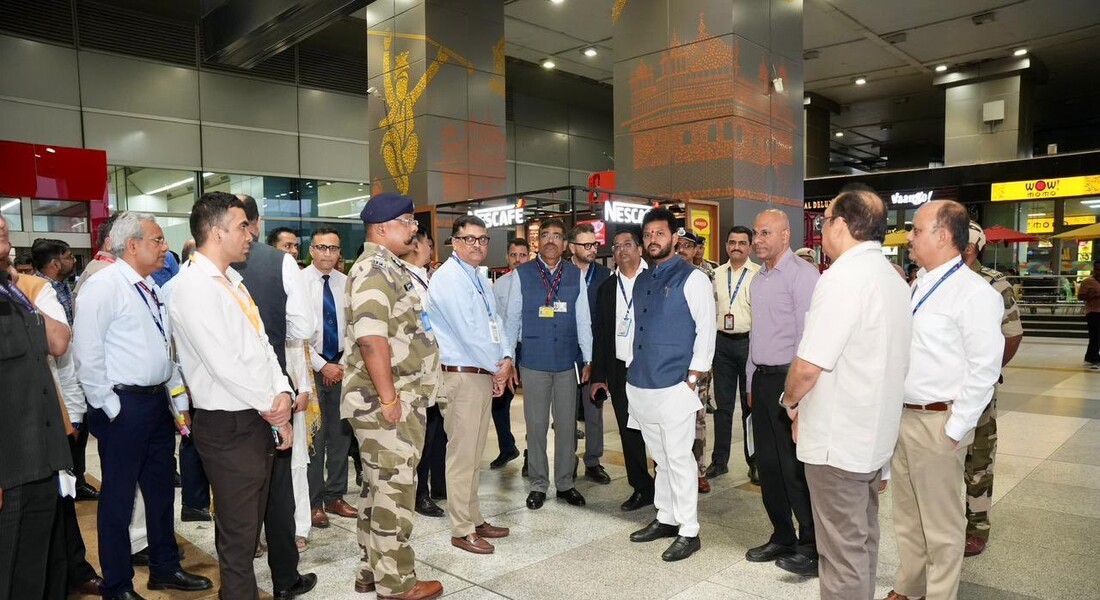
New Delhi: Minister of Civil Aviation Kinjarapu Ram Mohan Naidu has said that India’s unique geographical location between the eastern and western hemispheres provides a natural advantage in emerging as a global transit hub.

He made the remark after reviewing the readiness of Indira Gandhi International Airport for the implementation of hub-and-spoke operations, during which he held a high-level meeting with key stakeholders at the airport.

The review meeting was attended by senior officials, including the Secretary of Civil Aviation, along with representatives from key agencies such as the Ministry of Home Affairs, Ministry of Civil Aviation, Bureau of Immigration, Bureau of Civil Aviation Security, Customs, Airports Authority of India, Directorate General of Civil Aviation, CISF, DigiYatra, Delhi International Airport Limited, and leading airlines.

As part of the visit, Naidu conducted an on-ground walkthrough of passenger flow systems and inspected the Security Hold Area at Terminal 3 to assess readiness and efficiency, according to an official statement.

The developments are aligned with the National Civil Aviation Policy 2016, introduced under the leadership of Prime Minister Narendra Modi, which outlines a roadmap to position India as a preferred aviation hub for domestic passengers by 2030 and globally by 2047.

In line with this vision, the government has rolled out an International Aviation Hub Strategy that includes a calibrated approach to granting Points of Call to foreign airlines, particularly for non-metro destinations, renegotiation of bilateral agreements to strengthen Indian carriers and promote domestic hubs, and liberalisation of domestic code-share arrangements to expand the global reach of Indian airlines.

The minister highlighted that the hub-and-spoke model is expected to significantly enhance connectivity between Tier-II and Tier-III cities and international destinations, particularly through the UDAN Scheme. He indicated that the model would reduce travel time for passengers while ensuring optimal use of the country’s aviation infrastructure.

The minister further noted that the strategy represents a shift in India’s aviation landscape from being primarily an end-destination market to evolving into a global transit hub, enabling Indian airports to capture a larger share of transfer traffic currently routed through foreign hubs.

Referring to current travel patterns, the minister said that nearly 35% of international passengers from India transit through global hubs such as Dubai, London, and Singapore, adding that the government aims to reverse this trend by developing globally competitive hubs within the country. He identified key airports, including Delhi, Mumbai, Bengaluru, Hyderabad, Kolkata, and Chennai, as central to this strategy.

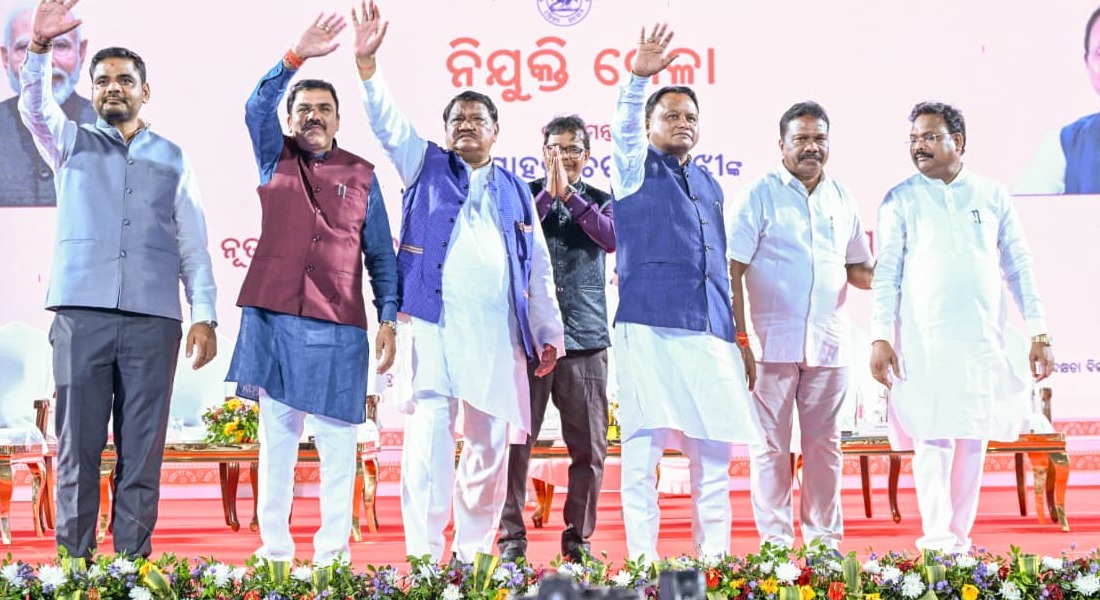
CM Majhi hands over 4,623 appointment letters at Nijukti Mela in Bhubaneswar

Bhubaneswar: Chief Minister Mohan Charan Majhi has distributed appointment letters to 4,623 candidates across seven departments at the Nijukti Mela held at Kalinga Stadium, Bhubaneswar.

Congratulating the newly appointed candidates, the chief minister emphasised that government service is not merely a livelihood but a unique opportunity to serve people.

In a series of posts on X, he urged them to uphold integrity, remain committed to transparency, and ensure timely and citizen-centric delivery of services.

Highlighting the state’s employment momentum, Majhi said that in the last 22 months, 44,082 government jobs and 92,000 private sector jobs have been created, opening new avenues for Odisha’s youth.

Addressing the gathering, he noted that government officials and employees are the true face of governance and the administrative system. He stressed that the ultimate goal is to deliver government services to the last person in the queue, adding that people are increasingly feeling that this is a government of the people.

Carrying forward this sentiment, he said, will help maintain the dignity of government jobs and strengthen public trust.

The chief minister also shared key advice for the newly appointed candidates. He called on them to stay away from corruption, reiterating the government’s zero-tolerance policy. Emphasising democratic values, he said that people are paramount and their voices must be heard with empathy, urging officials to resolve public grievances at their respective levels.

He further advised that personal ideological views should not hinder official duties and that responsibilities must be carried out in line with government directives. Stressing punctuality, he asked the recruits to complete tasks within the stipulated time. He also underscored the importance of maintaining courtesy and decorum in workplace interactions.