At IndiaVerve, we go beyond the noise to bring you meaningful stories of change, resilience and progress—from India to the world stage. Our mission is to bring readers credible, wide-ranging coverage across politics, business, sports, culture, society and more.
At IndiaVerve, we go beyond the noise to bring you meaningful stories of change, resilience and progress—from India to the world stage. Our mission is to bring readers credible, wide-ranging coverage across politics, business, sports, culture, society and more.
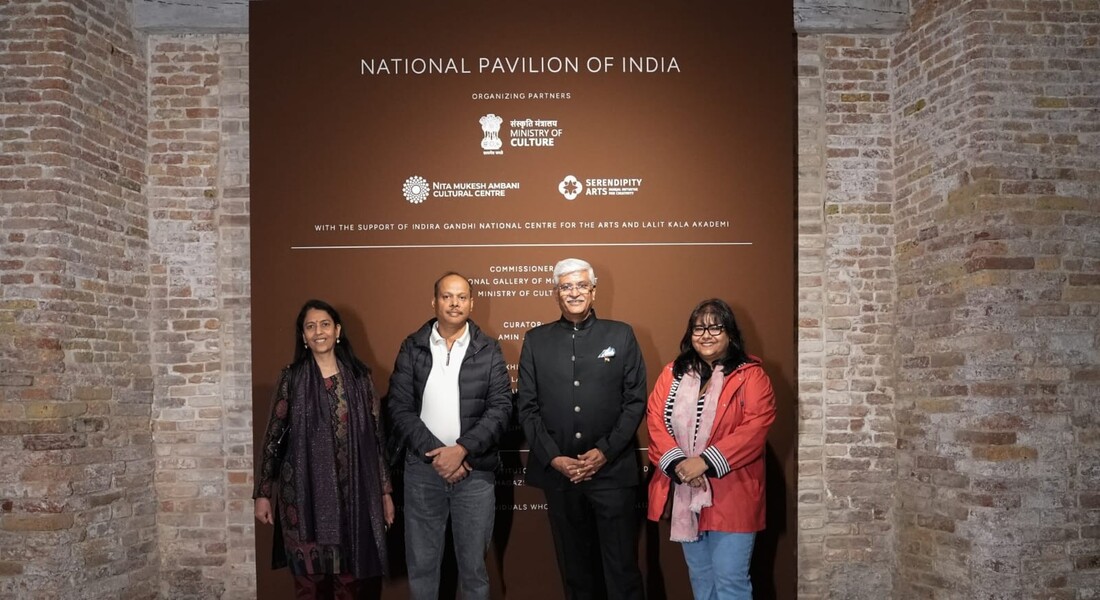
New Delhi: The Pavilion of India was officially opened to the public at the prestigious 61st International Art Exhibition of La Biennale di Venezia on Thursday, showcasing a landmark exhibition that brings together five contemporary Indian artists under the theme of memory, migration, and belonging.
The inauguration was attended by Union Minister of Culture and Tourism Gajendra Singh Shekhawat, Pietrangelo Buttafuoco, President of La Biennale di Venezia, Secretary of the Ministry of Culture Vivek Aggarwal, and India’s Ambassador to Italy Vani Rao. Nita M. Ambani, Isha Ambani, and Sunil Kant Munjal were also present on the occasion, according to an official statement.
The exhibition, titled “Geographies of Distance: Remembering Home”, is curated by Dr. Amin Jaffer and presented by the ministry in partnership with the Nita Mukesh Ambani Cultural Centre and Serendipity Arts. It features works by five artists – Alwar Balasubramaniam, Ranjani Shettar, Sumakshi Singh, Skarma Sonam Tashi, and Asim Waqif – whose practices engage deeply with questions of memory, material, and transformation rooted in Indian cultural traditions.
Speaking at the inauguration, Shekhawat described the exhibition as a reflection of a contemporary India that is both rooted and forward-looking, saying the pavilion demonstrated the strength of India’s cultural memory and the power of artistic expression to connect the country with the world.
Aggarwal said the exhibition brought together artists whose work engaged with questions of memory, material, and transformation, adding that their practice reflected the realities of a rising India while contributing to a broader global dialogue on belonging and identity.
Curator Dr. Amin Jaffer explained that the exhibition explored home as an emotional and material condition rather than a fixed place, saying the artists used fragile and organic materials alongside deeply personal narratives to reflect on how memory, migration, and change shape our understanding of belonging.
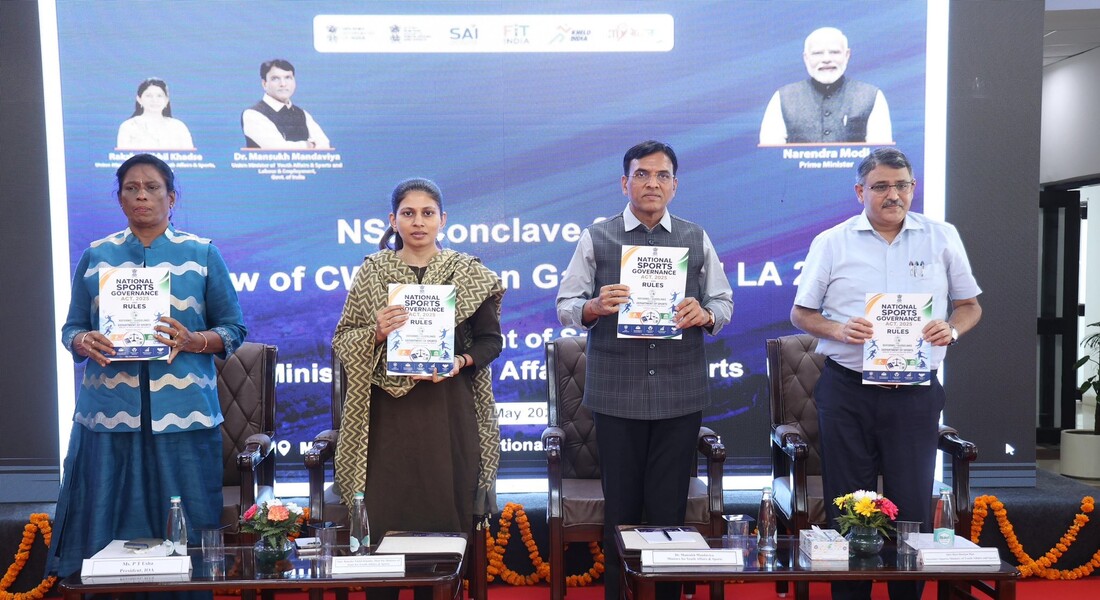
New Delhi: Union Minister of Youth Affairs and Sports Mansukh Mandaviya on Thursday attended the National Sports Federation Conclave 2026, bringing together representatives from 37 National Sports Federations, including the Indian Olympic Association, to chart India’s sporting roadmap ahead of major international competitions.
The conclave focused on strengthening preparations for the Commonwealth Games 2026, Asian Games 2026, and the Summer Olympics 2028 in Los Angeles, with discussions centred on long-term planning, governance reforms, and sustained support for Indian athletes on the global stage, according to an official statement.
Addressing the conclave, Mandaviya described the gathering as a coordinated step towards India’s preparation for upcoming global sporting events. He highlighted the government’s broader vision of transforming India into a leading sporting nation through long-term planning, scientific training, stronger sporting infrastructure, and sustained support for athletes competing at the highest international level.
The minister stressed the importance of institutional reforms and good governance, saying that India’s sporting future depended on stronger coordination between athletes, federations, and the government.
He called for greater transparency, timely elections, accountability, and stronger institutional mechanisms within federations, emphasising that governance must remain athlete-centric, and that athlete welfare should be at the heart of India’s sporting ecosystem.
Mandaviya also reiterated the government’s firm commitment to eradicating doping from Indian sport through awareness, education, and stricter legal measures. He urged federations, coaches, and support staff to take collective responsibility in building a clean and transparent sporting culture across the country.
The minister further outlined the government’s larger vision of strengthening the sports ecosystem through flagship initiatives, including Khelo India, the Fit India Movement, and the forthcoming Khelo Bharat Mission.
During the conclave, Mandaviya formally released the National Sports Governance Act 2025 Rules and Reform Guidelines Handbook, a significant step towards institutionalising governance reforms across Indian sports federations. He also emphasised the need for open and fair athlete selection processes, enhanced international engagement for federations, and increased investment in athletes, coaches, and governance mechanisms.
Minister of State for Youth Affairs and Sports Raksha Khadse underscored the importance of long-term planning, athlete support systems, and scientific training in building a future-ready sporting ecosystem.
She said India’s march towards the Asian Games, Commonwealth Games, and Olympics 2028 would be driven by performance, powered by science, and anchored in stronger federations.
Secretary of Sports Hari Ranjan Rao emphasised collective responsibility and long-term planning as essential pillars of India’s sporting ambitions, saying that the discussions held at the conclave would shape India’s sporting future with an eye on 2036.
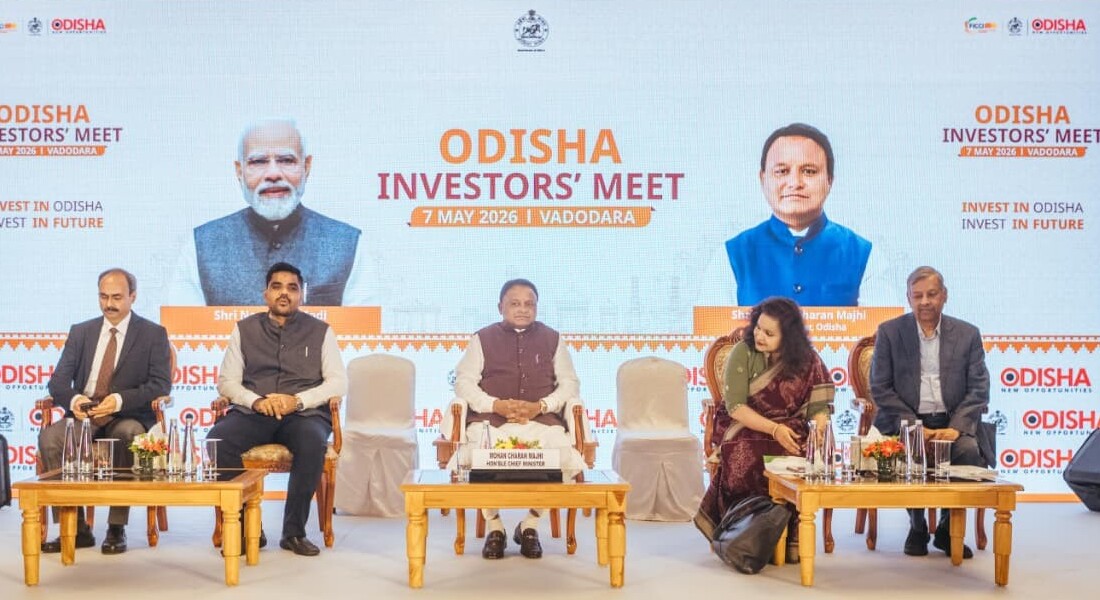
Bhubaneswar: Chief Minister Mohan Charan Majhi concluded a three-day Gujarat visit with a strong showing at the Odisha Investors’ Meet Roadshow in Vadodara on Thursday, where over 200 industry leaders, business associations, and institutional stakeholders participated.
The meeting signalled growing investor confidence in Odisha as an emerging industrial destination.
In a post on X, Majhi said the roadshow showcased Odisha’s industrial ecosystem, investment-ready infrastructure, strong MSME base, skilled workforce, and a policy-driven vision for manufacturing-led growth.
The discussions generated a significant pipeline of memoranda of understanding and investment intents, with officials describing the response as reflective of the trust the industry places in Odisha’s growth potential and the state government’s commitment to ease of doing business, he added.
On the second day of his Gujarat visit, Chief Minister Majhi visited Mundra Port, one of India’s largest and most integrated port facilities, and engaged with industry leaders on the broader vision for port-led industrial development.
Drawing on the scale and global competitiveness of Mundra, Majhi proposed a balanced two-coast strategy as a defining framework for India’s next phase of industrial expansion, arguing that the country’s growth could no longer remain concentrated on its western seaboard alone.
Majhi said the eastern coast now stands at a critical inflection point and that Odisha is well-positioned to lead this transformation. He said that while the western coast had demonstrated scale and global reach, the eastern seaboard must now be empowered to drive the next wave of India’s industrial growth, with Odisha playing a central role in that journey.
The CM said Odisha is advancing world-class industrial ecosystems anchored in robust infrastructure, seamless connectivity, and governance that ensures investment intent translates into timely on-ground implementation. With strategic access to global markets and a rapidly strengthening industrial base, he said, Odisha is poised to emerge as a key driver of growth along India’s eastern coast in the coming decade.
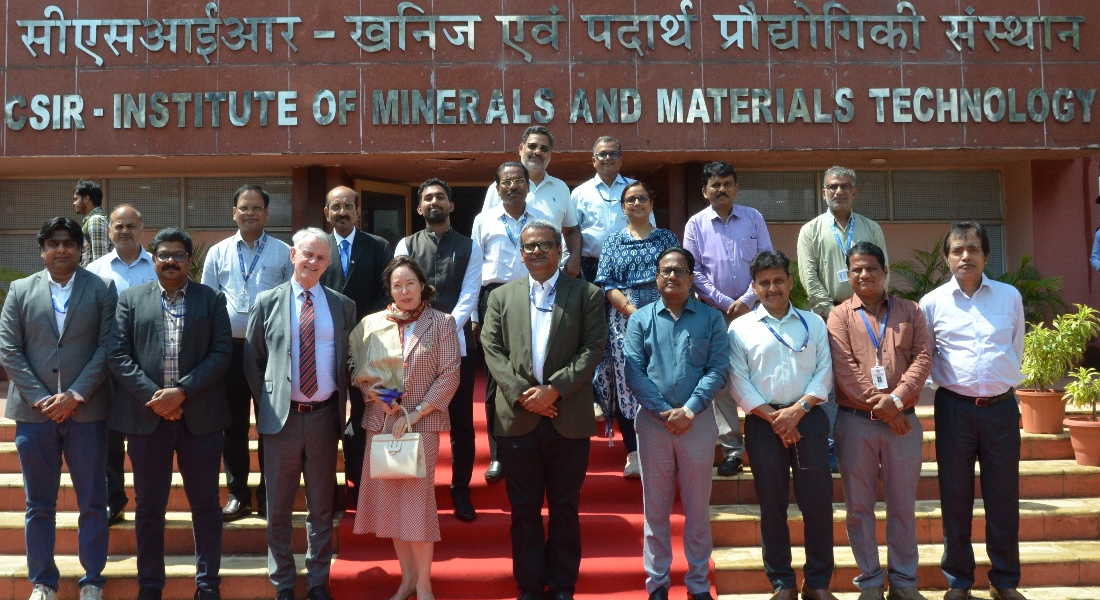
Bhubaneswar: Canadian High Commissioner to India Chris Cooter visited the CSIR-Institute of Minerals and Materials Technology (CSIR-IMMT) in Bhubaneswar to explore avenues for bilateral scientific and technological cooperation, with a particular focus on critical minerals, sustainable resource processing, and advanced metallurgical technologies.
The Canadian delegation included Karen Joan Blumenschein, spouse of the High Commissioner; Arjun Kumar Dutta, Trade Commissioner from the High Commission of Canada; and Rohit Shukla, Political, Economic, and Public Affairs Officer. They were received by CSIR-IMMT Director Dr. Ramanuj Narayan, along with senior scientists and researchers from the institute, according to an official statement.
During the interaction, Dr. Narayan outlined the institute’s expanding international engagement, highlighting the Joint Declaration of Intent signed with the University of Saskatchewan for collaborative research and academic exchange. Dr. Kali Sanjay, Head of the Centre of Excellence on Critical Minerals established at CSIR-IMMT by the Ministry of Mines, presented the centre’s ongoing work in research, technology development, and human resource capacity building in the critical minerals domain.
The visit comes at a time when India and Canada are increasingly emerging as strategic partners in the critical minerals sector, driven by surging global demand for minerals essential to clean energy technologies, electric mobility, advanced manufacturing, and strategic industries.
Canada brings to the partnership significant mineral reserves and advanced mining expertise, while India contributes growing capabilities in mineral processing, downstream technologies, and manufacturing. Deeper bilateral collaboration is expected to support resilient and diversified critical mineral supply chains, foster technological innovation, and contribute to the global energy transition.
As part of the visit, the Canadian delegation toured several advanced research facilities at CSIR-IMMT, including the Platinum Group Elements pilot plant, a recycling pilot plant, a seabed minerals pilot plant, and a molten salt electrolysis pilot facility. Discussions during the visit covered potential joint research programmes, capacity building initiatives, technical training, and technology transfer opportunities.
The delegation concluded their visit with a tree plantation drive on the CSIR-IMMT campus, reflecting both countries’ shared commitment to sustainable development and long-term scientific partnership.
Bhubaneswar: The Odisha government has notified the Odisha City Gas Distribution (CGD) Policy, 2026 to accelerate the expansion of piped natural gas (PNG) and compressed natural gas (CNG) infrastructure across the state.
Issued by the Housing and Urban Development Department, the policy aims to promote natural gas as a cleaner and environment-friendly fuel for domestic, commercial, industrial and transport sectors in line with India’s clean energy transition goals.
According to the policy framework, five authorised CGD entities will cover all 30 districts of Odisha. The state plans to facilitate nearly nine lakh domestic PNG connections and establish 271 CNG stations under a committed investment programme estimated at around ₹5,100 crore.
The Housing and Urban Development Department has been designated as the nodal agency for implementation. A State-Level Apex Committee headed by the Chief Secretary and district-level monitoring committees under Collectors will oversee project coordination, approvals and implementation.
The policy introduces a range of measures to support faster rollout of infrastructure, including single-window clearances, standardised permission charges, GIS-based underground utility mapping and priority land allotment for CNG stations and City Gate Stations.
It also mandates the inclusion of PNG pipeline provisions in building plans and urban master plans to support long-term urban infrastructure planning.
To encourage rapid expansion of the network, the state government has waived pipeline laying permission and supervision charges until March 31, 2027.
The policy further emphasises safety standards, emergency response systems and uninterrupted supply of PNG and CNG services. It also promotes compressed biogas (CBG) initiatives in collaboration with urban local bodies.
Officials said the policy is expected to strengthen Odisha’s clean energy ecosystem, improve urban infrastructure, reduce pollution and generate employment and investment opportunities across the state.
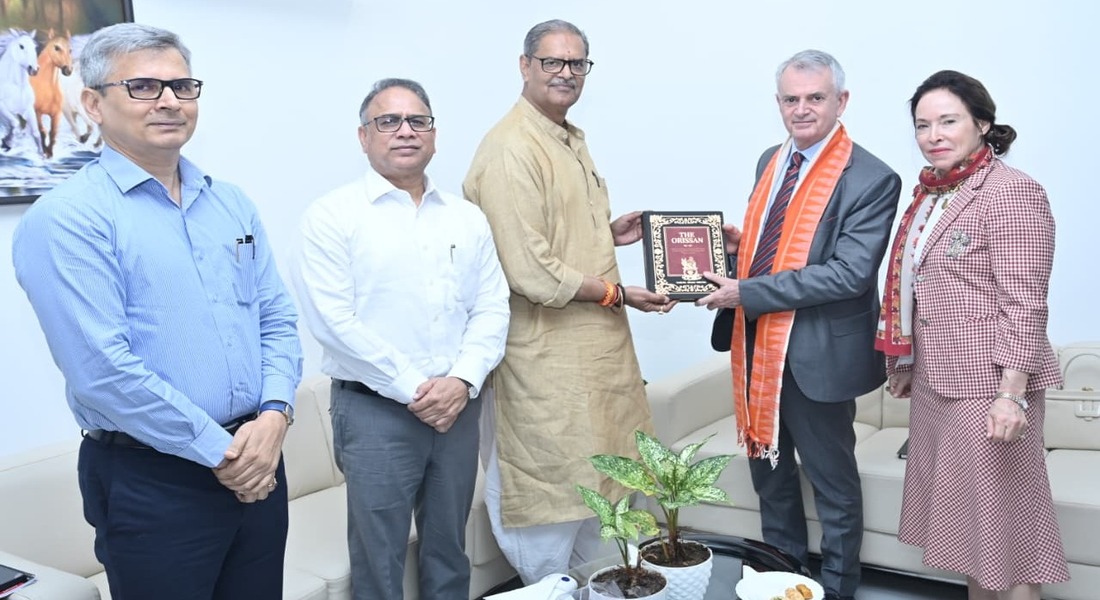
Bhubaneswar: Deputy Chief Minister Kanak Vardhan Singh Deo on Thursday held discussions with Canadian High Commissioner to India Christopher Cooter on strengthening bilateral cooperation in sectors such as trade, mining, clean energy and technology partnerships in Odisha.
The meeting took place at Lok Seva Bhawan in Bhubaneswar and was attended by senior officials including Additional Chief Secretary (Energy) Vishal Kumar Dev and Principal Secretary of Forest, Environment & Climate Change as well as OPTCL CMD Bhaskar Jyoti Sarma.
During the interaction, Singh Deo highlighted Odisha’s strategic importance in India’s mineral economy, stating that the state holds nearly 92 per cent of the country’s chromite reserves and possesses significant rare earth mineral deposits along its coastline.
Had a pleasant courtesy meeting with Mr. Christopher Cooter, High Commissioner of Canada to India. Our exchange of greetings and constructive dialogue reaffirmed the importance of nurturing strong, enduring partnerships that transcend borders and strengthen Odisha’s global… pic.twitter.com/9vVtEnFNcU
— Kanak Vardhan Singh Deo (Modiji Ka Parivar) (@KVSinghDeo1) May 7, 2026
The discussions focused on enhancing bilateral trade, agri-export opportunities, technology collaboration and foreign direct investment in sectors such as mining and value-added industries. The Canadian delegation also expressed interest in investment prospects in Odisha’s automobile sector.
The Deputy Chief Minister briefed the delegation on Odisha’s industrial growth, agricultural landscape and cultural heritage, while emphasising the state’s efforts to balance economic expansion with sustainable development.
“Odisha welcomes global partnerships that bring technology, investment and market access while ensuring sustainable and inclusive growth,” Singh Deo said during the meeting.
The discussion also touched upon Odisha’s growing role in renewable energy and green technology. The Deputy Chief Minister noted that two of India’s proposed Green Hydrogen Hubs will be established in Odisha at Paradip and Gopalpur, positioning the state as a key player in India’s clean energy transition.
According to the government release, Canada has shown interest in partnering on projects related to clean energy and industrial cooperation.
The meeting concluded with both sides agreeing to continue institutional dialogue and explore identified areas of cooperation further.
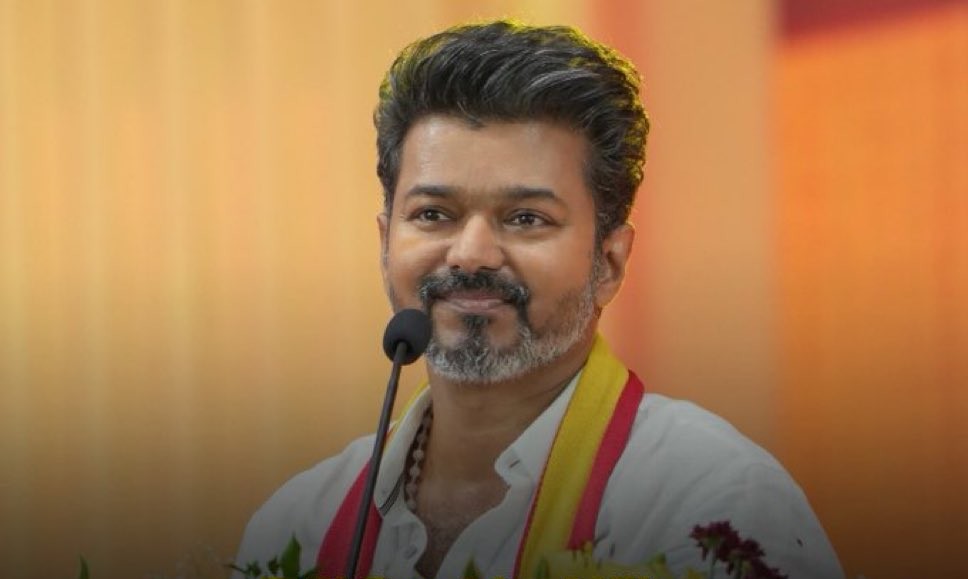
New Delhi: Tamil Nadu Governor Rajendra Arlekar on Thursday turned down the government formation bid of Tamilaga Vettri Kazhagam (TVK) President C. Joseph Vijay, stating that the party had failed to establish the requisite majority support in the state Legislative Assembly.
According to an official press release from Raj Bhavan, the governor summoned Vijay to Lok Bhavan in Chennai on Thursday and conveyed that the numerical strength required to form a government in the Tamil Nadu Assembly had not been demonstrated by the TVK-led alliance.
The TVK alliance, which received support from the Congress party, commands 113 seats in the Assembly – five short of the 118-seat majority mark required to form a government. The party had also reached out to the Communist Party of India and the Viduthalai Chiruthaigal Katchi to join the alliance, but both parties have yet to announce a decision, according to reports.
Despite the shortfall, Vijay urged the governor to allow him to form the government, arguing in a letter that the alliance would be in a position to prove its majority on the floor of the House within a fortnight. The TVK chief also cited precedent, pointing out that the single largest party has previously been invited to form the government even without a confirmed majority, and requested Arlekar to reconsider his position on those grounds.
Vijay had first called on the governor on Wednesday evening, during which the governor expressed reservations about the party’s arithmetic. On Thursday, Vijay returned to press his case, but the governor remained unconvinced.
During the meeting, the governor questioned whether Vijay’s claim to the majority was based on the assumption of potential future support from smaller parties, and raised concerns about the stability of any government formed on such a basis. He asked Vijay to clearly demonstrate how he intended to prove a majority on the floor of the House, and sought written letters of support from each of the parties he had indicated were backing his alliance.
The governor’s refusal leaves the political situation in Tamil Nadu unresolved, with the TVK-led alliance now under pressure to either secure additional support or explore other constitutional options to stake a fresh and stronger claim to power.
New Delhi: A detailed analysis of self-sworn affidavits filed by all 126 winning candidates in the 2026 Assam Assembly Elections, conducted by the Association for Democratic Reforms (ADR) and Assam Election Watch, reveals a mixed picture – a modest decline in the proportion of legislators with criminal backgrounds, but a significant and accelerating rise in personal wealth among elected representatives.
Criminal Cases: A Decline, But Concern Remains
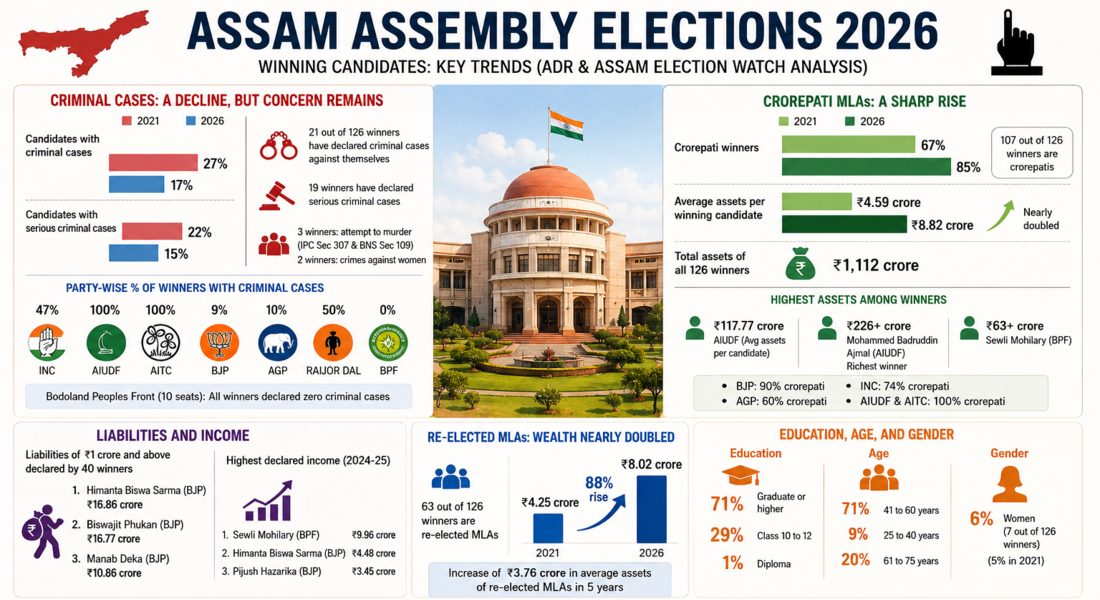
The proportion of winning candidates with declared criminal cases has fallen from 27% in 2021 to 17% in 2026, with 21 out of 126 winners having declared cases against themselves. Similarly, those with serious criminal cases dropped from 22% to 15%, with 19 winners falling in this category. While the trend is encouraging, the persistence of candidates with grave charges remains a matter of concern. Three winning candidates have declared cases related to attempt to murder under IPC Section 307 and BNS Section 109, while two have declared cases related to crimes against women, the ADR said in a press release.
A party-wise breakdown reveals stark disparities. The Indian National Congress recorded the highest proportion of winners with criminal cases at 47%, with nine out of 19 winning candidates carrying such declarations. Both winning candidates from the AIUDF and the sole winner from the AITC declared criminal cases, representing a 100% rate for each party.
The BJP, despite being the dominant force with 82 seats, recorded a comparatively lower rate of nine percent, with seven winners declaring criminal cases. The Asom Gana Parishad recorded a 10% rate, while Raijor Dal stood at 50%. Notably, the Bodoland Peoples Front, which won 10 seats, emerged with a clean slate – all its winning candidates declared zero criminal cases.
Crorepati MLAs: A Sharp Rise The proportion of crorepati winners has jumped significantly, rising from 67% in 2021 to 85% in 2026, with 107 out of 126 winning candidates declaring assets exceeding one crore rupees. The average assets per winning candidate have nearly doubled, climbing from Rs 4.59 crore in 2021 to Rs 8.82 crore in 2026. The combined declared assets of all 126 winners stand at Rs 1,112 crore.
Among parties, the AIUDF’s two winners declared the highest average assets at Rs 117.77 crore per candidate, driven significantly by party chief Mohammed Badruddin Ajmal, whose total declared assets amount to over Rs 226 crore, making him the wealthiest among all winning candidates. Sewli Mohilary of the Bodoland Peoples Front follows with assets exceeding Rs 63 crore, while Chief Minister Himanta Biswa Sarma of the BJP declared assets of over Rs 35 crore.
Both Raijor Dal winners are crorepatis, as are all winning candidates from the AIUDF and AITC. The BJP recorded a 90% crorepati rate among its winners, while the INC stood at 74% and the Asom Gana Parishad at 60%.
Liabilities and Income
Forty winning candidates declared liabilities of one crore and above. Chief Minister Himanta Biswa Sarma tops the liabilities list with declared liabilities of over Rs 16.86 crore against total assets of Rs 35.16 crore. He is followed by BJP’s Biswajit Phukan with liabilities of Rs 16.77 crore and Manab Deka with liabilities of Rs 10.86 crore.
On declared income, Sewli Mohilary of the Bodoland Peoples Front recorded the highest income at over Rs 9.96 crore for 2024-25, followed by Himanta Biswa Sarma at Rs 4.48 crore and BJP’s Pijush Hazarika at Rs 3.45 crore.
Re-Elected MLAs: Wealth Nearly Doubled
Of the 126 winners, 63 are re-elected MLAs. Their average assets have grown from Rs 4.25 crore in 2021 to Rs 8.02 crore in 2026 – an increase of Rs 3.76 crore, representing an 88% rise in five years. This sharp appreciation in declared wealth among sitting legislators is likely to draw further scrutiny from electoral watchdogs and civil society organisations.
Education, Age, and Gender
On education, 71% of winning candidates hold graduate or higher qualifications, while 29% have declared educational attainment between Class 10 and Class 12. One winner holds a diploma.
The majority of winners, 71%, fall in the 41 to 60 age bracket, while nine percent are between 25 and 40 years old, and 20% are between 61 and 75 years of age. On gender representation, women account for just seven of the 126 winning candidates, or six percent – a marginal improvement from five percent, or six winners, in 2021. The figure underscores the continued and deep underrepresentation of women in Assam’s legislative assembly.
While the 2026 Assam election results reflect a modest improvement in the criminal profile of elected representatives compared to 2021, the data present a more troubling picture on economic grounds. The near-doubling of average assets, the sharp rise in crorepati legislators, and the significant wealth accumulation among re-elected MLAs raise important questions about the growing economic distance between elected representatives and the constituents they serve.
New Delhi: India on Thursday commemorated the first anniversary of ‘Operation Sindoor’, the landmark tri-service military offensive launched on May 7, 2025, that targeted nine terror infrastructure sites linked to Lashkar-e-Taiba, Jaish-e-Mohammed, and Hizbul Mujahideen across Pakistan-occupied Kashmir and mainland Pakistan.
The massive operation was launched following the barbaric April 22, 2025, terror attack on tourists and civilians in Pahalgam, Jammu and Kashmir.
The operation, which deployed BrahMos missiles and over 100 aircraft, marked the largest aerial engagement by Indian forces since 1971. Military officials stated that more than 100 terrorists were eliminated in the precision strikes. Pakistan’s retaliatory response resulted in 21 civilian and eight military casualties on the Indian side before a ceasefire was brokered on May 10, 2025.
In the aftermath, India suspended the Indus Waters Treaty and bilateral trade, signalling a decisive policy shift in treating cross-border terrorism as an act of war.
On the anniversary, the Indian Air Force released footage of the strikes, drawing widespread attention and tributes across the country. Senior government leaders used the occasion to honour the armed forces and reaffirm India’s zero-tolerance stance on terrorism.
In a post on X, President Droupadi Murmu described Operation Sindoor as a defining testament to India’s unwavering resolve against terrorism, saying the operation reflected the unmatched courage and determination of the armed forces.
She added that the brutal attack at Pahalgam had been met with befitting and exemplary precision, and that those who threatened India must know the nation stands vigilant, united, and prepared to respond with strength.
Prime Minister Narendra Modi too paid tribute to the forces, saying they had displayed unparalleled courage, precision, and resolve during the operation and had given a fitting response to those who attacked innocent Indians at Pahalgam. He said the entire nation salutes their valour, and reaffirmed that India remains as steadfast as ever in its resolve to defeat terrorism and dismantle its enabling ecosystem.
He also highlighted that the operation underscored growing jointness among the services and demonstrated the strength that India’s pursuit of defence self-reliance has brought to national security.
Union Home Minister Amit Shah called Operation Sindoor an epochal mission that would always remind India’s enemies of the striking power of its armed forces. He said history would remember the day as one where precise military power, meticulous intelligence, and resolute political will came together to destroy every address of terror that had dared to threaten Indian citizens. The minister warned that no matter where adversaries hide, they remain within India’s sight.
Defence Minister Rajnath Singh saluted the valour and sacrifices of the armed forces, describing their conduct during the operation as reflecting unmatched precision, seamless jointness, and deep synergy across services. He called Operation Sindoor a powerful symbol of national resolve and preparedness, and said it also stood as a testament to India’s steady advances in achieving defence self-reliance.
From agriculture and women-led enterprises to education and sustainable livelihoods, this social organisation has built a community-driven development model across rural Bihar
In the villages of northern Bihar, where landlessness once defined survival and opportunity often seemed out of reach, a quiet but significant transformation has been taking shape over the past three decades. At the centre of this journey is Samagra Sikchhan Evam Vikas Sansthan (SSEVS), an organisation that grew not out of institutional planning, but from grassroots conviction and lived experience.
For Siddharth Kumar, Secretary of SSEVS, the organisation’s story is deeply intertwined with the social and political churn of the Emergency years. Young people from Champaran, he recalls, were drawn into collective action during that period, standing alongside communities whose voices had been suppressed. When the political environment shifted, a crucial question emerged—what next? While some returned to their studies or entered formal careers, a small group chose to stay back and continue working with the communities that had shaped their political awakening.
Influenced by the ideals of Jayaprakash Narayan and the vision of a more equitable rural society, this group began doing social work focusing on the most fundamental issues—land. Their approach was rooted in non-violence and collective mobilisation, building local leadership rather than leading from the front. The work was slow, often stretching over years, but it yielded results that would shape future direction for the group that wanted to do something for the poor and deprived communities in the region.
One of the earliest breakthroughs came when dozens of Musahar families, among the most marginalised in Bihar, were able to secure land after years of sustained effort. For Siddharth Kumar, this was not just an economic shift but a psychological one. “Land gave people a sense of belonging,” he reflects. “It changed how they saw themselves.”
On March 30, 1990, SSEVS was formally set up and began its journey as an organisation committed to addressing issues faced by marginalised sections of the society. But over time, it became clear that access to land alone could not ensure long-term stability. Without knowledge, skills, and access to markets, families risked slipping back into vulnerability.
This realisation marked the beginning of SSEVS’s transition into a broader development organisation. By the late 2000s, the focus expanded to agriculture, where farmers were introduced to improved practices and provided with seeds and technical support. Education soon followed as a parallel priority, with learning centres established to address widespread illiteracy and empower communities to access government schemes and opportunities.
Today, SSEVS operates across more than 1,000 villages in northern Bihar, working in districts such as West Champaran, East Champaran, Sitamarhi, Muzaffarpur and Madhubani. Its work now spans climate-resilient agriculture, livestock-based livelihoods, education, women’s empowerment, and community institution building.
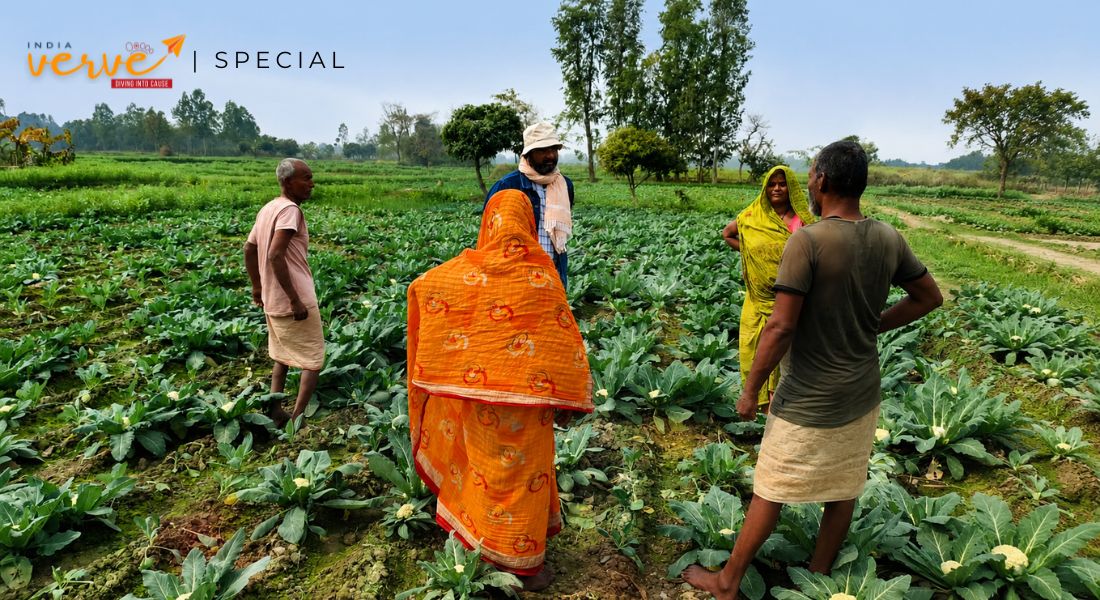
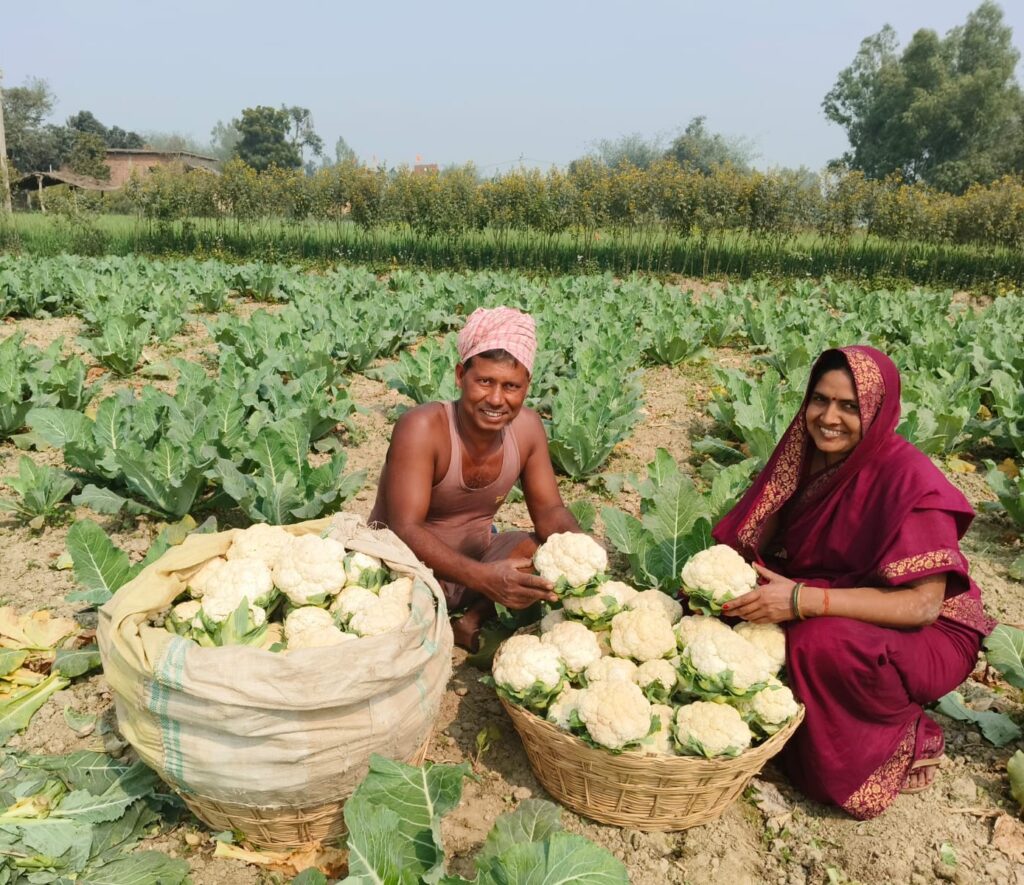
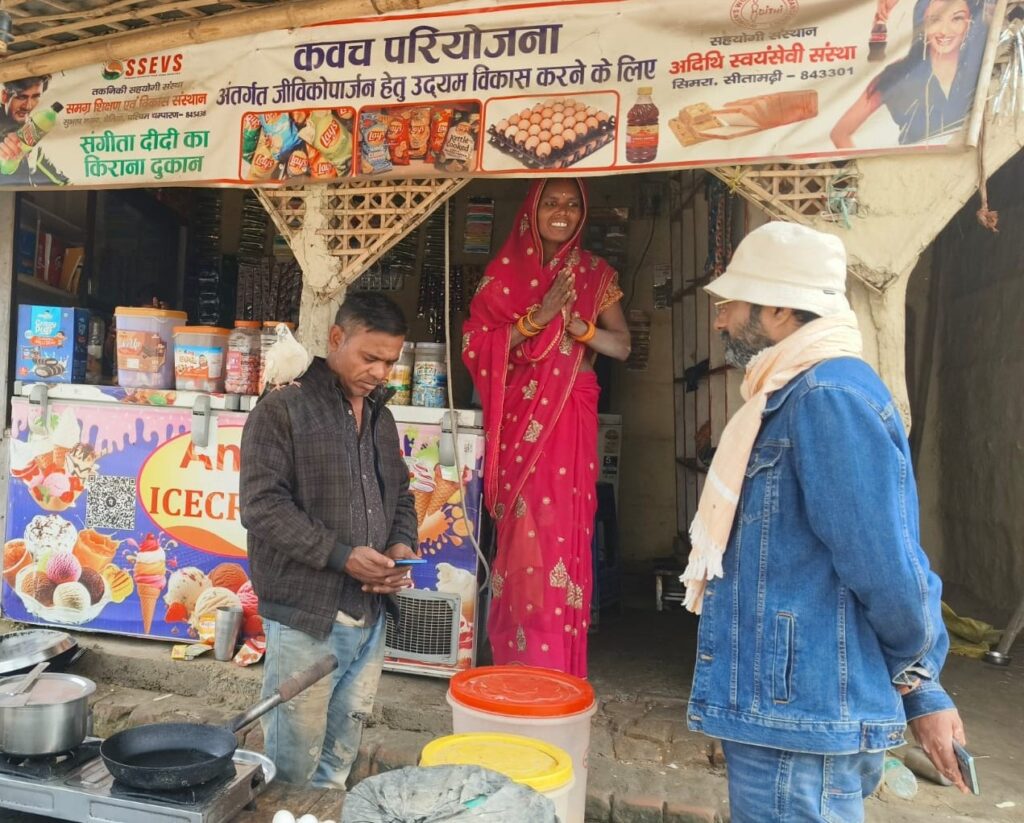
Cauliflower farming by a family in Sitamadhi using SSEVS guidanceSiddharth Kumar interacting with a shop owner supported under livelihood project
The scale of its impact is visible in the numbers—but more importantly, in the lives behind those numbers. In agriculture alone, over 6,600 farmers are now engaged in vegetable cultivation, while more than 3,000 kitchen gardens are helping families meet their nutritional needs. Nearly 4,300 landless farmers have been brought into farming systems, creating income opportunities where none existed earlier. Collectively, these efforts have generated income exceeding ₹4.8 crore, reflecting not just economic gains but a shift toward self-reliance.
A key innovation has been the introduction of multi-layered vegetable cultivation, which allows farmers to maximise productivity from small plots of land. “When farmers see that their income can double or even triple from the same land, it changes their outlook completely,” Siddharth Kumar notes. This is complemented by initiatives, such as the N-Balance project, where farmers receive guidance on the optimal use of fertilisers—reducing input costs while also contributing to environmental sustainability.
Livestock has emerged as another critical pillar of SSEVS’s work. What was once a subsistence activity has evolved into a structured enterprise, particularly for women. More than 11,000 women are now engaged in livestock rearing, collectively managing over 44,000 animals. The sector has generated incomes exceeding ₹6.2 crore, while trained community-level animal health workers are creating new livelihood opportunities within villages.
However, according to Siddharth Kumar, the most meaningful transformation lies in the shift in women’s roles within households and communities. Through more than 500 self-help groups involving over 10,000 women, savings and internal lending have become tools for financial independence and collective decision-making. Women who were once confined to unpaid labour are now managing enterprises, accessing credit, and participating in community leadership.
The organisation’s work with children and adolescents reflects a similar emphasis on long-term change. Bridge education centres have helped hundreds of children transition from labour into formal schooling, while adolescent programmes are enabling girls to continue their education and build confidence. Increasingly, SSEVS is also promoting what it calls a “survivor leadership” model, where individuals who have experienced exploitation or marginalisation take on leadership roles within their communities.
What ties these diverse initiatives together is a consistent philosophy—communities must lead their own development. SSEVS has deliberately positioned itself as a facilitator rather than a driver, focusing on building local institutions and leadership capacities. This approach has led to the emergence of farmer collectives, women’s groups, and survivor networks that continue to function independently, ensuring sustainability beyond project cycles.
Siddharth Kumar believes that this model of community ownership is what sets SSEVS apart. “When people take ownership, change becomes permanent,” he says. “Our role is to support, not to replace that leadership,” he adds, while thanking the supporters and funders of their projects which made those changes possible.
Looking ahead, SSEVS is focusing on scaling its impact through farmer producer organisations that can strengthen market access and reduce dependence on intermediaries. There is also a renewed emphasis on youth, particularly in creating local skill development opportunities that reduce migration while improving livelihoods. Climate-resilient agriculture, including multi-crop systems and sustainable aquaculture, is another key priority as the organisation responds to changing environmental conditions.
At the same time, there is an aspiration to extend this model beyond Bihar, particularly to regions with similar socio-economic challenges. For Siddharth Kumar, the goal is not expansion for its own sake, but the replication of a model that has proven effective in breaking cycles of poverty through community-led action.
More than three decades after its inception, SSEVS stands as a testament to what sustained grassroots engagement can achieve. Its journey—from access to land struggles to a comprehensive development model—reflects a deeper truth about change in rural India: that it is most enduring when it is shaped by the people themselves.
As Siddharth Kumar reflects on the organisation’s path, one idea remains central—development is not about delivering solutions, but about enabling communities to create their own. And in the villages of Bihar, that process is steadily turning aspiration into reality.