
From agriculture and women-led enterprises to education and sustainable livelihoods, this social organisation has built a community-driven development model across rural Bihar
In the villages of northern Bihar, where landlessness once defined survival and opportunity often seemed out of reach, a quiet but significant transformation has been taking shape over the past three decades. At the centre of this journey is Samagra Sikchhan Evam Vikas Sansthan (SSEVS), an organisation that grew not out of institutional planning, but from grassroots conviction and lived experience.
For Siddharth Kumar, Secretary of SSEVS, the organisation’s story is deeply intertwined with the social and political churn of the Emergency years. Young people from Champaran, he recalls, were drawn into collective action during that period, standing alongside communities whose voices had been suppressed. When the political environment shifted, a crucial question emerged—what next? While some returned to their studies or entered formal careers, a small group chose to stay back and continue working with the communities that had shaped their political awakening.
Influenced by the ideals of Jayaprakash Narayan and the vision of a more equitable rural society, this group began doing social work focusing on the most fundamental issues—land. Their approach was rooted in non-violence and collective mobilisation, building local leadership rather than leading from the front. The work was slow, often stretching over years, but it yielded results that would shape future direction for the group that wanted to do something for the poor and deprived communities in the region.
One of the earliest breakthroughs came when dozens of Musahar families, among the most marginalised in Bihar, were able to secure land after years of sustained effort. For Siddharth Kumar, this was not just an economic shift but a psychological one. “Land gave people a sense of belonging,” he reflects. “It changed how they saw themselves.”
On March 30, 1990, SSEVS was formally set up and began its journey as an organisation committed to addressing issues faced by marginalised sections of the society. But over time, it became clear that access to land alone could not ensure long-term stability. Without knowledge, skills, and access to markets, families risked slipping back into vulnerability.
This realisation marked the beginning of SSEVS’s transition into a broader development organisation. By the late 2000s, the focus expanded to agriculture, where farmers were introduced to improved practices and provided with seeds and technical support. Education soon followed as a parallel priority, with learning centres established to address widespread illiteracy and empower communities to access government schemes and opportunities.
Today, SSEVS operates across more than 1,000 villages in northern Bihar, working in districts such as West Champaran, East Champaran, Sitamarhi, Muzaffarpur and Madhubani. Its work now spans climate-resilient agriculture, livestock-based livelihoods, education, women’s empowerment, and community institution building.
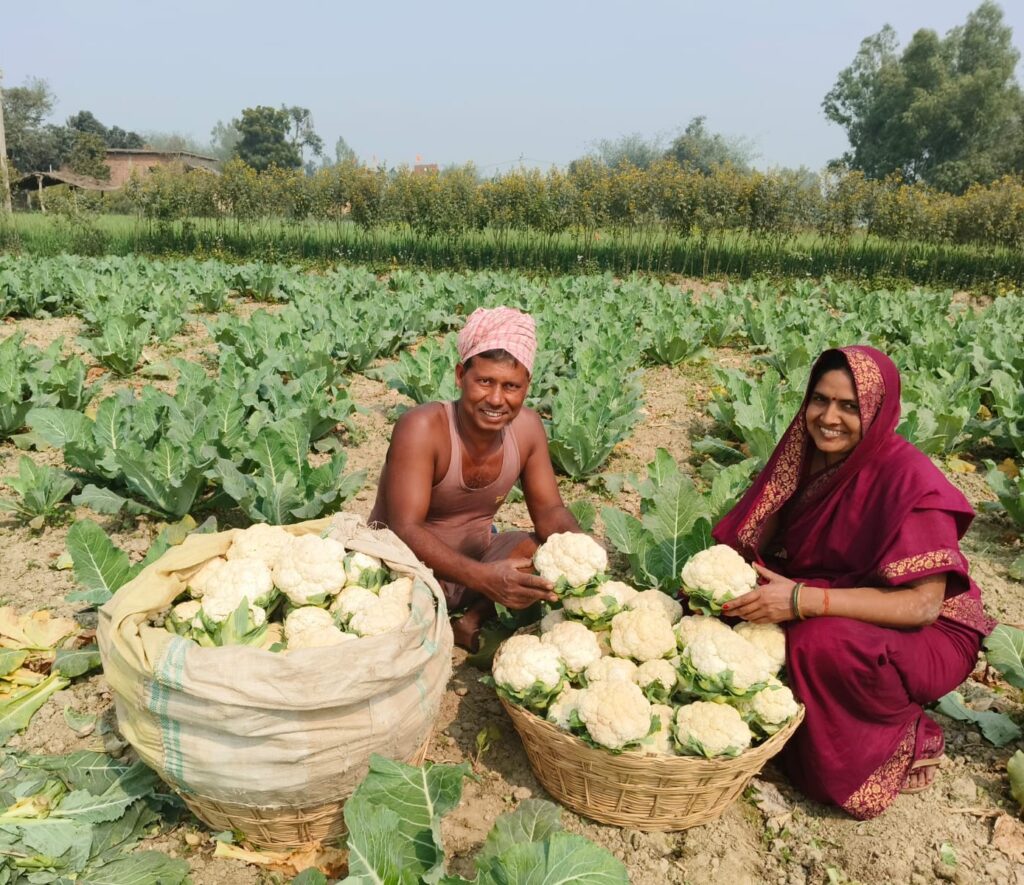
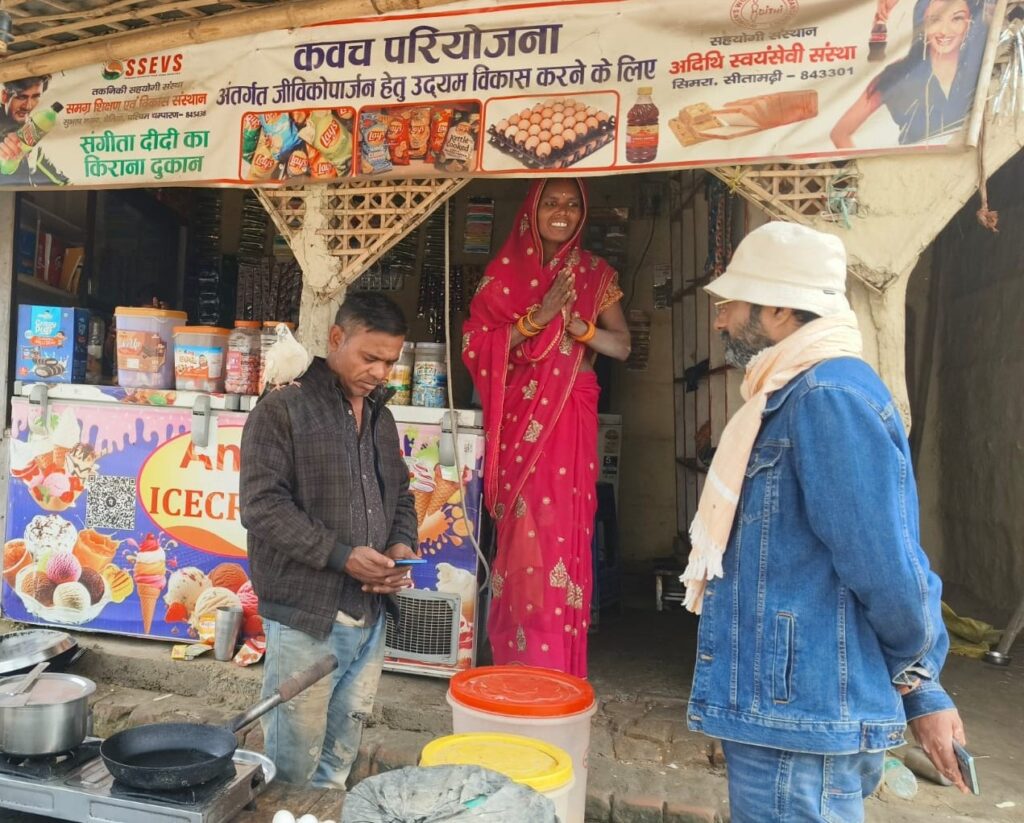
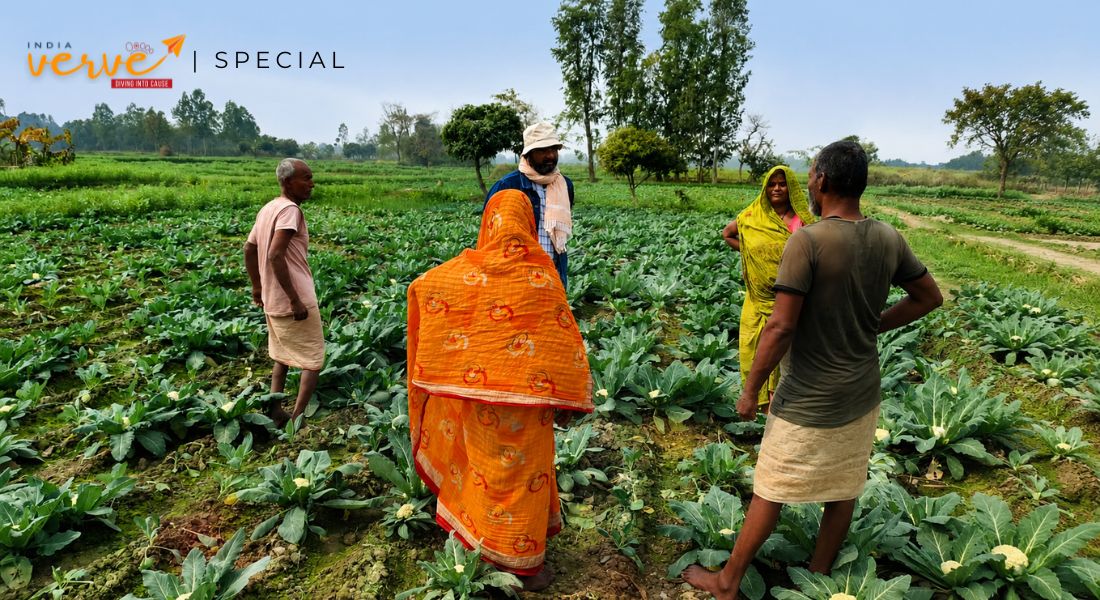
The scale of its impact is visible in the numbers—but more importantly, in the lives behind those numbers. In agriculture alone, over 6,600 farmers are now engaged in vegetable cultivation, while more than 3,000 kitchen gardens are helping families meet their nutritional needs. Nearly 4,300 landless farmers have been brought into farming systems, creating income opportunities where none existed earlier. Collectively, these efforts have generated income exceeding ₹4.8 crore, reflecting not just economic gains but a shift toward self-reliance.
A key innovation has been the introduction of multi-layered vegetable cultivation, which allows farmers to maximise productivity from small plots of land. “When farmers see that their income can double or even triple from the same land, it changes their outlook completely,” Siddharth Kumar notes. This is complemented by initiatives, such as the N-Balance project, where farmers receive guidance on the optimal use of fertilisers—reducing input costs while also contributing to environmental sustainability.
Livestock has emerged as another critical pillar of SSEVS’s work. What was once a subsistence activity has evolved into a structured enterprise, particularly for women. More than 11,000 women are now engaged in livestock rearing, collectively managing over 44,000 animals. The sector has generated incomes exceeding ₹6.2 crore, while trained community-level animal health workers are creating new livelihood opportunities within villages.
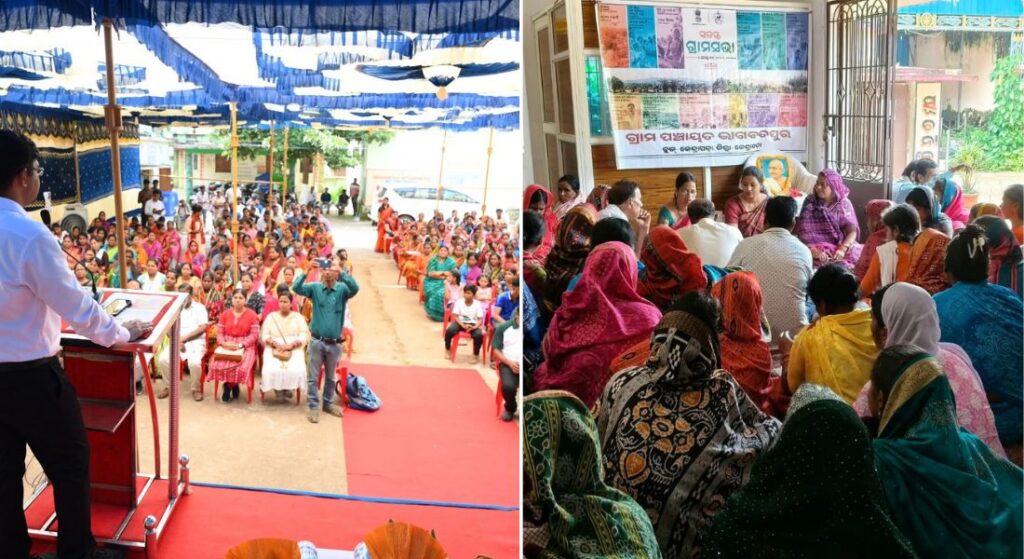
However, according to Siddharth Kumar, the most meaningful transformation lies in the shift in women’s roles within households and communities. Through more than 500 self-help groups involving over 10,000 women, savings and internal lending have become tools for financial independence and collective decision-making. Women who were once confined to unpaid labour are now managing enterprises, accessing credit, and participating in community leadership.
The organisation’s work with children and adolescents reflects a similar emphasis on long-term change. Bridge education centres have helped hundreds of children transition from labour into formal schooling, while adolescent programmes are enabling girls to continue their education and build confidence. Increasingly, SSEVS is also promoting what it calls a “survivor leadership” model, where individuals who have experienced exploitation or marginalisation take on leadership roles within their communities.
What ties these diverse initiatives together is a consistent philosophy—communities must lead their own development. SSEVS has deliberately positioned itself as a facilitator rather than a driver, focusing on building local institutions and leadership capacities. This approach has led to the emergence of farmer collectives, women’s groups, and survivor networks that continue to function independently, ensuring sustainability beyond project cycles.
Siddharth Kumar believes that this model of community ownership is what sets SSEVS apart. “When people take ownership, change becomes permanent,” he says. “Our role is to support, not to replace that leadership,” he adds, while thanking the supporters and funders of their projects which made those changes possible.
Looking ahead, SSEVS is focusing on scaling its impact through farmer producer organisations that can strengthen market access and reduce dependence on intermediaries. There is also a renewed emphasis on youth, particularly in creating local skill development opportunities that reduce migration while improving livelihoods. Climate-resilient agriculture, including multi-crop systems and sustainable aquaculture, is another key priority as the organisation responds to changing environmental conditions.
At the same time, there is an aspiration to extend this model beyond Bihar, particularly to regions with similar socio-economic challenges. For Siddharth Kumar, the goal is not expansion for its own sake, but the replication of a model that has proven effective in breaking cycles of poverty through community-led action.
More than three decades after its inception, SSEVS stands as a testament to what sustained grassroots engagement can achieve. Its journey—from access to land struggles to a comprehensive development model—reflects a deeper truth about change in rural India: that it is most enduring when it is shaped by the people themselves.
As Siddharth Kumar reflects on the organisation’s path, one idea remains central—development is not about delivering solutions, but about enabling communities to create their own. And in the villages of Bihar, that process is steadily turning aspiration into reality.