At IndiaVerve, we go beyond the noise to bring you meaningful stories of change, resilience and progress—from India to the world stage. Our mission is to bring readers credible, wide-ranging coverage across politics, business, sports, culture, society and more.

Komal Kohar clinches bronze at Asian Weightlifting Championships

New Delhi: India’s Komal Kohar won a bronze medal in the women’s 48kg category at the Asian Weightlifting Championships on Monday, lifting a total of 177kg to earn a podium finish for the host nation.

Kohar lifted 78kg in the snatch and followed it up with a 99kg effort in the clean and jerk in Gandhinagar, Gujarat, the latter earning her an additional bronze medal in that discipline, according to reports.

The young Indian stepped up in the absence of Tokyo Olympics silver medalist Mirabai Chanu, who was not part of this non-Olympic class event.

Chinese Taipei dominated the top two positions, with Huang Yi Chen winning gold after lifting a combined 193kg (81kg snatch + 112kg clean and jerk).

Compatriot Fang Wan-Ling claimed silver with a total of 192kg (84kg snatch + 108kg clean and jerk).

The competition also saw the absence of major contenders China, North Korea, and Thailand, though the event remained closely contested throughout.

As the host nation, India will take great encouragement from Kohar’s performance. Filling the shoes of an Olympic silver medalist was never going to be easy, but the young weightlifter rose to the occasion and delivered a result that signals real promise for the future.

Minister Dharmendra Pradhan launches India’s first Integrated CCYS Field Laboratory facility at IIT Bombay

New Delhi: Union Education Minister Dharmendra Pradhan on Monday launched India’s first Integrated Carbon Capture, Utilisation and Storage (CCUS) Field Laboratory Facility at the Indian Institute of Technology Bombay, describing the initiative as a major step towards strengthening the country’s clean energy innovation ecosystem.

The facility has been developed to support research and technological advancement in carbon capture, utilisation, and storage, a sector considered crucial for reducing industrial carbon emissions and supporting India’s long-term climate goals, Pradhan said in a post on X.

The minister extended his congratulations to UrjanovaC, a startup incubated at the Society for Innovation and Entrepreneurship at IIT Bombay, for transforming advanced scientific research into scalable technological capability for the country.

Pradhan said the launch reflects India’s growing capabilities in emerging technologies driven by innovation, scientific research, and long-term strategic vision. He emphasised that indigenous technological development would play a key role in helping India build sustainable industrial and energy systems in the coming decades.

Referring to India’s Panchamrit commitments announced by Prime Minister Narendra Modi and the national target of achieving Net Zero emissions by 2070, the minister noted that CCUS technology would become an important component of the country’s clean energy transition.

He also linked the development to the broader vision of the National Education Policy 2020, stating that the policy framework encourages institutions to move beyond knowledge generation and contribute towards innovation, enterprise, and research-driven national capacity building.

According to Pradhan, India possesses the scientific talent, research ecosystem, and industrial scale required to emerge as a global leader in sustainable technologies. He stressed the need for deeper collaboration between academic institutions, industries, policymakers, and society to convert research potential into large-scale national outcomes.

“The launch of the CCUS Field Laboratory Facility is a concrete step forward in that direction,” he noted.

VB–G RAM G Act to replace MGNREGA from July 1

New Delhi: In a major policy shift aimed at strengthening rural employment and village infrastructure, the Central government on Monday officially notified the implementation of the ‘Viksit Bharat – Guarantee for Employment and Livelihood Mission (Rural)’ or VB–GRAM G Act, which will come into force across India from July 1, 2026.

The new legislation will replace the existing rural employment framework with an expanded structure focused on livelihood generation, infrastructure development, and long-term rural sustainability. The government said the scheme is expected to benefit rural labourers, economically weaker families, women, self-help groups, and farmers across the country.

Announcing the rollout in Bhopal, Minister of Agriculture and Farmers Welfare Shivraj Singh Chouhan said the new programme marks a significant milestone in India’s rural development journey. It is aimed at improving income security while creating large-scale employment opportunities in villages, he noted.

One of the biggest changes under the new Act is the increase in guaranteed employment from 100 days to 125 days annually for rural workers seeking employment, Chouhan said. The revised provision will become effective from July 1, according to an official statement.

The Union minister clarified that until the new framework becomes operational, all provisions under the Mahatma Gandhi National Rural Employment Guarantee Act (MGNREGA) will continue to remain in force. He added that all pending projects under the current system would be completed before the transition to the new scheme.

According to the Centre, consultations with state governments are currently underway to finalise the operational rules of the Act. States have been given a preparation window of up to six months to complete implementation arrangements. However, the government stated that workers would continue receiving employment opportunities during the transition period without disruption.

Chouhan further said that under the leadership of Prime Minister Narendra Modi, the Union Budget has reportedly allocated over Rs 95,000 crore for employment generation through the scheme, while combined allocations by the Centre and states are expected to exceed Rs 1.51 lakh crore.

The government said wage payments under the scheme would be made directly into bank or post office accounts through Direct Benefit Transfer. Authorities aim to process wage payments within three days, while ensuring all dues are cleared within a maximum period of 15 days.

Chouhan further stated that workers would be eligible for compensation if payments are delayed beyond the prescribed timeline. In addition, unemployment allowance provisions would remain applicable if employment is not provided after demand is raised.

The scheme is also expected to significantly expand rural infrastructure projects. Proposed works include water conservation initiatives, rural roads, bridges, culverts, school buildings, Anganwadi centres, and infrastructure linked to livelihood activities.

The union minister further said infrastructure support for Self-Help Groups and Farmer Producer Organisations, including work sheds and operational facilities, may also be developed under the programme. Disaster mitigation projects, such as retaining walls in flood-prone or riverside villages, are also expected to be included.

Centre assures fuel stability amid West Asia conflict

New Delhi: Defence Minister Rajnath Singh on Monday chaired the fifth meeting of the Informal Group of Ministers (IGoM) on West Asia in New Delhi, where the Centre reviewed the impact of the ongoing regional conflict and outlined measures aimed at protecting India’s economy, fuel security, and supply chains from global disruptions.

The high-level meeting focused on India’s preparedness amid prolonged geopolitical tensions in West Asia, with the government asserting that the country currently faces no shortage of petroleum products or essential commodities despite sharp volatility in international energy markets.

According to officials briefed during the meeting, India presently maintains crude oil reserves sufficient for around 60 days, natural gas reserves for another 60 days, and LPG stock for nearly 45 days. The government also highlighted that India’s foreign exchange reserves remain strong at approximately USD 703 billion, according to an official statement.

The Centre noted that India continues to meet domestic fuel demand in full while also maintaining its position as one of the world’s largest oil refiners and exporters of petroleum products. Officials informed the ministers that Indian petroleum products are currently being exported to more than 150 countries.

However, the government acknowledged that rising international crude oil prices are placing a substantial financial burden on the country. Officials said Indian oil marketing companies have absorbed significant losses in recent months to shield consumers from global price shocks, with daily under-recoveries reportedly nearing Rs 1,000 crore.

Despite global fuel inflation triggered by the conflict, the government maintained that retail petroleum prices in India have remained largely stable over the past several weeks, unlike several other countries that have witnessed sharp increases in fuel costs.

The meeting also reviewed Prime Minister Narendra Modi’s recent appeal urging citizens to adopt fuel conservation measures and reduce unnecessary consumption during the period of international uncertainty.

As part of the proposed nationwide conservation effort, Modi had encouraged citizens to rely more on public transport systems such as metros, adopt carpooling, avoid unnecessary foreign travel, and prioritise domestic tourism. Citizens were also advised to reduce non-essential gold purchases to help conserve foreign exchange reserves.

The Centre additionally highlighted measures aimed at the agriculture sector, including reducing chemical fertiliser consumption, promoting natural farming practices, and encouraging the use of solar-powered irrigation pumps as alternatives to diesel-powered systems.

During the meeting, the defence minister directed ministries and state governments to work in coordination to institutionalise fuel efficiency measures, strengthen public awareness campaigns, and promote responsible consumption practices across sectors.

The government also stressed that there was no reason for public panic or panic-buying of fuel and essential commodities, stating that supply management systems remain stable and adequate stocks are available across the country.

Apart from Rajnath Singh, the meeting was attended by Union ministers J. P. Nadda, Hardeep Singh Puri, Ashwini Vaishnaw, Kiren Rijiju, Kinjarapu Ram Mohan Naidu, Sarbananda Sonowal, and Jitendra Singh.

Following the meeting, Rajnath Singh said the government was continuously monitoring the situation and taking necessary steps to prevent any disruption in the supply of essential commodities across the country.

CM Majhi highlights Somnath-Lingaraj spiritual link at ‘Swabhiman Parva’ in Bhubaneswar

Bhubaneswar: Chief Minister Mohan Charan Majhi on Monday attended the ‘Somnath Swabhiman Parva’ organised at the sacred Lingaraj Temple in Ekamra Kshetra to mark the 75th anniversary of the restoration of the Somnath Temple.

Addressing the gathering, Majhi highlighted the spiritual and cultural connection between Lord Somnath and Lord Lingaraj, describing the two temples as powerful symbols of India’s civilisational heritage and Sanatan culture.

Majhi stated that while Somnath Temple stands as the sentinel of western India, Lingaraj Temple represents the spiritual strength and identity of eastern India. He noted that both temples reflect the rich legacy of ancient Indian architecture, devotion, and cultural continuity.

Recalling the turbulent history of Somnath Temple and its repeated reconstruction over the years, the chief minister said the shrine symbolises the indomitable spirit and self-respect of Indian civilisation. In a series of posts onX, he remarked that despite repeated attacks in history, the spiritual light of Sanatan culture continued to survive.

Majhi also stressed the importance of preserving India’s cultural traditions and strengthening Shaivite religious centres across the country. He said the state government remains committed to reinforcing Odisha’s spiritual and cultural foundations as part of its broader development vision.

The programme was organised at Ekamra Kshetra, one of the most significant Shaivite centres in the country, and witnessed the participation of devotees, spiritual leaders, and cultural enthusiasts.

The event commemorated 75 years of the restoration of the Somnath Temple, which is regarded as one of the most revered pilgrimage sites dedicated to Lord Shiva in India.

Opposition attacks Modi over austerity appeal amid Iran war-linked economic concerns

New Delhi: Opposition parties on Monday sharply criticised Prime Minister Narendra Modi over his appeal to citizens to adopt austerity measures amid rising economic pressure linked to the ongoing Iran conflict and disruptions in the Strait of Hormuz.

The criticism came a day after Modi, speaking at a public event in Hyderabad, urged people to conserve fuel, limit foreign travel, reduce unnecessary consumption and adopt practices such as working from home and using public transport to help the country manage rising global energy costs.

Leader of Opposition in Lok Sabha Rahul Gandhi accused the Prime Minister of shifting responsibility onto citizens instead of addressing policy failures.

“Modi ji demanded sacrifices from the public yesterday — don’t buy gold, don’t go abroad, use less petrol, cut down on fertilizer and cooking oil, take the metro, work from home,” Rahul Gandhi wrote on X. “These are not sermons, but proofs of failure,” he added.

The Congress leader further alleged that the government was attempting to avoid accountability by asking citizens to bear the burden of the economic crisis. “In 12 years, he’s brought the country to such a pass that the public has to be told what to buy, what not to buy, where to go, where not to go. Every time, they shift the responsibility onto the people, so they can escape accountability themselves,” Gandhi said.

The Indian National Congress also demanded a special session of Parliament to discuss the economic situation and the implications of the Prime Minister’s remarks.

Congress general secretary Jairam Ramesh claimed Modi’s statements suggested the economic situation was more serious than what official figures indicated. He warned that austerity measures, including possible fuel price hikes, could be introduced in the coming weeks.

Sagarika Ghose of the All India Trinamool Congress also criticised the government, accusing it of hypocrisy.

Referring to the Prime Minister’s international visits and large-scale election campaigns, she questioned why ordinary citizens were being asked to make sacrifices while political spending continued. “For the people: austerity… Raja mast, janta trast,” she wrote on X.

Samajwadi Party chief Akhilesh Yadav termed the government’s appeal an “admission of failure” in handling both the economy and foreign policy.

“As soon as elections are over, the government suddenly remembered the ‘crisis’. In reality, there is only one crisis for the country and its name is BJP,” Yadav said in a post on X.

The BJP, however, defended the Prime Minister’s remarks, saying the appeal was intended to strengthen India’s economic resilience amid global uncertainty triggered by the West Asia conflict.

Senior BJP leader Amit Malviya said Modi’s message reflected the need for collective responsibility during a period marked by supply chain disruptions, rising inflation and energy insecurity.

India has been facing mounting economic pressure due to the prolonged disruption in the Strait of Hormuz, through which a major share of global crude oil supplies passes. India imports nearly 90 per cent of its crude oil requirements.

The economic concerns also weighed heavily on Indian markets on Monday. The Nifty 50 index fell more than one per cent in early trade, while the Sensex also recorded sharp losses amid fears of prolonged energy disruptions and inflationary pressure.

Odisha DGP Khurania orders tougher policing measures

Bhubaneswar: Director General of Police (DGP) Yogesh Bahadur Khurania has chaired a high-level review meeting in Bhubaneswar and directed police officials across the state to intensify crime control measures, strengthen public-police coordination, and make policing more responsive and people-oriented.

The meeting, held at the DGP Camp Office, focused on the overall law and order situation in Odisha, crime prevention strategies, investigation standards, and steps aimed at improving operational efficiency within the police force.

During the review, the Odisha DGP instructed all district Superintendents of Police and Range IGs/DIGs to adopt result-oriented approaches to curb criminal activities and reinforce public confidence in policing systems.

A major emphasis of the meeting was placed on strengthening field-level preparedness and emergency response capabilities. Khurania directed that all personnel deployed in Emergency Response Vehicles should undergo professional and behavioural training to improve their handling of emergency and sensitive situations. He noted that enhanced training would help personnel respond more efficiently during crises and improve public interaction.

In a significant operational directive, the DGP ordered all police stations in the state to conduct mandatory “briefing parades” every day before 9 am. Officials were instructed to ensure strict implementation and continuous monitoring of the exercise.

According to police officials, the daily briefing sessions will include reviews of local law and order situations, identification of crime-prone zones, monitoring the movement of habitual offenders, and discussions on ongoing investigations. The move is aimed at improving coordination, vigilance, and rapid response at the police station level.

The DGP also called for tougher enforcement measures against criminal networks and repeat offenders. He directed officials to expedite the execution of pending Non-Bailable Warrants and initiate stringent action under the National Security Act against hardened and habitual criminals.

Special emphasis was also laid on anti-narcotics operations, with the DGP asking officers to intensify raids and crackdowns against illegal drug trafficking networks operating in the state.

To improve visible policing, Khurania instructed police units to strengthen beat patrolling across all police station jurisdictions and increase highway patrol operations on national highways. He also directed officers to launch focused drives to prevent misconduct and crime-prone incidents in vulnerable areas.

On the investigation front, the Odisha Police chief stressed close monitoring of serious criminal cases, including murder investigations, by senior officers. He directed officials to ensure the swift arrest of accused persons, professional investigation, and timely legal action to secure convictions.

Police Commissioner Dr S. Dev Datta Singh and Additional Police Commissioner Narasingha Bhol were also present during the meeting.

AIFF, Odisha government renew long-term partnership to strengthen youth football development

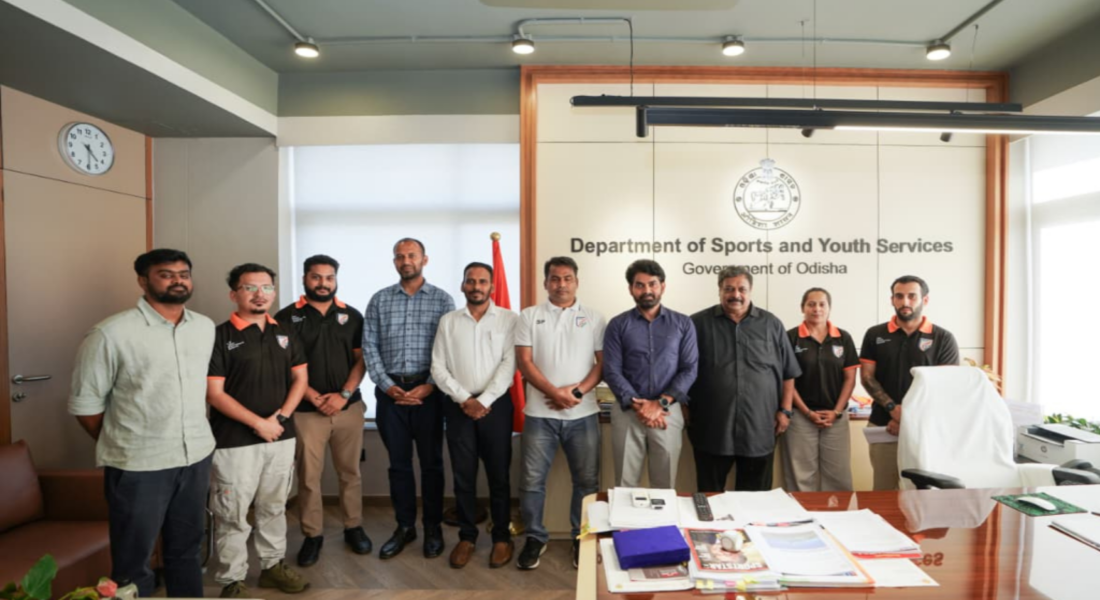
New Delhi: The All India Football Federation (AIFF) and the Department of Sports and Youth Services (DSYS), government of Odisha, have renewed their partnership to strengthen elite youth football development in the country, extending the collaboration for another five years through a fresh Memorandum of Understanding (MoU).

The agreement was signed in New Delhi by DSYS Director Dr Vijay Yeddula and AIFF Deputy Secretary General M Satyanarayan in the presence of AIFF Technical Director Syed Sabir Pasha.

The renewed pact builds upon the football development programme launched under the earlier MoU signed in November 2023, according to an AIFF release.

Officials associated with the initiative said the partnership has already started producing encouraging results in a relatively short period, particularly through the AIFF-FIFA Talent Academy.

According to AIFF officials, several players trained under the programme have progressed to top football academies and national team setups. The federation noted that four academy players have already entered the India U17 national team structure, while an Odisha-based female footballer advanced to the India U19 Women’s National Team.

The AIFF leadership said the continuation of the partnership reflects growing confidence in Odisha’s contribution to the development of Indian football. Federation officials stated that the performances achieved during the first phase of the collaboration demonstrated the potential of a structured grassroots and youth development system supported by long-term institutional backing.

The AIFF also highlighted the academy’s performance in the U17 AIFF Elite Youth League 2024-25, where the team reached the semi-finals, calling it a significant milestone achieved within less than two years of the programme’s launch.

Under the renewed agreement, the framework for football development is expected to become more structured with clearly defined responsibilities, governance mechanisms, financial commitments, and performance benchmarks. The programme will continue to function under FIFA’s Talent Development Scheme, which is designed to align youth football training with international standards.

Officials said the project will focus on scientific player development methods, modern coaching systems, and creating a direct pathway for young footballers to move into professional and national-level football.

As part of the collaboration, the AIFF will oversee the technical and operational aspects of talent identification, coaching, and player development, while the Odisha government, through DSYS, will continue to provide financial assistance, infrastructure, and institutional support for the academy and associated programmes.

Ex-treasury staffer arrested in Odisha Vigilance crackdown over Rs 8 crore pension fraud

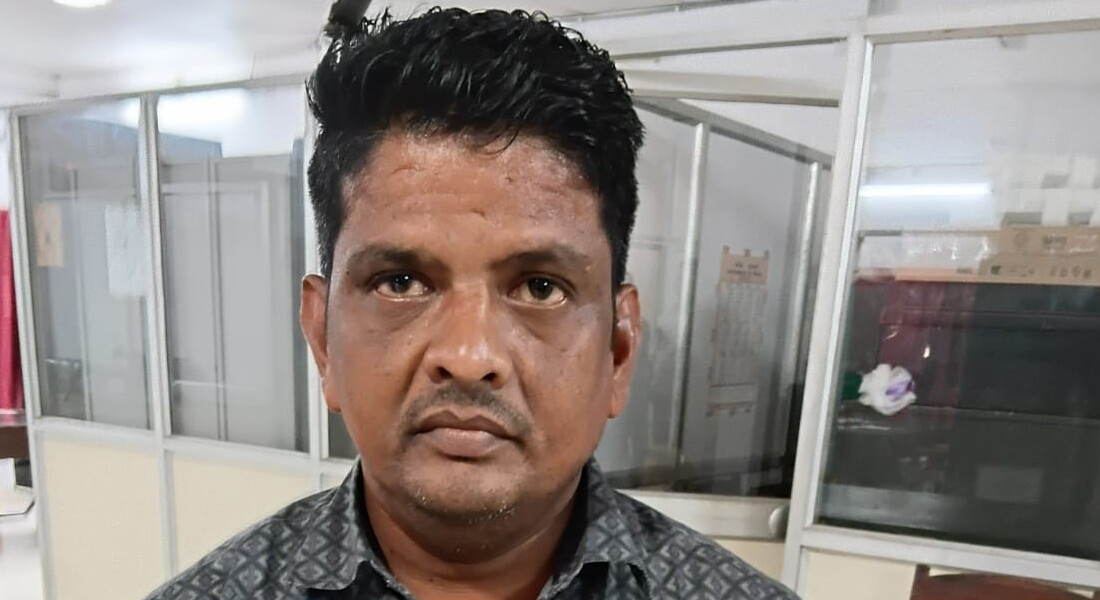
Bhubaneswar: In a major corruption crackdown, the Odisha Vigilance has arrested former Senior Assistant Santosh Kumar Panda and five of his associates for allegedly siphoning off more than Rs 8 crore from the state exchequer through fraudulent treasury transactions linked to pension payments.

The accused, who previously worked at the Sub-Treasury Office in Chandbali of Bhadrak district, was produced before the Special Vigilance Court in Balasore after investigators uncovered what they described as a long-running financial manipulation scheme operating between 2018 and 2023.

According to the Vigilance investigation, the fraud revolved around the alleged misuse of the Integrated Financial Management System, a digital platform used for processing government financial transactions. Officials alleged that genuine pension, gratuity, and commutation bills were initially cleared and paid to actual beneficiaries before being secretly reused months later for illegal withdrawals.

Investigators claimed the accused waited several months after legitimate pension payments were completed before re-entering the original Pension Payment Order details into the system. Instead of routing funds to the real pensioners, the money was allegedly diverted into third-party accounts linked to associates through forged Government Pension Order IDs generated on the portal.

The probe further indicated that over 100 fraudulent bills were allegedly processed during the five years, resulting in the transfer of Rs 8.04 crore into dozens of private bank accounts connected to multiple individuals.

Vigilance officials also suspect serious lapses in verification procedures at the treasury level, alleging that approvals were granted without checking whether the bills had already been settled or whether beneficiary details matched original records.

Along with Santosh Kumar Panda, the agency arrested Siba Shankar Samal, Deb Shankar Samal, Prafulla Kumar Rout, Sandip Kumar Mitra, and Abhay Kumar Panda in connection with the case.

The case has been registered under various sections of the Prevention of Corruption Act and the Indian Penal Code related to criminal conspiracy, forgery, criminal breach of trust, and falsification of records.

Officials said the investigation is continuing to identify other individuals and government officials who may have played a role in facilitating the alleged embezzlement.

US rejects Iran’s revised peace terms as Middle East tensions resurface

New Delhi: Fresh diplomatic efforts to end the ongoing conflict between the US, Iran, and Israel have run into turbulence after Washington dismissed Tehran’s latest response to a proposed peace framework, even as the fragile ceasefire in the region showed signs of strain.

Iran reportedly conveyed its revised position to the US through Pakistani intermediaries, outlining conditions linked to sanctions relief, maritime access, and security guarantees. According to Iranian media reports, Tehran sought the removal of American sanctions, an end to naval restrictions around the Strait of Hormuz following an initial agreement, and assurances that no future military action would be launched against the country.

The development comes days after Washington floated a broad roadmap aimed at restarting negotiations over Iran’s nuclear programme and reopening critical shipping routes in the Gulf, according to theguardian.com.

Reports suggested the US framework included long-term restrictions on Iran’s uranium enrichment activities, the transfer of enriched uranium stockpiles outside the country, and the dismantling of certain nuclear infrastructure.

However, Iran is believed to have pushed back against some of the tougher demands. International media reports indicated that Tehran proposed a shorter pause on enrichment activities, partial export of enriched uranium reserves, and dilution of the remaining stockpile, while refusing to shut down its nuclear facilities entirely.

US President Donald Trump later indicated that Washington found the Iranian response unacceptable, signalling widening gaps between both sides despite renewed diplomatic outreach.

The tensions resurfaced amid concerns that the month-long ceasefire in the region may be weakening. Reports of drone activity and military alerts across parts of the Middle East added to fears that hostilities could intensify again if negotiations collapse.

Israeli Prime Minister Benjamin Netanyahu also signalled that Israel considers the threat unresolved as long as Iran retains highly enriched uranium and operational enrichment sites. In a televised interview excerpt released ahead of broadcast, Netanyahu suggested that any lasting resolution would require the removal of fissile material from Iranian territory and the dismantling of nuclear infrastructure.

The renewed diplomatic deadlock has once again placed the spotlight on the future of Iran’s nuclear programme, regional security in the Gulf and the possibility of another escalation involving major powers in the Middle East.