At IndiaVerve, we go beyond the noise to bring you meaningful stories of change, resilience and progress—from India to the world stage. Our mission is to bring readers credible, wide-ranging coverage across politics, business, sports, culture, society and more.
At IndiaVerve, we go beyond the noise to bring you meaningful stories of change, resilience and progress—from India to the world stage. Our mission is to bring readers credible, wide-ranging coverage across politics, business, sports, culture, society and more.
Bhubaneswar, May 15: Chief Minister Mohan Charan Majhi on Friday announced that Odisha will soon introduce a dedicated film policy aimed at reviving and strengthening the Odia film industry, while assuring that financial constraints would not stand in the way of its growth.
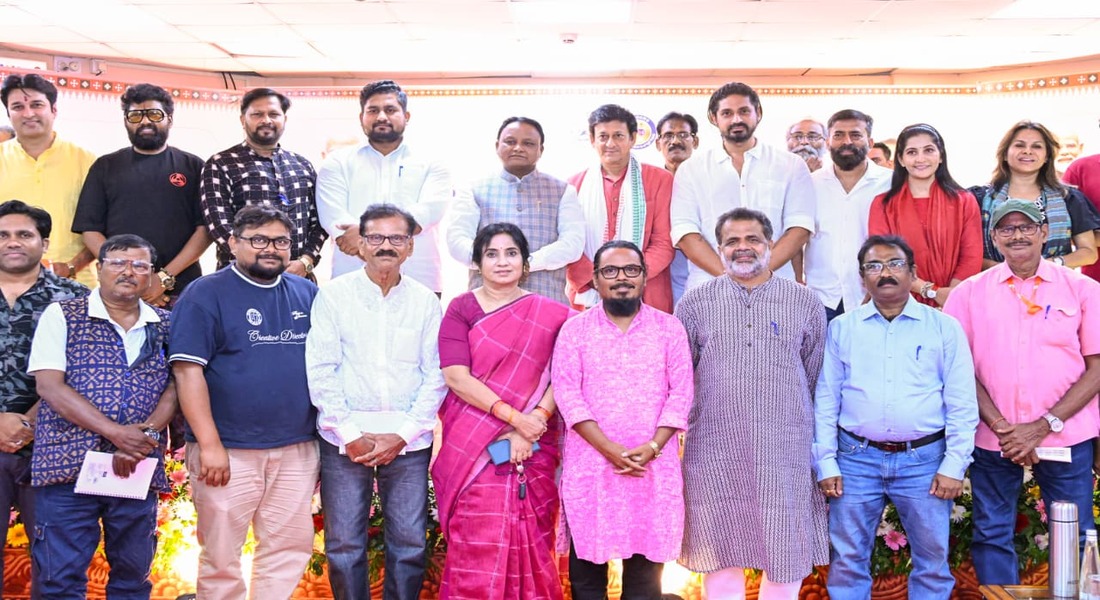
The announcement came during a special interaction with prominent personalities from the Odia film industry at Sanskruti Bhavan in Bhubaneswar, where the Chief Minister held extensive discussions on the present condition and future direction of Odia cinema.
Describing Odia cinema as an important marker of the State’s identity, Majhi said the time had come for “extraordinary efforts” to revive the industry and take it to greater heights.
“Odia cinema should not imitate others but discover its own voice,” the Chief Minister said, urging filmmakers to focus on original themes rooted in Odisha’s culture, history and everyday life.
He suggested that filmmakers draw inspiration from Odisha’s rich heritage, including the legacy of Lord Jagannath, Kalinga’s maritime history, tribal culture, stories of resilience during cyclones and floods, rural life, and the riverine culture around Mahanadi and other rivers.
According to Majhi, films based on authentic narratives connected to Odia society would resonate more strongly with audiences and help restore the popularity of Odia cinema.
Highlighting the need for professional training in filmmaking, the Chief Minister said Odisha requires a dedicated film training institute to nurture talent and enhance technical expertise in the sector. He announced that such an institution would be established in the State.
Criticising the previous dispensation for allegedly neglecting the film industry, Majhi said the present government is committed to preserving and promoting Odia identity and culture. He assured industry stakeholders that funding would not become a hurdle in strengthening film infrastructure in the State.
The Chief Minister also interacted with actors, filmmakers and technicians regarding challenges faced by the industry and promised lasting solutions to address their concerns.
Speaking on the occasion, Odia Language, Literature and Culture Minister Suryabanshi Suraj said Odisha’s film industry would have a significant role to play as the State prepares to celebrate its centenary year in 2036. He expressed confidence that the discussions would pave the way for the future growth of the industry.
Among those present were Korei MLA and actor Akash Das Nayak, Digapahandi MLA and actor Siddhanta Mahapatra, Additional Chief Secretary to the Chief Minister Shashwat Mishra, Director of Odia Language, Literature and Culture Dr Bijay Ketan Upadhyay and Odisha Sahitya Akademi Secretary Dr Chandrasekhar Hota.
Prominent film personalities including actors Anubhav Mohanty, Anu Choudhury, Pushpa Panda, Harihar Mahapatra, Pinky Pradhan and producer Siddharth Agarwal, along with several film technicians, participated in the interaction.
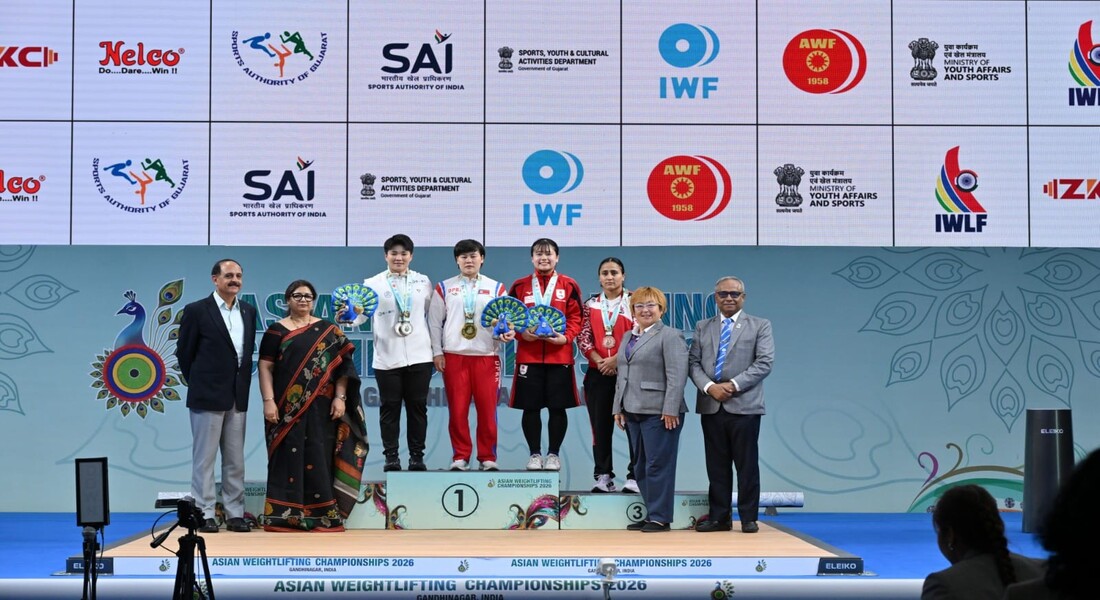
New Delhi: India’s Harjinder Kaur on Friday delivered an impressive performance at the Senior Asian Weightlifting Championship 2026 in Gandhinagar, securing a bronze medal in the women’s 59kg snatch event.
The Indian lifter successfully lifted 96kg in snatch to finish third in the category. She began strongly with a smooth 93kg lift in her opening attempt. Although she could not clear 96kg in her second attempt, Harjinder made a successful final lift to clinch the bronze medal.
In the clean and jerk section, Harjinder completed all three attempts successfully, lifting 115kg, 118kg, and 121kg, respectively, according to reports. She finished with a combined total of 217kg to secure fourth place overall, narrowly missing an overall podium finish by two kilograms.
Taiwanese weightlifter Huei-Wen Chen claimed silver in snatch with a 104kg lift, while Song Kuk-hyang of North Korea won gold with 112kg.
In the overall standings, Japan’s Yui Miyagoe secured bronze with a total lift of 219kg, while Huei-Wen Chen took silver with 239kg. Kuk-hyang dominated the category with a gold medal-winning total of 263kg.
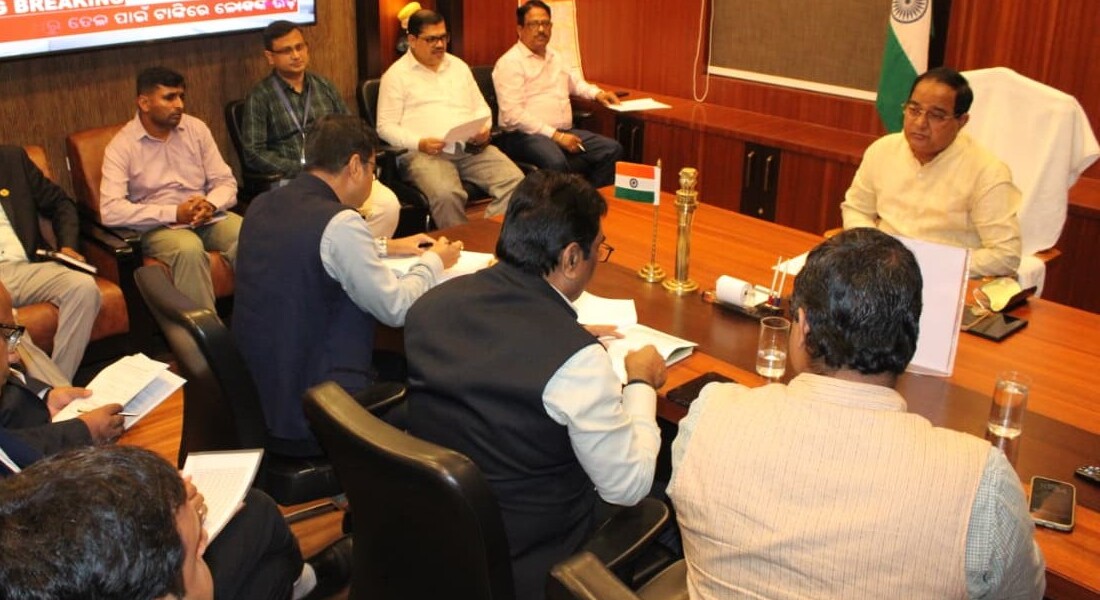
Bhubaneswar: Odisha Food Supplies and Consumer Welfare Minister Krushna Chandra Patra on Friday chaired a review meeting with representatives of major oil companies to assess the fuel supply situation in Odisha and ensure uninterrupted availability of petrol and diesel across the state.
The meeting was held at the minister’s office chamber in the Secretariat under the initiative of the Food Supplies and Consumer Welfare Department. During the discussion, the minister stressed the importance of maintaining a stable supply chain while safeguarding public interest.
The minister informed the meeting that petrol and diesel are currently available in adequate quantities across Odisha, and supply to petrol pumps remains stable.
Representatives of the oil companies appealed to the public not to panic or purchase fuel beyond their actual requirements, stating that there is no disruption in the overall supply system.
Although the overall fuel supply situation remains normal, reports of shortages at a few petrol pumps in certain areas were also discussed during the meeting. Company representatives assured the government that such issues would be addressed on priority and immediate steps would be taken to restore normal supply wherever required.
Among those present at the meeting were Indian Oil state head Kamal Sil, HPCL representative Ashish Pandey, BPCL representative Deepak Agrawal, and senior departmental officials.
Bhubaneswar: Law, Works, and Excise Minister Prithiviraj Harichandan on Friday reviewed multiple heritage, cultural, and pilgrimage infrastructure projects linked to Shree Jagannath culture and temple development during a series of meetings held at Lok Seva Bhavan in Bhubaneswar.
The minister reviewed the proposed ‘Shree Jagannath Culture Centre’ and ‘Raghunandan Library’, which aim to strengthen the preservation, protection, and global promotion of Shree Jagannath culture.
During the meeting, Harichandan said the sacred tradition of Lord Jagannath remains deeply connected with Odia identity, spirituality, and cultural heritage, and preserving it for future generations is a collective responsibility.
According to the proposed plan, the centre will house two modern conference halls and an audio-visual hall to support academic discussions, seminars, workshops, and research activities. The facility will also focus on presenting the history, philosophy, traditions, and social influence of Jagannath culture before a global audience, the minister said in a series of posts on X.
He also said special emphasis would be given to research related to Jagannath culture, ancient history, and religious heritage. Important historical materials, including Madala Panji records, palm-leaf manuscripts, rare temple documents, and traditional archival records, will be digitally preserved to ensure easier access for future generations and researchers.
Harichandan also reviewed the progress of the under-construction ‘Nilachal Bhakta Nivas Annex Building’ at Shree Jagannath Dham in Puri. The project is being developed to provide affordable, secure, and convenient accommodation facilities for devotees visiting the temple town.
Harichandan also discussed various issues related to pilgrim amenities and said the additional infrastructure would help improve the overall pilgrimage experience through better facilities, improved surroundings, and efficient management systems.
In another meeting, Harichandan reviewed the proposed development and beautification plans surrounding Lingaraj Temple and the restoration of the sacred Bindusagar Lake. He examined the proposed designs and discussed steps for the comprehensive development of the temple surroundings and the historic water body.
Ekamra MLA Babu Singh, OBCC advisor Jayakrishna Das, OBCC Chief General Manager-II Engineer Sridhar Raut, Chief Construction Engineer Manoj Mahananda, and architects were present during the review meetings.
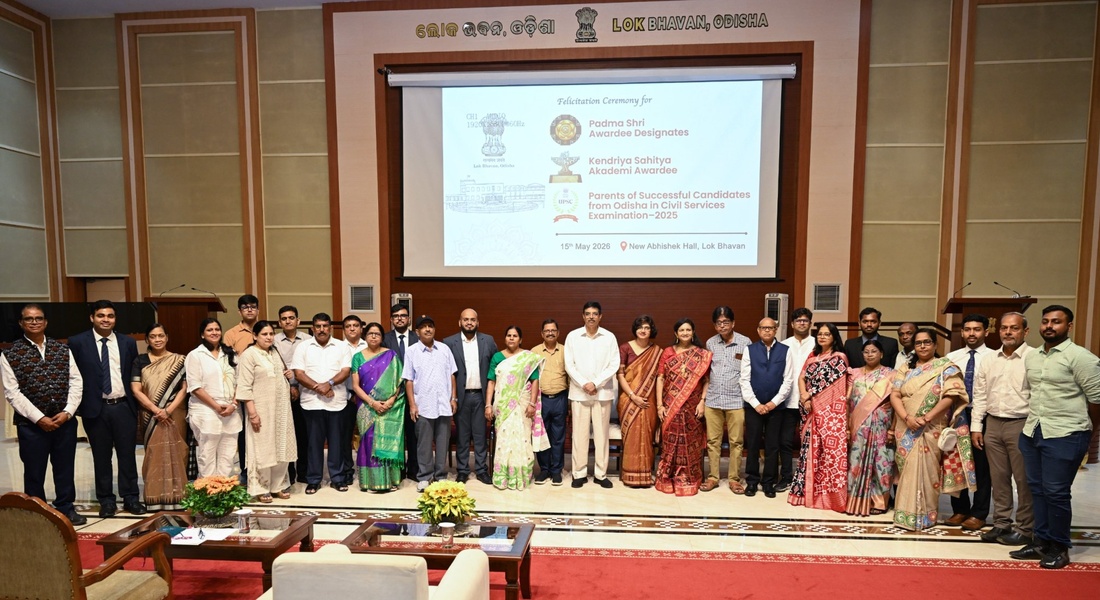
Bhubaneswar: Odisha Governor Dr. Hari Babu Kambhampati on Friday felicitated Padma Shri awardees-designate, a Kendriya Sahitya Akademi Award recipient, and successful candidates of the Indian Civil Services Examination 2025, along with their parents, at a special programme held at New Abhishek Hall in Bhubaneswar.
Addressing the gathering, the governor described the programme as a celebration of excellence, creativity, dedication, and public service. He said achievements in literature, culture, education, and administration serve as an inspiration for society and reflect commitment towards nation-building.
In a post on X, he said: “Their achievements reflect dedication, perseverance, creativity, and service to society. Odisha’s rich cultural heritage, literary excellence, and talented youth continue to strengthen the vision of a progressive and empowered India.”
Among those honoured were Mahendra Kumar Mishra for his contribution towards documenting and preserving Odisha’s tribal folklore and cultural heritage, Charan Hembram for promoting Santali language and culture, noted Prahallada Nataka artist Simanchal Patra, and Sarat Kumar Patra for preserving Odisha’s traditional art and handloom heritage. All four have been nominated for the Padma Shri Awards 2025.
Kambhampati also felicitated Girija Kumar Baliarsingh, who received the Sahitya Akademi Award for his poetry collection “Padapurana”. During the programme, the governor highlighted the importance of literature in preserving collective memory and inspiring future generations.
Successful candidates from Odisha in the Indian Civil Services Examination 2025 and their parents were also honoured during the event. The governor praised the contribution of parents in shaping the success of young achievers and urged the future administrators to work with integrity, compassion, and dedication towards public welfare and the vision of Viksit Bharat 2047.
Governor’s Commissioner-cum-Secretary Dr. Roopa Roshan Sahoo delivered the welcome address at the programme. Cultural performances were also organised, while several awardees and achievers shared their experiences during the event.
Bhubaneswar: Celebrity chef Kunal Kapur has once again brought the long-running rasgulla debate into the spotlight after speaking about the dessert’s origins during a recent podcast appearance.
During a conversation on the Mirchi Punjabi podcast with RJ Abby, Kapur discussed Indian culinary traditions and regional sweets. The discussion took an interesting turn when he mentioned that rasgulla is widely believed to have originated in Odisha.
Reacting to the remark, the podcast host joked that people in Kolkata might not be pleased with the statement. Kapur responded by clarifying that he was referring to a commonly held belief regarding the dessert’s origin and not making a personal claim.
The rasgulla – also known as rasagola or rasogolla depending on the region – has remained at the centre of a cultural and culinary debate between Odisha and West Bengal for several years.
During the podcast, Kapur also highlighted the similarities between the sweet traditions of the two eastern states, particularly their use of fresh chhena in desserts. He praised the wide variety of chhena-based sweets popular in both Odisha and West Bengal.
The chef further appreciated Odisha’s traditional dessert chhena poda, describing it as a baked sweet that resembles a modern cheesecake despite being part of the region’s culinary heritage for generations.
The rasgulla debate continues to spark strong reactions online, with many people viewing the sweet not just as a dessert but also as a symbol of regional identity, culture, and history.
New Delhi: Union Education Minister Dharmendra Pradhan on Friday said June 21 is the new date for the National Eligibility-cum-Entrance Test Undergraduate (NEET-UG) 2026 re-examination, following the cancellation of the original test held on May 3.
Addressing a press conference in New Delhi, Pradhan said the controversy began on May 7, when the National Testing Agency (NTA) received a complaint suggesting that a circulating “guess paper” contained questions that had appeared in the actual exam. The Higher Education Department launched an immediate inquiry and referred the matter to central government agencies, who subsequently coordinated with state authorities.
By May 12, it was confirmed that the so-called guess paper had contained genuine questions leaked from the examination.
The minister stated that the government was unwilling to allow deserving students to be disadvantaged due to the actions of what he described as an “education mafia,” or to permit undeserving candidates to benefit through dishonest means. He acknowledged a lapse in the system despite the earlier implementation of recommendations made by the Radhakrishnan Committee, which had been formed following a previous irregularity.
According to him, the government accepts responsibility for addressing the failure.
Pradhan reaffirmed the Centre’s commitment to a zero-error, zero-tolerance approach for entrance examinations. He expressed confidence in the NTA’s current leadership and assured that steps would be taken to eliminate errors going forward.
On the question of exam format, the minister announced that starting next year, the examination will shift to a Computer-Based Test mode, identifying the OMR-based system as the root vulnerability in the current process.
Regarding the upcoming re-exam, Pradhan confirmed that no registration fee will be charged to candidates, adding that the NTA had already announced a fee refund on the day the original examination was cancelled.
Akhil Bhartiya Gramin Uthan Samiti (ABGUS) is a grassroots development organisation that has spent nearly four decades working with vulnerable and marginalised communities across northern India. From improving access to healthcare and education to strengthening livelihoods and community leadership, the organisation has steadily built a reputation for people-centred, sustainable development.
As ABGUS marks 39 years of its journey, the milestone offers an opportunity to reflect on how a small community initiative founded in the mid-1980s has grown into a multi-state organisation driving impact across health, rural development, and youth empowerment.
In a conversation with IndiaVerve, Rajesh Verma, one of founders of ABGUS, looks back at the organisation’s origins, the challenges of sustaining grassroots work, and his vision for scaling community-led development in the coming decade.
A Beginning Shaped by Crisis and Compassion
The story of ABGUS traces back to the turbulent period following the assassination of former Prime Minister Indira Gandhi in 1984. At the time, Verma and his friends were young residents of a government colony and nearby areas in Delhi’s Old Transport Nagar area. The anti-Sikh riots that followed created widespread fear and violence, forcing many families to seek refuge wherever they could find safety.
“Several Sikh families came to our colony to escape the mobs,” Rajesh Verma recalls. “A few of us young people decided that we would protect them and help them in whatever way possible. We organised ourselves, spoke to officials, and tried to ensure their safety.”
What began as spontaneous relief work soon became something deeper. During the process of helping displaced families, Rajesh Verma and his friends came into contact with administrators, social workers, and civil society organisations who were working on rehabilitation efforts.
“That experience made us realise how important organised community action can be,” he says. “The seed of ABGUS was planted there.”
In 1987, the group formally registered the organisation. In its early years, ABGUS functioned entirely through community contributions and voluntary support, focusing mainly on relief and local community service. But by the late 1980s, the founders realised that meaningful change required more structured programmes.
“We began to examine the resources available and think about how we could expand our work,” Verma explains.
The organisation received its first major project in 1988 from ICARE, focusing on community health and awareness. That partnership continued for nearly a decade and helped ABGUS strengthen its presence at the grassroots.
By the early 1990s, the organisation had begun collaborating with several international development partners and expanded its work beyond Delhi into neighbouring regions. Offices were established in locations such as Alwar, Gurgaon, Rewari and Rohtak, marking the organisation’s transition from a local initiative into a regional development organisation.
A significant milestone came in 1997 when ABGUS partnered with ChildFund International (then CCF) to implement community development programmes focused on child welfare in Tijara, Rajasthan — an area where the organisation continues to work even today.
Building Programmes That Last
Looking back, Verma believes one of ABGUS’s defining strengths has been its commitment to long-term programme approaches rather than short-term projects. “From the beginning, we did not work only in project mode,” he says. “Even when funding partners changed, our focus areas remained the same.”
During the late 1980s and early 1990s, ABGUS began developing programmes around four core pillars: livelihood generation for Below Poverty Line families, quality education, community health, and women’s social and economic empowerment.
“At that time, women were rarely recognised as economic partners within households,” Verma notes. “We started working with them to create livelihood opportunities and to strengthen their role in decision-making.”
The results of these early interventions continue to shape communities today.
In one village, women who once earned less than ₹30 a day eventually became primary breadwinners for their families. In another instance, a woman associated with ABGUS programmes went on to become the village’s first elected woman Sarpanch.
The organisation has also supported children from marginalised backgrounds to pursue higher education and secure government jobs. Verma recalls the pride of seeing Muslim children from underprivileged families’ complete master’s degrees and enter public service.
Over time, ABGUS’s work has also nurtured community leadership. Several individuals who participated in the organisation’s programmes have later entered local governance or politics, including one community leader who eventually became a Member of the Legislative Assembly.
“For me, the biggest satisfaction is hearing people talk about how their lives changed,” Verma says. “We have worked continuously with more than 1,200+ families over the years, and today many of them tell us how their perspectives and confidence have evolved.”
Overcoming Challenges on the Ground
Like many grassroots organisations, ABGUS’s journey has not been without obstacles. One of the most persistent challenges, Verma says, has been gaining the trust of communities.
“When you enter a new village, people often do not immediately understand what you are trying to do,” he explains. “Sometimes they doubt your intentions.”
In the late 1990s, when ABGUS began implementing programmes with ChildFund International, some communities initially feared that development activities might involve religious conversion. The organisation responded by initiating open dialogues and continuous engagement with local leaders.
“We spent time listening to people and addressing their concerns,” Verma says. “Once they saw our work and our intentions, their perception changed.”
Another major challenge came during the policy transition around corporate social responsibility (CSR) in India. When discussions began around tightening regulations on foreign funding, many non-profits feared losing financial support.
ABGUS decided to prepare early for the transition. “We started planning around 2015 to strengthen our domestic partnerships,” Verma explains. “By 2016, we had completely shifted from foreign funding to Indian CSR funding.”
What initially appeared to be a risk soon became an opportunity. Over the years, ABGUS has secured more than ₹25 crore in support from over ten corporate partners, including organisations such as SBI Foundation, Hindustan Unilever and United Breweries.
Sewing machines are being distributed as part of SAMMAN project
ABGUS team handing out scholarship certificiates to students
A Community-Led Model of Development
A defining feature of ABGUS’s approach is its emphasis on community ownership. Rather than implementing programmes in a top-down manner, the organisation focuses on strengthening local capacity and leadership so that communities themselves can drive development.
“Our aim is not to create dependency,” Verma says. “We want communities to identify their own challenges, access government schemes, and build networks that support their growth.”
This approach has helped communities take greater responsibility for local initiatives and sustain outcomes even after external interventions reduce.
Looking Ahead: Scaling Proven Models
As ABGUS approaches its 40th year, the organisation is preparing for its next phase of growth.
Verma says the strategy for the coming decade is straightforward: consolidate the lessons of the past four decades and scale the interventions that have demonstrated clear impact.
“We want to strengthen the models that have worked and expand them to more communities,” he explains.
One such model is a diversified multi-cropping system that allows farmers to grow multiple crops simultaneously on the same piece of land. Often referred to as vertical or multi-layer farming, the approach helps maximise land productivity while reducing risk.
ABGUS trained around 150 farmers in the Nuh district of Haryana in this technique. Initially, only about 30 farmers were willing to adopt the model due to concerns about moving away from traditional farming practices.
However, the results were striking. Within just a few months, participating farmers reported income increases of three to four times compared to earlier cropping patterns.
“These farmers have now become role models for others,” Verma says. “They are mentoring fellow farmers and demonstrating the benefits of the system.”
To support small and marginal farmers further, ABGUS also facilitated the creation of a Custom Hiring Centre, which provides access to modern agricultural equipment through a community-managed equipment bank.
The initiative has been supported through the SBI Foundation’s Gram Seva programme, and demand for the model continues to grow.
Investing in Rural Youth
Alongside agriculture, ABGUS is also expanding its focus on youth development. The organisation operates a training centre in Haryana where rural youth receive skill development opportunities, including physical and academic preparation for recruitment into the Indian Army — a career aspiration for many young people in the region.
The centre offers structured training that builds discipline, confidence, and employability among participants. “Many young people simply lack access to the right guidance,” Verma says. “When they receive the right support, their potential becomes visible.”
Partnerships for the Next Phase
To scale its work, ABGUS plans to deepen collaborations with CSR partners, institutional donors, and community stakeholders.
Existing partnerships — such as those with SBI Foundation through initiatives like Sanjeevani – Clinics on Wheels, Gram Sevaand Saksham — have demonstrated the potential of collaborative development models.
Going forward, the organisation hopes to build new partnerships that can expand successful interventions in agriculture, rural health, youth development, and community leadership.
“The future lies in working together,” Verma says.
As ABGUS prepares to enter its fourth decade, its founder remains guided by the same principle that inspired the organisation’s birth during a moment of crisis four decades ago: that meaningful change begins when communities come together to support one another. “Our work has always been about strengthening the energy that already exists within communities,” Verma reflects. “If that energy is nurtured, development becomes sustainable.”
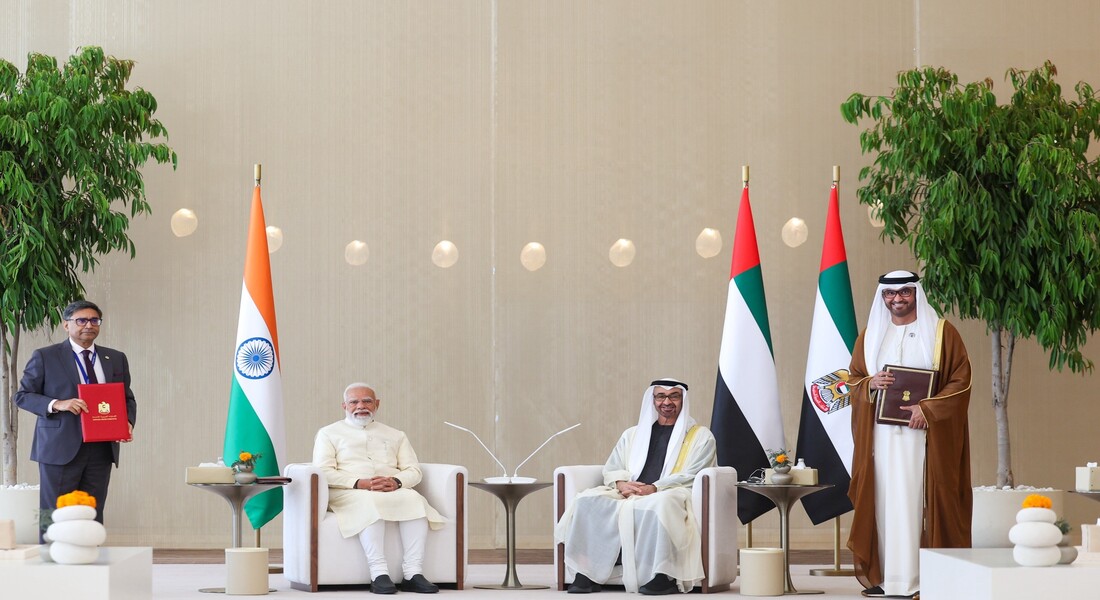
New Delhi: Prime Minister Narendra Modi on Friday paid an official visit to Abu Dhabi, where he was received at the airport by UAE President Mohamed bin Zayed Al Nahyan and accorded a ceremonial welcome.
The two leaders held detailed discussions covering the full range of bilateral ties, according to an official statement. Modi reaffirmed India’s strong condemnation of attacks on the UAE and expressed solidarity with the leadership and people of the country.
He also reiterated India’s position in favour of safe transit passage and unimpeded navigation through the Strait of Hormuz, highlighting its importance for regional peace, stability, energy security, and food security.
Both sides reviewed the Comprehensive Strategic Partnership and noted progress across sectors, including energy, trade, investment, defence, security, fintech, infrastructure, education, culture, and people-to-people ties. They also welcomed the continued success of the India–UAE Comprehensive Economic Partnership Agreement, which has contributed to growth in bilateral trade.
On energy cooperation, both leaders acknowledged the UAE’s role in India’s energy security through crude oil, LNG, and LPG supplies. They welcomed new initiatives in the sector, including an agreement between Indian Strategic Petroleum Reserves Limited and Abu Dhabi National Oil Company to enhance UAE participation in India’s strategic petroleum reserves up to 30 million barrels and explore joint gas storage facilities in India.
They also welcomed a long-term LPG supply arrangement between Indian Oil Corporation Limited and Abu Dhabi National Oil Company.
The two sides welcomed USD 5 billion in investment commitments from UAE entities into India. This includes USD 3 billion by Emirates NBD in RBL Bank, USD 1 billion by the Abu Dhabi Investment Authority in partnership with the National Investment and Infrastructure Fund for infrastructure projects, and USD 1 billion by International Holding Company in Sammaan Capital.
Defence cooperation was further strengthened with the signing of a Framework for Strategic Defence Partnership, covering industrial collaboration, innovation and advanced technology, training, exercises, maritime security, cyber defence, secure communications, and information exchange.
Several additional agreements were concluded during the visit, including a MoU between Cochin Shipyard Limited and Drydocks World Dubai for a ship repair cluster at Vadinar under the Maritime Development Fund Scheme, and a tripartite MoU on maritime skill development involving Cochin Shipyard Limited, Drydocks World Dubai, and the Centre of Excellence in Maritime and Shipbuilding. A term sheet was also signed for an 8 exaflop supercomputing cluster between C-DAC and G42.
Both sides also welcomed the operationalisation of the Master Application for International Trade and Regulatory Interface virtual trade corridor, aimed at linking customs and port authorities to streamline cargo movement and reduce costs and transit time.
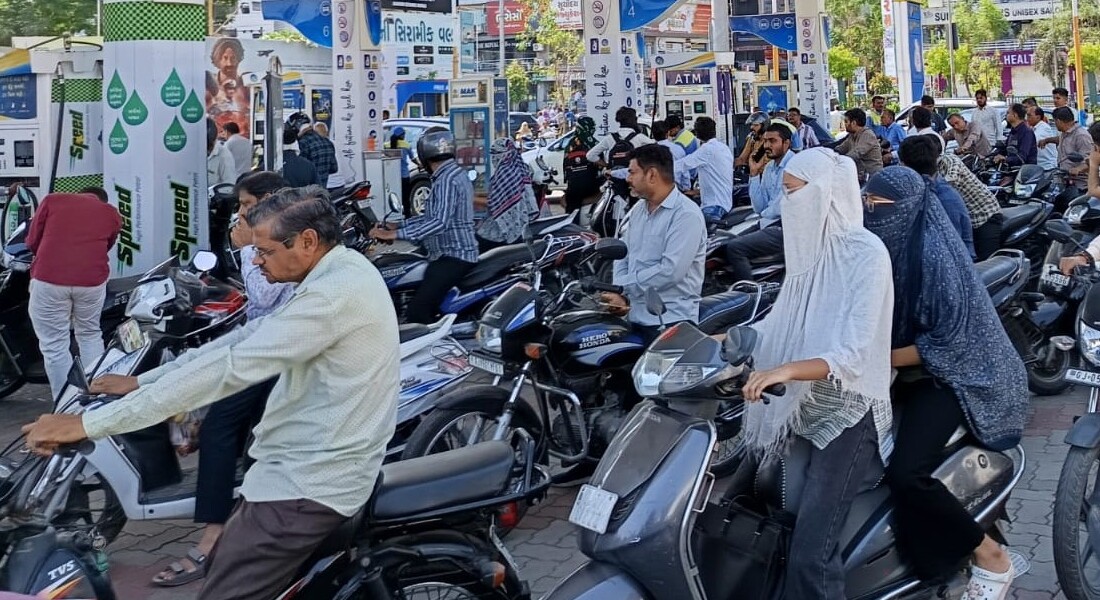
New Delhi: Retail fuel prices have been increased across major metro cities for the first time in four years as rising global crude oil prices and mounting losses faced by oil marketing companies pushed the Centre to revise rates for consumers.
The revised prices of petrol and diesel came into effect on Friday, while Compressed Natural Gas (CNG) prices were also increased in Delhi and Mumbai, according to reports.
Petrol prices have increased by Rs 3.14 per litre, taking the rate up to Rs 97.77, while diesel has gone up by Rs 3.11 per litre to Rs 90.67.
In Delhi, the price of CNG was raised by Rs 2 per kilogram, taking the retail rate from Rs 77.09 per kg to Rs 79.09 per kg. Mumbai had witnessed a similar increase a day earlier, with CNG prices across the Mumbai Metropolitan Region climbing to Rs 84 per kg.
The latest fuel price revision comes after months of pressure on state-run oil marketing companies, which had reportedly been absorbing rising international crude oil costs without fully passing them on to consumers.
Earlier this year, Indian Oil Corporation Limited, Bharat Petroleum Corporation Limited, and Hindustan Petroleum Corporation Limited had already increased the prices of premium petrol and diesel variants. However, regular retail fuel prices had remained unchanged despite volatility in global oil markets.
According to reports, oil companies had been facing daily losses estimated at around Rs 1,600 crore as crude procurement costs surged sharply following the escalation of conflict in West Asia. India’s imported crude basket, which averaged around USD 69 per barrel in February before tensions intensified, reportedly climbed to nearly USD 113-114 per barrel in the following months.
The government had earlier avoided a retail fuel hike amid concerns that higher fuel prices could trigger broader inflationary pressure by increasing transportation and commodity costs across sectors.
Amid rising energy costs, Prime Minister Narendra Modi had earlier urged citizens to conserve fuel and adopt measures such as remote working wherever possible to reduce fuel consumption and ease pressure on foreign exchange reserves.