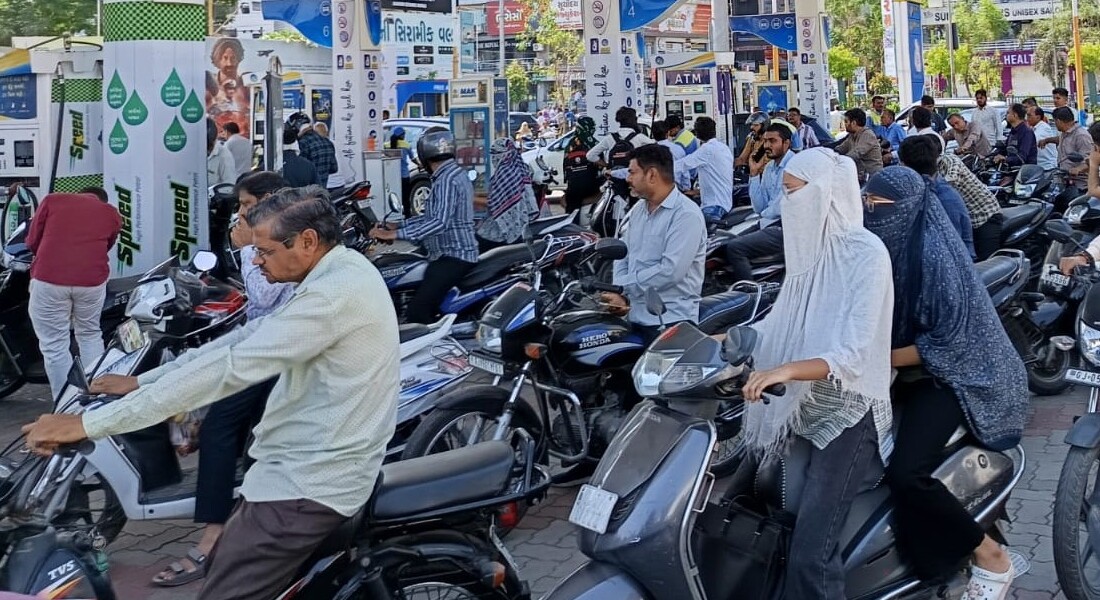

New Delhi: Retail fuel prices have been increased across major metro cities for the first time in four years as rising global crude oil prices and mounting losses faced by oil marketing companies pushed the Centre to revise rates for consumers.
The revised prices of petrol and diesel came into effect on Friday, while Compressed Natural Gas (CNG) prices were also increased in Delhi and Mumbai, according to reports.
Petrol prices have increased by Rs 3.14 per litre, taking the rate up to Rs 97.77, while diesel has gone up by Rs 3.11 per litre to Rs 90.67.
In Delhi, the price of CNG was raised by Rs 2 per kilogram, taking the retail rate from Rs 77.09 per kg to Rs 79.09 per kg. Mumbai had witnessed a similar increase a day earlier, with CNG prices across the Mumbai Metropolitan Region climbing to Rs 84 per kg.
The latest fuel price revision comes after months of pressure on state-run oil marketing companies, which had reportedly been absorbing rising international crude oil costs without fully passing them on to consumers.
Earlier this year, Indian Oil Corporation Limited, Bharat Petroleum Corporation Limited, and Hindustan Petroleum Corporation Limited had already increased the prices of premium petrol and diesel variants. However, regular retail fuel prices had remained unchanged despite volatility in global oil markets.
According to reports, oil companies had been facing daily losses estimated at around Rs 1,600 crore as crude procurement costs surged sharply following the escalation of conflict in West Asia. India’s imported crude basket, which averaged around USD 69 per barrel in February before tensions intensified, reportedly climbed to nearly USD 113-114 per barrel in the following months.
The government had earlier avoided a retail fuel hike amid concerns that higher fuel prices could trigger broader inflationary pressure by increasing transportation and commodity costs across sectors.
Amid rising energy costs, Prime Minister Narendra Modi had earlier urged citizens to conserve fuel and adopt measures such as remote working wherever possible to reduce fuel consumption and ease pressure on foreign exchange reserves.