Bhubaneswar: Anticipating a below-normal monsoon and possible El Niño impact this year, the Odisha government on Wednesday unveiled a comprehensive preparedness and contingency strategy for the Kharif 2026 season to protect farmers from weather-related risks and minimise crop losses.
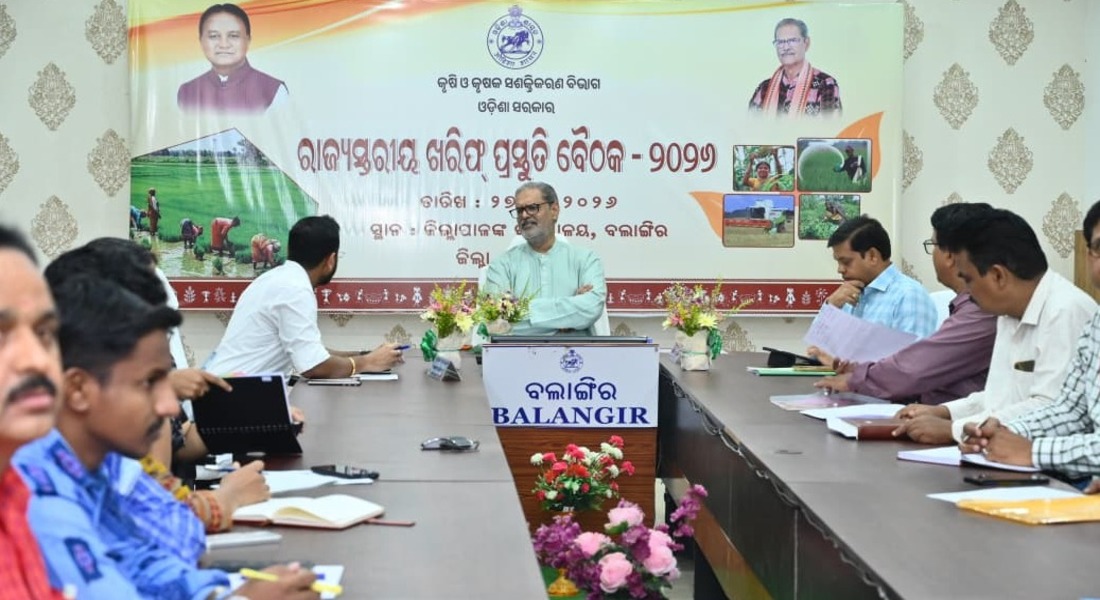
Deputy Chief Minister and Agriculture, Farmers’ Empowerment & Energy Minister Kanak Vardhan Singh Deo chaired a high-level virtual review meeting with district administrations and directed departments, officials and research institutions to work in close coordination to safeguard agricultural productivity during the upcoming cropping season.
The preparedness plan follows forecasts by the India Meteorological Department (IMD), which has predicted below-normal southwest monsoon rainfall in parts of Odisha along with the possibility of El Niño conditions affecting rainfall patterns.
During the meeting, Singh Deo instructed officials to prioritise timely seed availability and climate-resilient agricultural practices, particularly in vulnerable and rain-deficit regions.
The Odisha State Seeds Corporation (OSSC) has been directed to ensure certified seeds reach farmers by the first week of June, especially in remote districts. Authorities have also been asked to increase the supply of short- and medium-duration varieties of paddy, pulses, oilseeds and millets that are better suited to erratic rainfall conditions.
To minimise risks from delayed monsoon, the government plans to promote crop diversification in upland and rainfed areas. A community nursery approach will also be adopted if monsoon onset is delayed. OSSC has been instructed to maintain reserve seed stocks to address any emergency situation arising from weather disruptions.
The state government has also announced stricter monitoring of fertiliser supply and distribution. Agencies such as MARKFED, Primary Agricultural Cooperative Societies (PACS) and Large Area Multi-Purpose Cooperative Societies (LAMPCS) will ensure last-mile delivery of fertilisers to farmers.
District collectors have been asked to closely supervise fertiliser distribution, while the government warned of strict action against black marketing, hoarding and illegal diversion of farm inputs. Officials will also promote balanced nutrient management based on Soil Health Cards, alongside water conservation and green manuring practices.
As part of efforts to reduce financial stress on cultivators, officials have been directed to maximise farmer enrolment under the Pradhan Mantri Fasal Bima Yojana (PMFBY). The Odisha government will bear the entire farmer premium share for up to two hectares, with farmers required to pay only a nominal ₹1 validation fee per application.
The government also emphasised completion of the Farmer Registry, which will be mandatory for access to schemes such as PM-KISAN, CM-KISAN, subsidised farm inputs and procurement benefits.
Technical support during the Kharif season will be provided by the Odisha University of Agriculture and Technology (OUAT) through Krishi Vigyan Kendras (KVKs), which will issue real-time, location-specific weather advisories and pest management support.
To improve outreach, crop advisories will be displayed on LED screens at district and state levels, while field officers have been directed to regularly visit villages and conduct awareness campaigns on dry-spell preparedness.
Senior officials, agricultural scientists and district administrators attended the review meeting.