At IndiaVerve, we go beyond the noise to bring you meaningful stories of change, resilience and progress—from India to the world stage. Our mission is to bring readers credible, wide-ranging coverage across politics, business, sports, culture, society and more.

President Murmu calls for stronger India-Moldova economic ties during historic State visit

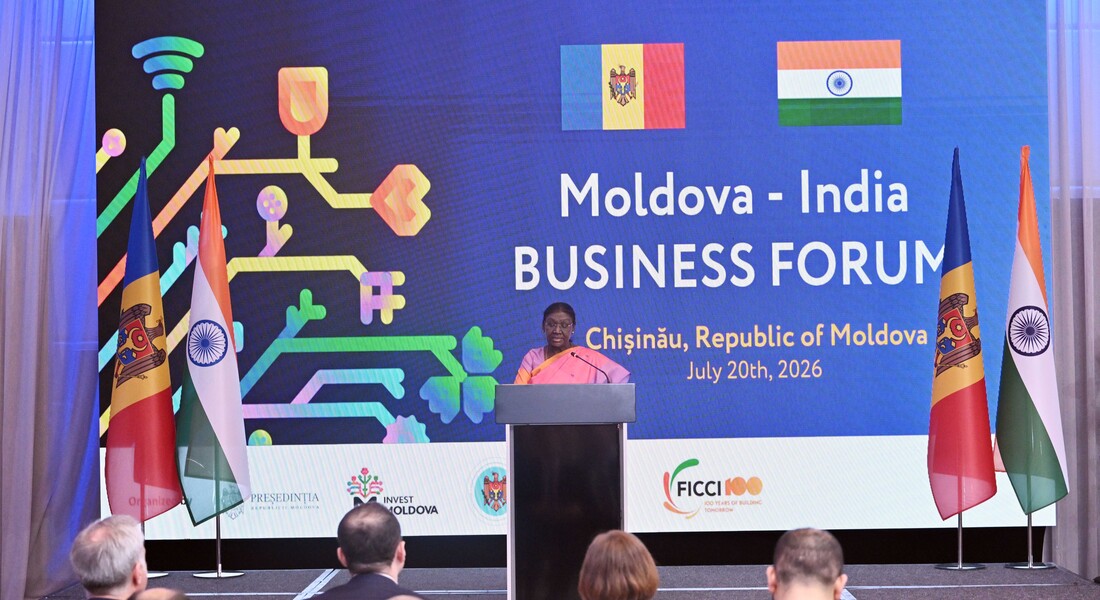
New Delhi: President Droupadi Murmu on Monday called for stronger economic cooperation between India and Moldova, urging businesses from both countries to expand trade and investment across sectors such as renewable energy, digital technologies, agriculture and healthcare.

Addressing the India-Moldova Business Forum in Chișinău alongside Moldovan President Maia Sandu, Murmu said India and Moldova have shared warm and friendly relations since establishing diplomatic ties in 1992.

She said the partnership is based on mutual respect, democratic values and a shared commitment to peace, development and international cooperation.

The president also said India is moving towards its vision of Viksit Bharat 2047 and seeks partnerships based on trust and shared prosperity. She said India’s growth is being driven by entrepreneurship, digital transformation, manufacturing and a young, skilled workforce.

Murmu said Moldova’s reform-oriented outlook, strategic location, talented human capital and growing integration with European markets make it an attractive destination for Indian businesses.

She highlighted opportunities for cooperation in digital technologies, artificial intelligence, cybersecurity, fintech, Digital Public Infrastructure, infrastructure development, renewable energy, advanced manufacturing, agriculture, food processing, pharmaceuticals, biotechnology and healthcare.

Earlier, Murmu arrived in Chișinău on the first leg of her three-nation State visit to Moldova, North Macedonia and Romania. The visit marks the first-ever State visit by an Indian President to Moldova, according to an official statement.

The president is accompanied by Minister of State for Consumer Affairs, Food and Public Distribution Nimuben Jayantibhai Bambhaniya, Rajya Sabha MP Dinesh Sharma and Lok Sabha MP Vijay Baghel.

She was received at Chișinău International Airport by Moldova’s Deputy Prime Minister and Minister of Foreign Affairs, Mihai Popșoi.

Murmu later visited the Presidential Palace, where she was accorded a ceremonial welcome and a guard of honour by Sandu. The two leaders held one-to-one and delegation-level talks covering the full spectrum of bilateral relations.

Describing the visit as a historic milestone, Murmu said it reflects the growing friendship and mutual trust between India and Moldova. She noted that the two countries have steadily strengthened their partnership over the past three decades despite the geographical distance.

The president stressed the need to promote greater trade and investment, strengthen resilient supply chains, improve connectivity and encourage closer engagement between the business communities of both countries.

She also announced India’s decision to double the number of Indian Technical and Economic Cooperation training slots for Moldovan professionals, including specialised courses in artificial intelligence and other emerging technologies. She invited Moldovan diplomats to participate in AI and cyber diplomacy courses at the Foreign Service Institute of India.

During the talks, the two leaders agreed to strengthen cooperation in agriculture, logistics, infrastructure, healthcare, pharmaceuticals, renewable energy, Digital Public Infrastructure, artificial intelligence and innovation. They also agreed to continue working together to address common global challenges and contribute to a peaceful, stable and prosperous world.
Odisha prioritises drinking water, Kharif crops amid low rainfall

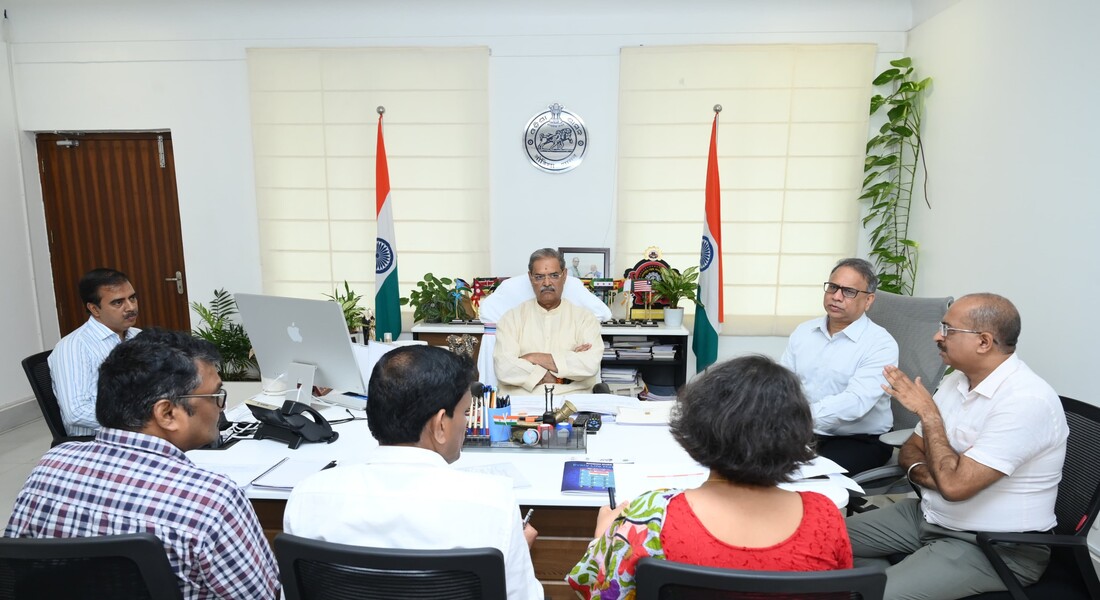
Bhubaneswar: The Odisha government has stepped up measures to tackle the low rainfall in the catchment areas of major reservoirs, including Balimela and Machkund, while prioritising drinking water and agriculture over hydropower generation.

The decision was taken at a high-level review meeting chaired by Deputy Chief Minister Kanak Vardhan Singh Deo. The meeting was attended by Additional Chief Secretary, Energy, Vishal Kumar Dev, Principal Secretary, Water Resources, Subha Sarma, and Commissioner-cum-Secretary, Agriculture & Farmers’ Empowerment, Sachin Ramchandra Jadhav.

The government has issued strict guidelines to maintain optimum reservoir storage levels. A critical water reserve will be conserved exclusively for drinking water and agricultural needs before any allocation is made for power generation.

With weak monsoon conditions and reservoir levels lower than last year, the Water Resources and Agriculture departments are closely monitoring the situation.

Water conservation is being prioritised to ensure the Kharif farming season remains unaffected. The state has also initiated discussions with the Union Ministry of Agriculture for coordinated support.

Singh Deo said the temporary halt in power generation at the Balimela hydroelectric project is a responsible step to safeguard water for agriculture. He said the state’s power grid remains stable through strategic alternative power procurement and assured citizens there is no need to panic about power or water shortages.

The state has activated a comprehensive contingency plan, with the Agriculture, Energy and Water Resources departments implementing local strategies to protect standing crops.

To offset reduced hydropower generation, the Energy Department, GRIDCO and Odisha Hydro Power Corporation have established an alternative power procurement framework. The state is coordinating with the State Load Despatch Centre, Regional Load Despatch Centre and National Load Despatch Centre to secure electricity from external grids and ensure uninterrupted power supply.

The government has also initiated high-level discussions with the Andhra Pradesh government to address technical issues at the Machkund hydroelectric project. Bilateral talks are underway to restore and modernise the Machkund project units so that optimal power generation can resume at the earliest.

The Odisha government said it remains vigilant and committed to managing the state’s water and energy resources efficiently while responding to the evolving monsoon situation.

KGBV wardens begin five-day training at RIE Bhubaneswar

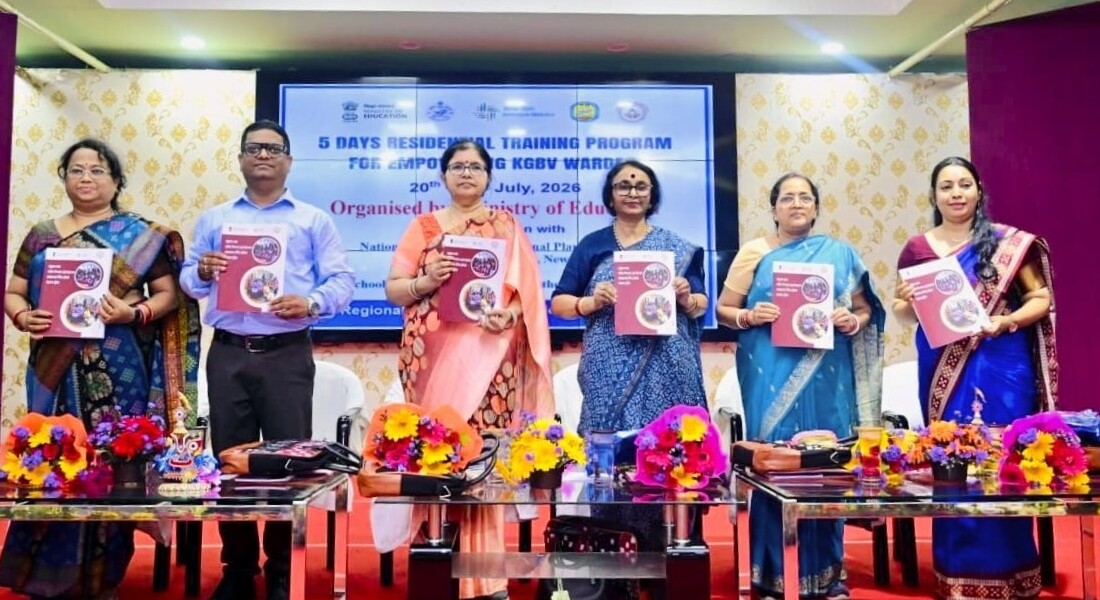
Bhubaneswar: A five-day residential training programme for wardens of Kasturba Gandhi Balika Vidyalaya (KGBV) began at the Regional Institute of Education (RIE), Bhubaneswar, on Monday.

The programme is jointly organised by the National Institute of Educational Planning and Administration, New Delhi, and the Odisha School Education Programme Authority (OSEPA).

Addressing the participants, OSEPA Additional Director Sangeeta Behera urged the wardens to become more efficient and sensitive in their responsibilities. She said wardens play a vital role in creating a safe, inclusive and supportive residential environment for girl students.

Behera said the workshop aims to strengthen the capacity of wardens and help transform KGBVs into secure, disciplined, student-friendly, and quality residential educational institutions.

OSEPA Joint Director Dr Santosh Kumar Rout welcomed the participants and highlighted the importance of strong communication among students, parents, teachers and the community. He also stressed the need to promote regular health check-ups, nutritional security, menstrual hygiene, sanitation, and healthy lifestyle practices among students.

Union Education Secretary Sanjay Kumar, NIEPA Professor Shashikala Wanjari, Joint Secretary Archana Sharma Awasthi, Deputy Secretary Ram Niwas, Dr Santwana G. Mishra, Dr Kumar Gaurav and Dr Imra Kerketta attended the inaugural session virtually. The guests also unveiled an official handbook during the programme.

The training is being attended by teacher educators from DIETs, district gender coordinators, and more than 70 KGBV wardens from five districts of Odisha. RIE Principal Prof. Manasi Goswami, Prof. Ritanjali Das, Dr Sarita, and OSEPA State Gender Coordinator Lahari Mohanty were also present.

Odisha launches induction programme for newly recruited PGT teachers

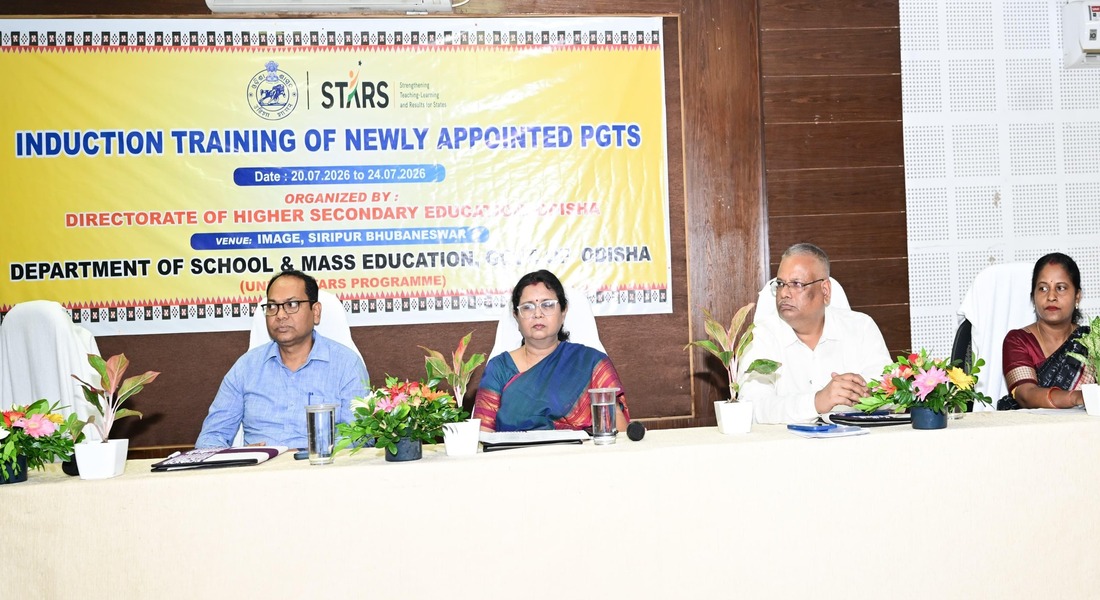
Bhubaneswar: The Odisha government’s School and Mass Education Department on Monday launched a two-phase induction workshop for 120 newly recruited Post Graduate Teachers (PGTs) of Sanskrit and Economics serving in government higher secondary schools and government upgraded higher secondary schools across the state.

The orientation programme, organised by the Directorate of Higher Secondary Education, is being held at the Institute of Management and Advanced Global Excellence (IMAGE), Siripur, from July 20 to 31.

The inaugural session was attended by Director of Elementary Education Balamukunda Meena, UNICEF Field Office Chief Prasanta Kumar Das, Director of Higher Secondary Education Niyati Patnaik, UNICEF Education Specialist Lalita Patnaik, Joint Director Sasmita Mali, Deputy Directors C.H. Vijayalakshmi and Jitendra Kumar Nayak, among other officials.

Addressing the participants, Meena urged the newly recruited teachers to adopt a problem-solving approach in their profession and emphasised their responsibility in shaping responsible citizens. He said teachers play a crucial role in guiding students in the right direction and contributing to nation-building.

Director of Higher Secondary Education Patnaik called upon the teachers to apply the knowledge and skills gained during the workshop to support the holistic development of students. She said such induction programmes help strengthen teachers’ professional competencies, ultimately benefiting students’ academic and personal growth.

Earlier, Joint Director Sasmita Mali welcomed the participants and outlined the objectives and structure of the workshop. Deputy Director C.H. Vijayalakshmi coordinated the programme, while Deputy Director Jitendra Kumar Nayak delivered the vote of thanks.

According to the department, the orientation will be conducted in two phases. The first phase will run from July 20 to July 24, while the second phase is scheduled from July 27 to July 31.

Police lathi-charge, fire tear gas as CJP’s Parliament march sparks massive protests in Delhi

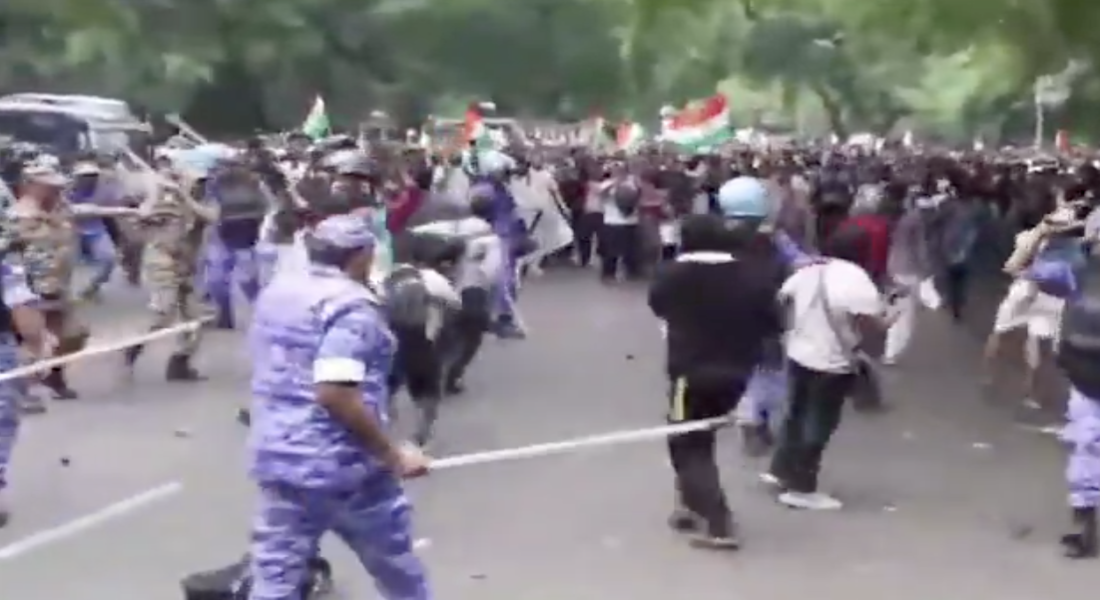
New Delhi: Police resorted to lathi-charge and fired tear gas shells on Monday to disperse thousands of students and youth activists participating in the Cockroach Janta Party’s (CJP) “Chalo Sansad” march, as protests demanding the resignation of Union Education Minister Dharmendra Pradhan over the alleged NEET-UG paper leak intensified in the national capital.

The protest, which coincided with the opening day of the Monsoon Session of Parliament, witnessed heavy deployment of security personnel as demonstrators attempted to march from Jantar Mantar towards Parliament despite prohibitory orders imposed by the Delhi Police. Protesters claimed that police used force to clear Jantar Mantar, while videos circulating on social media appeared to show police personnel baton-charging demonstrators, with several protesters sustaining injuries. Tear gas shells were also fired after protesters were stopped near Raisina Road, around 200 metres from Parliament.

The Delhi Police, however, denied allegations of excessive force. Deputy Commissioner of Police Sachin Sharma said no police personnel had used force against protesters, even as the situation became tense after the arrival of Azad Samaj Party (Kanshiram) chief Chandrashekhar Azad’s convoy. Police alleged that some protesters resorted to stone-pelting, leading to a brief escalation in tensions.

The CJP alleged that Delhi Police dragged activist Sonam Wangchuk’s wife, Gitanjali J. Angmo, by her hair while dispersing protesters. The organisation also claimed that internet services were disrupted around the protest site. These claims could not be independently verified.

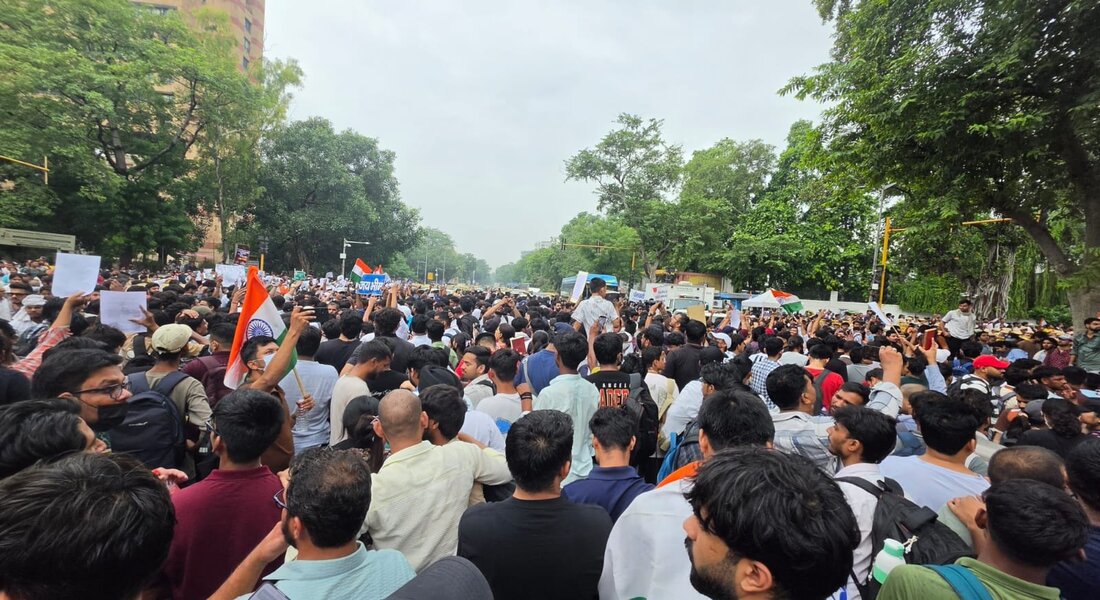
Despite the police action, demonstrations continued across central Delhi, with protesters regrouping at multiple locations. While Delhi Police estimated the gathering at around 8,000 people, the CJP claimed the turnout had crossed one lakh. Several media reports also described the gathering as one of the largest student-led demonstrations in recent years.

Earlier in the day, the Centre initiated dialogue with the protest leaders. CJP spokespersons Saurav Das informed that he and Ashutosh Ranka met Union Health Minister J.P. Nadda at his residence for around 10 minutes after the government reached out to the organisation. During the meeting, the CJP reiterated its three principal demands: the immediate release of activist Sonam Wangchuk from Safdarjung Hospital, the resignation of Union Education Minister Dharmendra Pradhan, and compensation of ₹1 crore for the families of students who allegedly died by suicide following the NEET-UG paper leak controversy.

Following the meeting, Das said in a post on X that the minister had accepted the memorandum and assured the delegation that he would discuss the matter internally at the appropriate level. However, he clarified that no commitments had been made by the government and asserted that the peaceful protest would continue until the demands were addressed.

In a post on X, Minister J.P. Nadda wrote:“The meeting took place in a cordial atmosphere. An initial verbal discussion was held in detail with their delegation, and they submitted a written petition to me around 4 p.m.”

The CJP’s memorandum accused the Education Minister of being directly responsible for repeated examination-related controversies, including the alleged NEET-UG paper leak, and criticised the government for failing to implement systemic reforms in the education sector.

The protest march drew support from leaders across the political spectrum and members of the cultural community. Azad Samaj Party chief Chandrashekhar Azad, Trinamool Congress MP Mahua Moitra, actors Prakash Raj and Shabana Azmi, and several leaders of the Aam Aadmi Party visited the protest site to express solidarity with the demonstrators.

AAP leader Atishi condemned the police action, saying the lathi-charge and firing of tear gas shells on students demanding the Education Minister’s resignation was “extremely cruel” and alleging that such actions reflected the government’s intolerance towards peaceful protests.

Meanwhile, activist Sonam Wangchuk remained admitted to Safdarjung Hospital after being shifted there by Delhi Police on July 18 following a deterioration in his health during his indefinite hunger strike. In a handwritten letter released from the hospital, Wangchuk reiterated that he would end his fast only if the government accepted accountability for alleged failures in the education system or Members of Parliament assured him that the issue would be taken up during the Monsoon Session. He has continued to describe his hospitalisation as “illegal detention”.

Delhi Police had earlier denied permission for the Parliament march and imposed prohibitory orders under Section 163 of the Bharatiya Nagarik Suraksha Sanhita (BNSS), maintaining that no authorisation had been granted for the procession. Security remained tight across central Delhi throughout the day, with barricades, riot-control vehicles and a heavy police presence deployed around Jantar Mantar and key routes leading to Parliament.

ASI carrying out excavations at two Odisha heritage sites

Bhubaneswar: The Archaeological Survey of India (ASI) is carrying out excavations at two heritage sites in Odisha, with a reported expenditure of Rs 58.79 lakh, Union Minister for Culture and Tourism Gajendra Singh Shekhawat informed the Lok Sabha on Monday in a written reply.

According to the minister, the ASI is undertaking excavations at the Sari Deul Complex in the Bhubaneswar locality of Khordha district and the Ashok Rock Inscription (Fort Jaugada) at Pandya in Purushottampur, Ganjam district.

The expenditure reported for the Sari Deul Complex stands at Rs 24,28,505, while Rs 34,51,306 has been allocated for the excavation at the Ashok Rock Inscription (Fort Jaugada). The combined expenditure on the two ongoing projects is Rs 58,79,811.

The minister also informed Parliament that the ASI has carried out 121 archaeological projects across the country during the last five years. Excavations have unearthed structural remains, burials, pottery and a range of antiquities, including coins, beads, ornaments, agricultural tools and bone objects. Recovered samples are sent to scientific institutions for validation whenever required, according to an official statement.

Shekhawat further said there has been no court order regarding the continuation or closure of any archaeological project undertaken by the ASI during the last five years.

The two Odisha sites are among the ongoing excavation projects aimed at documenting and preserving the country’s archaeological heritage through scientific exploration and research.

US intensifies Iran strikes as regional tensions spread across Middle East

New Delhi: The US carried out a fresh round of airstrikes on Iran for the ninth consecutive night, targeting sites that Washington said were linked to threats against commercial shipping in the Strait of Hormuz.

The latest attacks came as the conflict widened across the Middle East, with Iran launching retaliatory strikes against US-linked military positions in several countries.

The US Central Command said the strikes were intended to weaken Iran’s ability to target commercial vessels passing through the strategic waterway, a vital route for global oil supplies.

According to guardian.com, missile strikes were reported in several Iranian cities, including Tabriz, Chabahar, Konarak, Bandar Mahshahr, and Bandar Imam Khomeini. Explosions were also reported in the affected areas, though the extent of the damage was not immediately clear.

Iran’s Islamic Revolutionary Guard Corps (IRGC) claimed responsibility for missile attacks on US military targets in Kuwait and said it had also targeted US aircraft at Jordan’s Aqaba airport.

The IRGC further announced a strike on what it described as an enemy special operations headquarters in Syria’s Al-Tanf region. Air raid sirens were also reported in Bahrain.

US President Donald Trump said the latest operation was conducted in memory of American service members killed during the recent escalation. Speaking to reporters after returning to Washington following the FIFA World Cup final, he said the strikes honoured what he described as “three great patriots.”

The US military confirmed that one service member died in northern Iraq during a controlled detonation involving a downed Iranian drone, while two others were killed in an earlier Iranian attack in Jordan. According to the US, 17 American military personnel have been killed and more than 420 wounded since the conflict began.

Iran’s Health Ministry said US attacks over the past three weeks have killed at least 50 people and injured more than 500 others.

The conflict also raised concerns over maritime security in the Strait of Hormuz. The UK Maritime Operations Centre said it had received a report of a vessel on fire off the coast of Oman. Separately, the IRGC claimed that two oil tankers were destroyed while attempting to pass through the southern route of the strait. The claim could not be independently verified.

The IRGC further warned that the Strait of Hormuz would remain unsafe for oil and petrochemical shipments as long as US military operations continued in the region. It also threatened further military action against American forces.

Separately, US Secretary of State Marco Rubio accused Iran of using the Strait of Hormuz to pressure the international community and called on other countries to take stronger measures to safeguard global shipping routes.

The latest escalation pushed oil prices higher. Brent crude futures for September delivery rose 2.72% to USD90.50 a barrel in early Asian trading after briefly crossing USD91, its highest level since June.

Regional tensions continued to mount as Bahrain reported air raid sirens and the US Embassy warned that Iran could target unspecified locations in central Manama.

Following Iranian attacks on sites in Jordan, Israel warned that the conflict risked expanding further across the region, raising fears of a broader confrontation involving multiple countries.

Thousands gather at Jantar Mantar for CJP’s ‘Chalo Sansad’ march

New Delhi: Thousands of students, youth activists and supporters of the Cockroach Janata Party (CJP) gathered at Delhi’s Jantar Mantar on Monday before marching towards Parliament on the opening day of the Monsoon Session, defying heavy security arrangements and police attempts to stop the procession.

According to reports, sporadic clashes broke out between protesters and security personnel as demonstrators pushed through barricades, while several Delhi Metro stations were temporarily closed amid heightened security.

The march, organised under the banner of “Chalo Sansad”, was launched to demand greater accountability in the education system and action over the alleged NEET-UG paper leak. Even as police maintained a heavy presence across central Delhi, the Centre initiated talks with CJP leaders in an apparent bid to defuse the situation. However, the protesters reportedly insisted on holding discussions only with the Prime Minister or a Cabinet Minister.

Amid escalating protests, the Centre reportedly initiated efforts to open a dialogue with the Cockroach Janata Party (CJP). According to media reports, New Delhi Deputy Commissioner of Police Sachin Sharma held discussions with CJP representatives on behalf of the government. The protesters were reportedly offered meetings with the District Magistrate, a Union Government Secretary and later a Minister of State, but declined the proposals, insisting that talks should take place only with the Prime Minister or a Cabinet Minister. The CJP is understood to have submitted a list of preferred Union ministers for the proposed dialogue.

Meanwhile, activist Sonam Wangchuk, who remains admitted to Safdarjung Hospital after being shifted there by the Delhi Police on Saturday following the deterioration of his health during an indefinite hunger strike, said he was prepared to end his fast if the government accepted responsibility for alleged failures in the education system and Parliament agreed to take up the issue.

In a handwritten letter from the hospital, Wangchuk laid down three conditions for ending his hunger strike. He demanded that the government acknowledge accountability for the alleged lapses surrounding the NEET-UG examination, that Members of Parliament assure him the issue would be raised in both Houses, and that senior political leaders visit him in hospital to convey these assurances if his health prevented him from joining the Parliament march.

Meanwhile, the Delhi High Court agreed to hear on Monday afternoon an appeal filed by Wangchuk’s wife, Gitanjali J. Angmo, challenging an earlier order refusing permission to shift him from Safdarjung Hospital to a private medical facility of his choice. Her counsel argued that Wangchuk was not under arrest and retained the right to choose his treatment and hospital.

Heartbreak for Messi as European champions Spain lift FIFA World Cup title

Spain beat Argentina by a solitary goal to win the FIFA World Cup 2026 title on Sunday, clinching the prestigious trophy for the second time.

Substitute Ferran Torres’ 106th-minute goal silenced thousands of Argentine fans at New York New Jersey Stadium. Spain were too strong for Argentina, displaying an all-round performance throughout the match.

On the other hand, Argentina managed only two shots in the entire match.

Argentina goalkeeper Emiliano Martinez made a remarkable series of saves, but eventually he could not stop Torres’ thunderous strike.

Defending champions Argentina were reduced to 10 men in the 93rd minute when the referee showed a second yellow card to Enzo Fernandez.

Torres was named the Michelob Ultra Superior Player of the Match.

Later, talking to reporters, Spain Coach Luis de la Fuente said: “I feel especially proud of this generation of footballers who have grown with this idea, making it better and giving us an example of a group, of a family. They are players with exceptional talent. For me, it’s been an honour to have accompanied them on this journey. I’m very emotional, looking back. We have spoken a lot with the players.”

Argentina Coach Lionel Scaloni reacted with sorrow, saying: “[I feel] sadness, but knowing that we left everything out there. I have a lot of things to say about how we got here, but it’s not worth it. I want to thank these guys eternally for giving us another World Cup final and for competing until the end. They [Spain] were better, that’s the truth.”

US President Donald Trump and FIFA President Gianni Infantino presented the trophy to Spain Captain Rodri at MetLife Stadium.

According to reports, an estimated 1.5–1.8 billion viewers worldwide watched the final.

FIFA also honoured several players with individual awards following the conclusion of the final.

Rodri received the adidas Golden Ball Award for the tournament’s best player, while France superstar Kylian Mbappe collected the adidas Golden Boot Award for scoring an amazing 10 goals.

Spanish goalkeeper Unai Simon took home the adidas Golden Glove Award for recording seven clean sheets in eight matches.

The FIFA Best Young Player Award went to Pau Cubarsi, while Lionel Messi won the adidas Silver Ball Award.