At IndiaVerve, we go beyond the noise to bring you meaningful stories of change, resilience and progress—from India to the world stage. Our mission is to bring readers credible, wide-ranging coverage across politics, business, sports, culture, society and more.

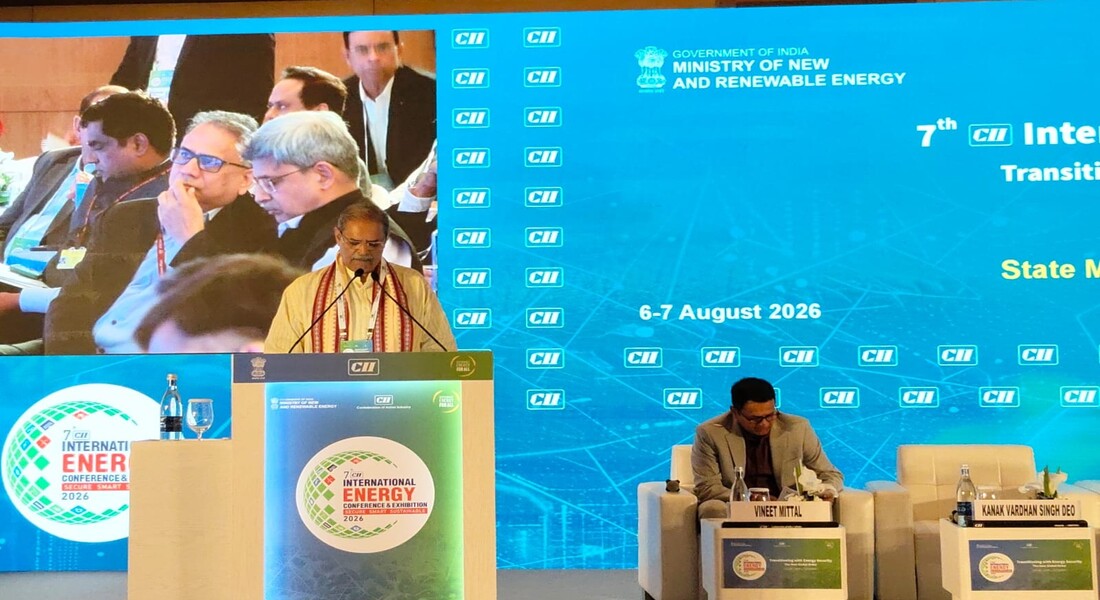
Deputy CM Kanak Singh Deo attends CII International Energy Conference in Delhi

Bhubaneswar: Odisha Deputy Chief Minister Kanak Vardhan Singh Deo attended the 7th CII International Energy Conference & Exhibition (IECE 2026) in New Delhi on Thursday.

The minister engaged with policymakers, industry leaders, global delegates, and energy experts from over 20 countries. The conference was held under the theme “Engage | Energize | Power.”

In a series of posts on X, Singh Deo said the global platform reaffirmed a collective resolve to shape a sustainable, secure, and future-ready energy ecosystem.

He said Odisha remained committed to driving innovation, strengthening energy resilience, and contributing meaningfully to India’s leadership in the global energy transition.

During the conference, the Deputy CM held a bilateral meeting with Sri Lanka’s Minister of Energy, Anura Karunathilake. The discussion focused on strengthening regional cooperation and advancing sustainable energy solutions.

Madhya Pradesh’s Minister for New and Renewable Energy, Rakesh Shukla, also joined the deliberations, contributing additional perspectives to the shared vision. Singh Deo said Odisha remained committed to fostering partnerships that drive innovation, resilience, and a cleaner energy future for the region.

Singh Deo also held a meeting with the leadership of Jakson Group, including Sudhanshu Pokhriyal, CEO of the Distributed Energy Business; Sidharth Das, Executive Vice President of the Distributed Energy Business; and Rohit Sharma, Senior Vice President of Corporate Affairs at JAKSON Infra.

Separately, he met Vineet Mittal, Chairman of the CII National Committee on Green Hydrogen and Founder & Chairman of Avaada Group, on the sidelines of the conference.

Govt plans roadside amenity centres every 50 km on major highways

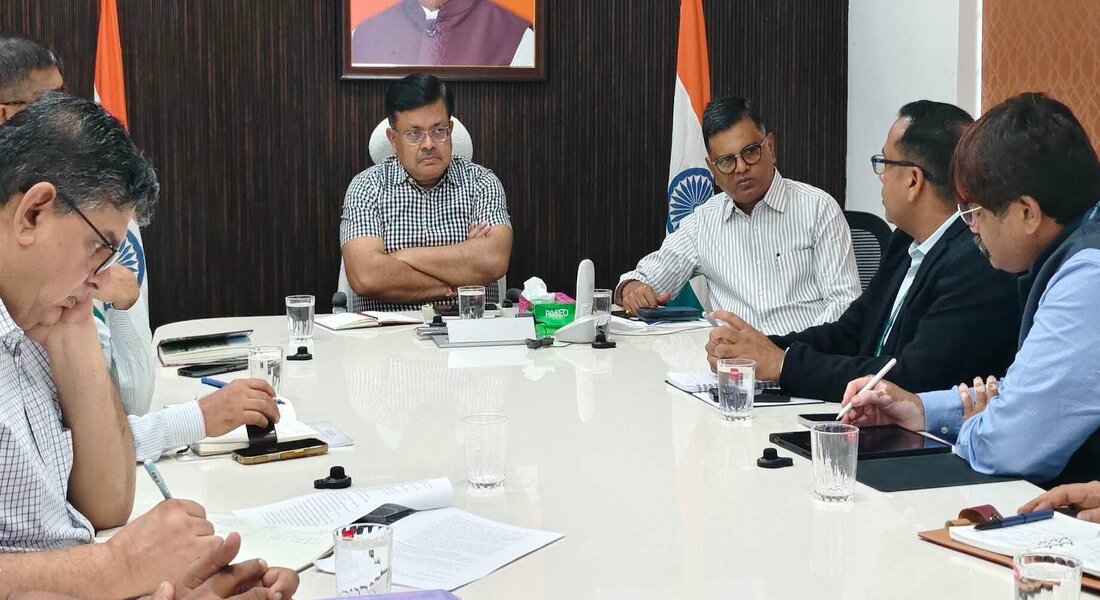
Bhubaneswar: The Odisha government is planning to establish roadside amenity centres at every 50-kilometre interval along national highways, state highways, expressways and major district roads to improve travel convenience and road safety across the state.

The proposal was discussed at a high-level meeting chaired by Law, Works and Excise Minister Prithviraj Harichandan, who reviewed plans for setting up the wayside facilities to cater to truck drivers, bus passengers, tourists and other road users undertaking long-distance travel.

According to an official release, the proposed Wayside Amenity Centres will provide a range of essential facilities, including separate toilets for men and women, EV charging stations, petrol pumps, food courts and rest houses. The initiative aims to ensure that travellers have access to basic amenities at regular intervals while also promoting safer and more comfortable journeys.

The government is planning to sign Memorandums of Understanding (MoUs) with public sector oil marketing companies in the first phase of the project. Under the proposed arrangement, the state government will provide land for the centres, while the oil companies will be responsible for their development, operation and maintenance.

The initiative is part of the state’s broader efforts to strengthen road infrastructure and improve road safety as Odisha expands its network of highways and expressways. Officials noted that the availability of well-equipped roadside facilities would benefit commercial vehicle operators, tourists and private vehicle users alike.

The meeting was attended by Works Department Principal Secretary Sanjay Kumar Singh, Transport Commissioner Amitabh Thakur, Works Department Special Secretary Sameer Hota, NHAI Regional Officer Pradeep Lal, Chief Engineer (National Highways) Narayan Patel, along with senior officials from the Works Department, Tourism Department and Hindustan Petroleum Corporation Limited (HPCL).

Iran, Oman close to Hormuz deal as US-Iran tensions persist

Talks on a new maritime corridor enter final stage, while reports highlight continuing disagreements over shipping control and concerns over US military readiness.

Iran and Oman are close to finalising an agreement on a new commercial shipping corridor through the strategically important Strait of Hormuz, signalling progress in efforts to restore maritime traffic through one of the world’s busiest energy routes even as wider tensions between Tehran and Washington remain unresolved.

The proposed arrangement comes after months of disruption in shipping through the Strait of Hormuz following the escalation of conflict involving Iran, the United States and Israel. The waterway carries nearly one-fifth of the world’s oil and liquefied natural gas (LNG) supplies, making any disruption a matter of global economic concern.

According to Al Jazeera, Iranian Foreign Ministry spokesperson Esmaeil Baghaei said negotiations between Tehran and Muscat were in the final stage of reviewing and drafting a joint statement after both sides agreed on the geographical coordinates of a new commercial shipping corridor. He said the discussions covered the technical, legal, security and environmental aspects of the proposed route and expressed hope that the process would conclude successfully if there was no external interference.

However, an agreement on the shipping corridor is not expected to automatically resolve the broader crisis between Iran and the United States. While Iranian officials have maintained that the negotiations are exclusively with Oman, Washington has reportedly rejected any arrangement that would leave Iran in control of maritime traffic or require ships to obtain permits or pay transit fees. The report noted that broader peace talks could resume once an agreement on the Strait of Hormuz is reached, although it remains unclear whether any arrangement would be temporary.

The BBC reported that Iran has described the proposed corridor as a temporary arrangement that could remain operational for two to four months. Baghaei also cautioned that the agreement would not by itself guarantee safe navigation, arguing that security concerns persist because of what Tehran described as the continued US naval blockade and other military actions against Iran.

One of the principal sticking points in the negotiations has been Iran’s proposal to levy transit fees on vessels using the Strait of Hormuz. Iran has reportedly proposed fees of between five and seven per cent of cargo value, Oman has discussed a lower fee of around three per cent, while the United States has opposed any such charges. Shipping through the Strait has been severely disrupted in recent months, with Iran requiring prior clearance for vessels and reportedly attacking some ships that did not comply with its directives.

Oil prices edged lower after signs of progress in the negotiations, with Brent crude falling marginally during Asian trading. Energy markets have remained highly sensitive to developments in the Strait because of its critical role in global oil and LNG transportation.

Meanwhile, The Washington Post reported that concerns over dwindling US stocks of long-range guided missiles and air-defence interceptors have become one of the factors influencing Washington’s military options in the region. According to that report, President Donald Trump questioned Defence Secretary Pete Hegseth during a recent meeting over the state of US munitions stockpiles after learning that shortages remained despite earlier assurances.

The United States has reportedly consumed large quantities of precision-guided weapons, including Tomahawk cruise missiles, Patriot interceptors, THAAD systems and tactical ballistic missiles during the recent conflict. Although additional production has been authorised, replenishing these inventories could take months or even years, limiting immediate military flexibility.

President Trump has publicly maintained that the United States possesses ample military resources while also saying discussions over the Strait of Hormuz were progressing. At the same time, Iranian officials have reiterated that any negotiations are being conducted through Omani mediation rather than directly with Washington.

The developments indicate that negotiations over the Strait of Hormuz are advancing, but significant differences remain over navigation rights, security arrangements and the broader diplomatic relationship between Iran and the United States. Until those issues are resolved, uncertainty over one of the world’s most critical maritime trade routes is likely to continue.

El Niño could push 49 million more people into acute hunger by 2027: WFP

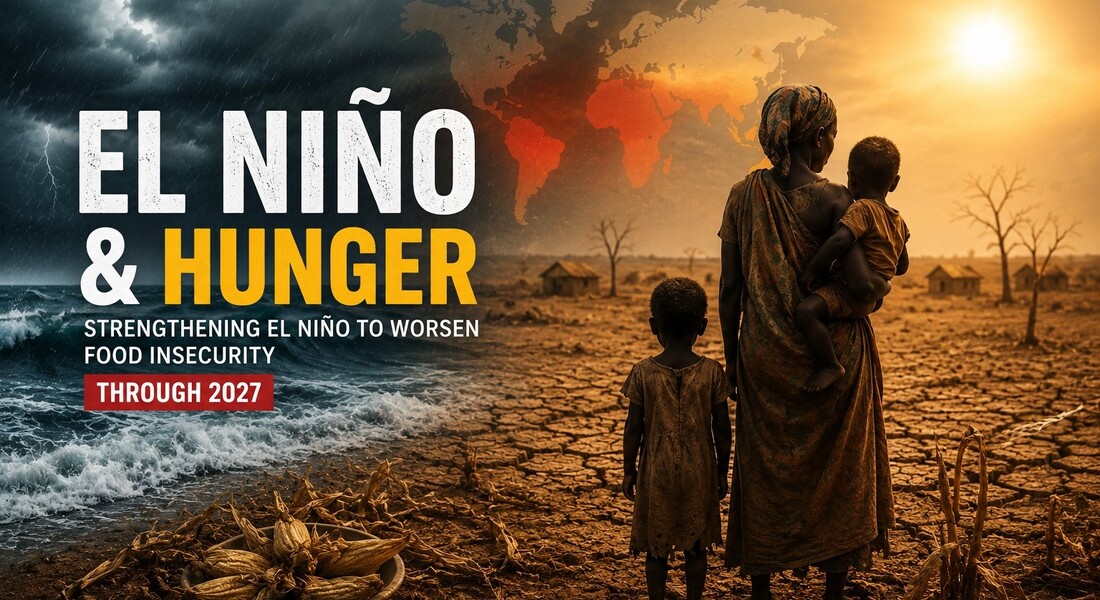
New Delhi: The UN World Food Programme (WFP) has said that the strengthening El Niño weather pattern is set to significantly worsen food insecurity in some of the world’s most vulnerable countries through 2027.

According to the agency’s latest analysis, the impacts of El Niño are already being felt by the most vulnerable communities on the frontlines of hunger, prompting WFP to ramp up its preparedness and response efforts.

Carl Skau, WFP’s Acting Executive Director, said El Niño posed a massive threat to the food security of millions of people who were already vulnerable. He said the sooner families were helped to prepare for climate shocks, the greater the agency’s ability to save lives and protect livelihoods.

According to him, severe floods and droughts could quickly push communities from coping into crisis.

He added that WFP was already scaling up early response efforts in eight countries and stood ready to do more.

El Niño is expected to peak between September and December 2026, though its effects are likely to be felt throughout 2027 owing to disruptions in future harvest cycles, the WFP said in a press release. The report noted that drought, flooding, and extreme temperatures were already putting communities at risk in several regions.

WFP said it was taking early action in partnership with the Food and Agriculture Organization, the UN Office for the Coordination of Humanitarian Affairs, and other agencies, with active anticipatory action plans now running in more than 50 countries.

Since May, the agency has triggered such plans in South Sudan, Chad, Mauritania, Uganda, Guatemala, and El Salvador, providing over USD 14 million in life-saving support to half a million people. This has included scaling up pre-arranged financing tools such as disaster risk insurance, credit lines, and digital payments to make funds available faster and at lower cost.

The agency said experience showed that every USD 1 invested in anticipatory programs could save between USD 3 and USD 7 in avoided losses and response costs.

WFP recalled that the 2015-2016 El Niño had affected the food security of 60 to 100 million people. Its early analysis now projects that the 2026-2027 El Niño could push at least 49 million more people into acute food insecurity by the end of 2027.

The analysis covered 45 countries already considered food insecure, where El Niño is expected to significantly alter rainfall patterns, temperatures, and the frequency of floods and droughts. Across these countries, the number of acutely food-insecure people is projected to rise from approximately 225 million to around 274 million, an increase of nearly 22%.

Nandan Nilekani says India to have over a million startups by 2035

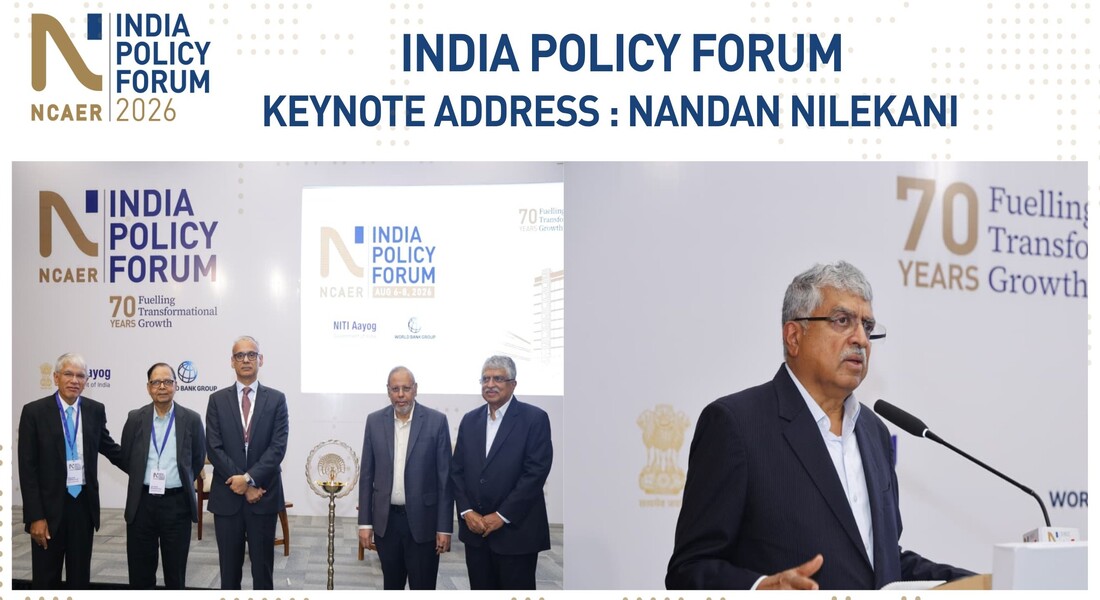
New Delhi: Infosys Co-founder and Chairman Nandan Nilekani on Thursday said India will have more than a million startups by 2035.

He was delivering the opening remarks at the India Policy Forum 2026 conference, organised by the National Council of Applied Economic Research (NCAER).

Nilekani, who also chairs NCAER’s governing board, made a strong case for supporting entrepreneurship. He said India’s startup count grew from 10,000 to 150,000 in just 10 years, a pace he expects to continue.

He urged that AI be made available in all Indian languages, adding that significant value and productivity gains would follow from giving a billion people access to AI.

At a separate session of the conference, panellists discussed how India can build more effective and accountable regulatory systems. The session was chaired by Professor S. Mahendra Dev, Chairman of the Economic Advisory Council to the prime minister.

It was noted that regulation, largely carried out through statutory regulatory authorities, remains deeply embedded in India’s economic landscape, and that regulatory intervention is often necessitated by market failures linked to asymmetric information, negative externalities, and market power.

The panel called for stronger checks and balances within regulatory institutions and structural reforms to the legal frameworks governing them, the NCAER said in a series of posts on X.

The session featured Ajay Shah of XKDR Forum, Dr Devesh Kapur and Dr Pravin Krishna of Johns Hopkins University, and Dr Rana Hasan of NCAER’s Centre for Economic Growth and Development.

Separately, a team of economists and NCAER academic faculty released the India Policy Forum 2025 volume, containing research papers presented at the previous IPF conference. The papers, based on original research, were published after revisions incorporating IPF discussants’ comments, floor discussions, and editorial review, with support from an international research panel.

The volume was released by NCAER Vice Chairman Manish Sabharwal, NCAER Non-Resident Senior Fellows and Professors Karthik Muralidharan and Pravin Krishna, and NCAER Secretary and Operations Director Dr Anil Sharma.

The release was followed by a keynote address on “Savings and Investment Potential in India” by NITI Aayog Vice Chairman Dr Ashok Lahiri.

Health minister reviews post-flood healthcare situation in Jajpur

Bhubaneswar: Odisha Health Minister Dr. Mukesh Mahaling on Thursday inspected the Jajpur District Headquarters Hospital and enquired about the health condition of patients undergoing treatment there.

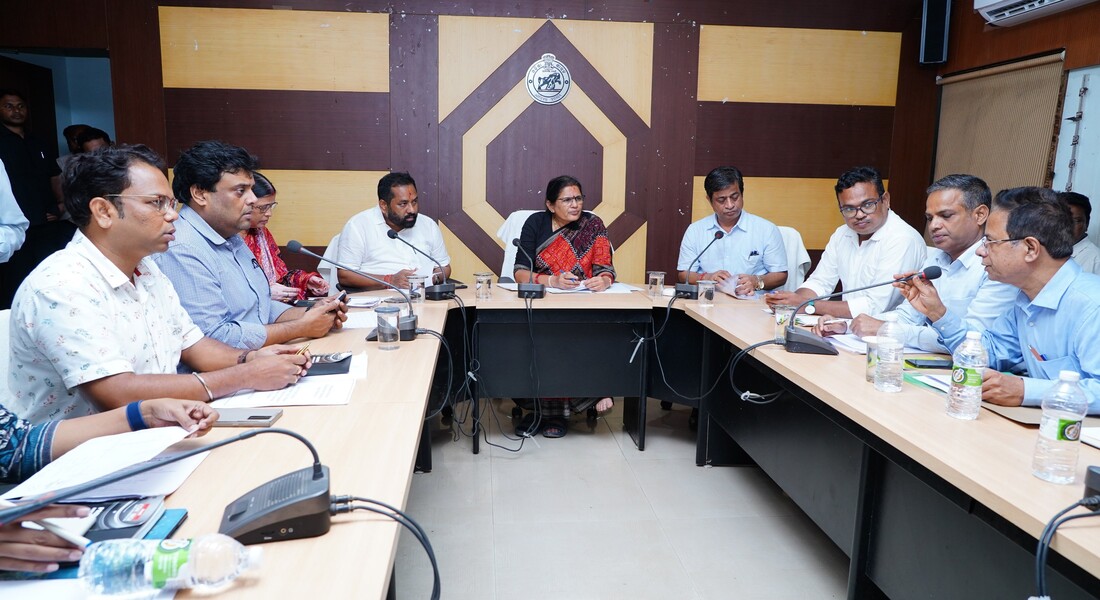
During the visit, he reviewed the situation regarding diarrhoea, malaria, and other communicable diseases, along with the availability of medicines and the management of healthcare services. He directed departmental officials to remain vigilant so that no lapse occurs in healthcare delivery.

Mahaling later attended an important review meeting on post-flood healthcare at the District Collector’s conference hall, where various aspects of the situation were discussed. He said that of the 60 pregnant women who had come to the hospital during the floods, 47 have safely returned home after healthy deliveries.

He added that government health centres have adequate stocks of anti-snake venom and other essential medicines.

The minister further said the post-flood health situation remains fully under control under the direct supervision of the Health Department and the Director of Public Health. Mahaling noted that tube wells in the affected areas are being disinfected with bleaching powder, while halogen tablets are being distributed to the public.

Mahaling thanked doctors, health workers, Accredited Social Health Activist workers, anganwadi workers, and the Jajpur district administration for their tireless effort and continuous service during the crisis.

The District Collector, the Chief District Medical Officer, and other officials were present at the review meeting.

Odisha hosts ‘E3 – Energize Empower East 2026’ to boost electrical, electronics sector

Bhubaneswar: Odisha’s Minister of State (Independent Charge) for Industries, Skill Development and Technical Education, Sampad Chandra Swain, inaugurated the EXPO at “E3 – Energize Empower East 2026” in Bhubaneswar.

The event was organised by the Indian Electrical and Electronics Manufacturers’ Association in partnership with the Government of Odisha at a Bhubaneswar hotel.

Deputy Chief Minister Kanak Vardhan Singh Deo also attended the inaugural session alongside Swain. Swain visited the exhibition stalls and interacted with electrical and electronics equipment manufacturers, material suppliers, and entrepreneurs at the venue.

Swain said the innovation, technology, and entrepreneurial spirit on display were driving growth in the electrical and electronics sectors and powering the future of Eastern India.

He said that under the guidance of Prime Minister Narendra Modi and the leadership of Chief Minister Mohan Charan Majhi, Odisha’s power sector is undergoing a significant transformation, citing industrial growth, green energy expansion, smart grid development, and EV adoption as part of the state’s Vision 2036 roadmap.

He described Odisha as an emerging hub for electrical manufacturing, innovation, and exports, and invited industry leaders to partner with the state in developing manufacturing clusters, strengthening supply chains, promoting MSMEs, and advancing R&D and skills.

Swain wished the event success, expressing hope that it would lead to new investments, strategic partnerships, and sustainable growth for Eastern India.

Singh Deo said the event reflected the government’s collective resolve to energise the East through new opportunities, skill development, and industrial growth, strengthening Odisha’s role in India’s journey of progress.

Speaking at the same venue, Hemant Sharma, IAS, Additional Chief Secretary, Industries Department, said that with over Rs 10 lakh crore in active investments, Odisha offers significant opportunities for electrical equipment manufacturers to invest and expand.

Netflix launches ‘As Seen on Netflix’ section on Incredible India portal

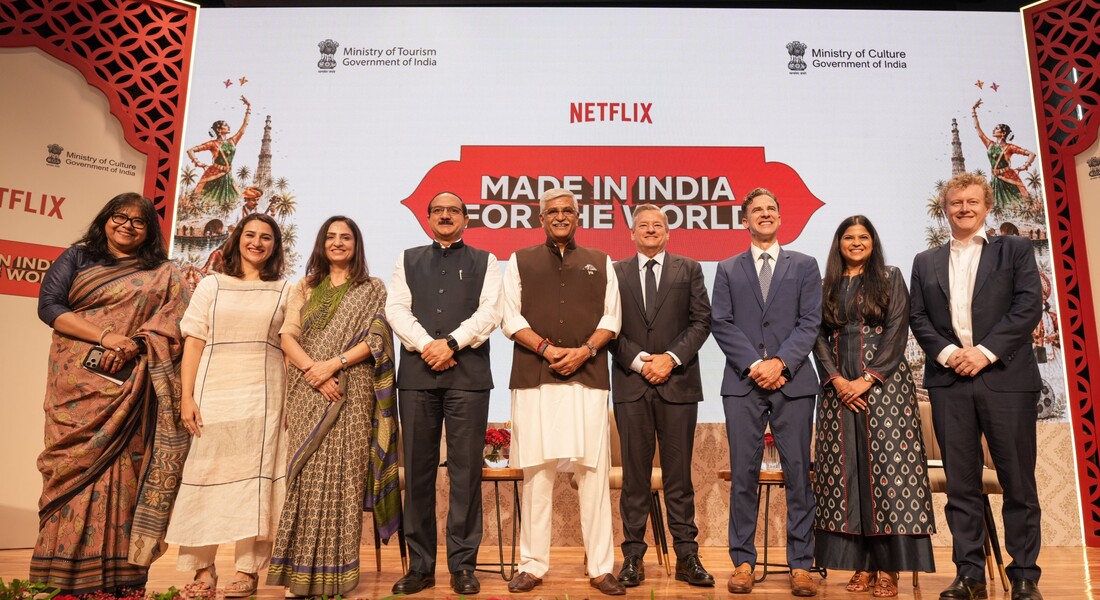
New Delhi: Union Minister for Culture and Tourism Gajendra Singh Shekhawat has launched the ‘As Seen on Netflix’ section on the Incredible India portal.

The initiative was developed under the ongoing collaboration between the Ministry of Tourism and Netflix India, according to an official statement.

The new section will allow global audiences to discover the real locations, cultural traditions, and authentic experiences featured in Netflix India’s films and series. Officials said the move is aimed at promoting India’s rich cultural heritage and tourism potential.

The launch coincided with a special event at the National Gallery of Modern Art in New Delhi, marking 10 years of Netflix in India. Netflix Co-Chief Executive Officer Ted Sarandos joined the Union minister for a fireside conversation on how storytelling is transforming India’s cultural heritage, tourism, and creative economy.

Speaking at the event, Shekhawat said India’s stories have inspired the world for thousands of years, and that technology now offers an unprecedented opportunity to carry these stories to every corner of the globe.

He noted that the creative economy is emerging as a powerful driver of growth, generating livelihoods while preserving India’s cultural identity. He welcomed partnerships that empower Indian talent and showcase the country’s civilisational heritage with authenticity, adding that culture is not merely India’s inheritance but one of its greatest strategic strengths.

Sarandos said there is not one India but many Indias, each with its own stories and traditions. He observed that stories rooted in different parts of the country have resonated with global audiences over the past decade and inspired people to experience India’s destinations and cultures firsthand.

He reaffirmed Netflix’s commitment to continuing its partnership with the Ministry of Culture and the Ministry of Tourism to take more of India’s stories to the world.

Both leaders reaffirmed their shared commitment to promoting authentic stories rooted in India’s diverse cultures, landscapes, and traditions, while strengthening the country’s creative economy and global cultural footprint.