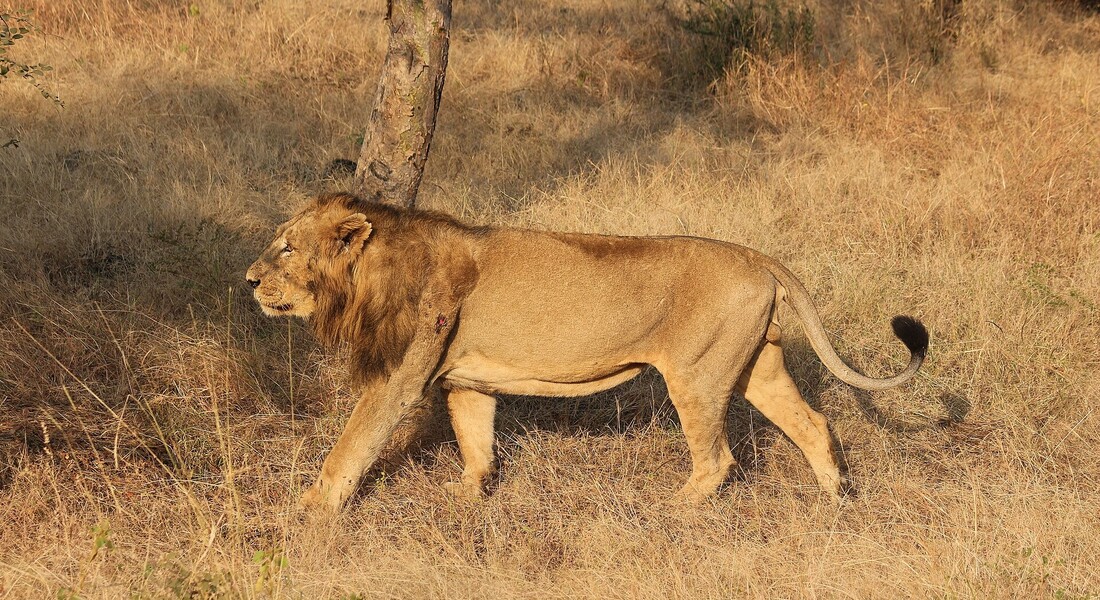

New Delhi: India’s Asiatic Lion population has crossed 891 individuals in 2025, marking a sharp rise from 523 in 2015, Union Environment Minister Bhupender Yadav announced on World Lion Day 2026.
Yadav credited forest officials, conservationists and local communities for the conservation success, according to an official statement.
In a post on X, he said India’s achievement stood as proof of the nation’s commitment to protecting wildlife and biodiversity.
The minister added that the country remained resolved to safeguard its natural heritage for future generations.
“As we mark World Lion Day, let us reaffirm our resolve to safeguard our natural heritage and ensure that the roar of the Asiatic Lion continues to resonate for generations to come,” Yadav noted.
Similarly, Union Minister of State for Environment Kirti Vardhan Singh marked the occasion. He said India had shown the world that development and nature could progress together through protected habitats, stronger conservation programmes and greater coexistence between people and wildlife.
The conservation push traces back to Project Lion, launched by Prime Minister Narendra Modi on August 15, 2020, to secure the long-term survival of the species. Since then, the lions’ range has expanded from about 30,000 square kilometres to nearly 35,000 square kilometres.
The project follows a landscape-level approach that combines habitat improvement, disease surveillance, veterinary care, scientific population monitoring, technology-driven tracking and community participation in conservation efforts.