
New Delhi: The Union Cabinet on Wednesday approved a series of measures covering agricultural support, renewable energy transmission, and urban traffic management.
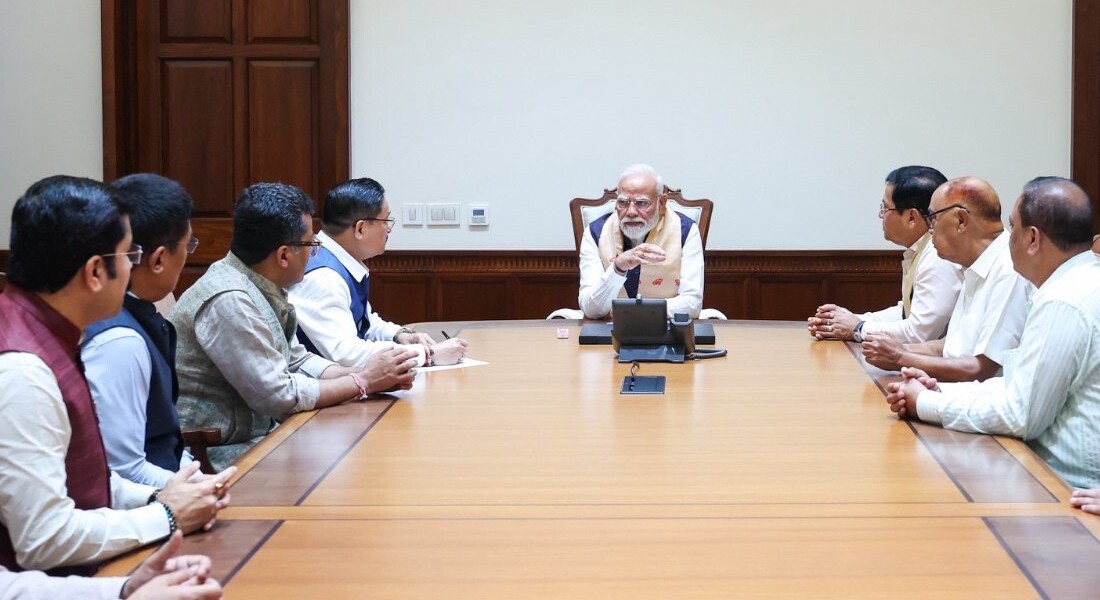
The Cabinet Committee on Economic Affairs, chaired by Prime Minister Narendra Modi, approved the increase in Minimum Support Prices (MSP) for all mandated Rabi crops for the 2027-28 marketing season, according to an official statement.
The highest absolute increase has been approved for safflower at Rs. 675 per quintal, followed by rapeseed and mustard at Rs. 413 per quintal. The MSP for lentil (masur) will increase by Rs. 390 per quintal, while barley, gram and wheat will see increases of Rs. 136, Rs. 83 and Rs. 25 per quintal, respectively.
The government said the MSP increases are aimed at ensuring remunerative prices for farmers and are in line with the Union Budget 2018-19 decision to fix MSP at a level of at least 1.5 times the All-India weighted average cost of production.
The expected margin over the All-India weighted average cost of production is 106% for wheat, 96% for rapeseed and mustard, 92% for lentil, 59% for gram, 58% for barley and 50% for safflower.
The government said higher MSPs for pulses and oilseeds in recent years are also intended to encourage crop diversification beyond cereals.
According to the figures released by the government, wheat procurement during 2014-15 to 2025-26 stood at 3,715 LMT, compared with 2,254 LMT during 2004-05 to 2013-14. Procurement of the six Rabi crops during 2014-15 to 2025-26 increased to 3,921 LMT from 2,302 LMT during the earlier period.
The MSP amount paid to wheat-growing farmers during 2014-15 to 2025-26 rose to Rs. 7.31 lakh crore from Rs. 2.56 lakh crore during 2004-05 to 2013-14. For farmers growing the six Rabi crops, the corresponding MSP payments increased to Rs. 8.36 lakh crore from Rs. 2.65 lakh crore.
In another major decision, the Union Cabinet approved the Green Energy Corridor Phase-III (GEC-III) scheme to strengthen India’s intra-state transmission system and facilitate the evacuation of up to 135 GW of renewable energy across States and Union Territories.
The scheme also includes deployment of 50 GWh of Battery Energy Storage Systems (BESS) at renewable energy developer or generator ends, or at other locations considered important for grid flexibility. The storage systems are intended to help address intermittency, congestion, peak-hour curtailment, and demand during non-solar hours.
The scheme is targeted for completion by FY 2032-33 and has a total project outlay of Rs. 1,86,405 crore. Of this, Rs. 1,36,378 crore is earmarked for development of intra-state transmission systems under GEC-III and Rs. 50,000 crore for 50 GWh of BESS.
The scheme will involve Central Financial Support of Rs. 54,082 crore. The government said the assistance will help offset intra-state transmission charges and keep power costs lower for end users.
Greenfield projects under the intra-state transmission component will be implemented through Tariff Based Competitive Bidding, while brownfield upgrades and network-strengthening works will be undertaken on a Cost Plus Basis. State Transmission Utilities will serve as the overall implementing agencies, while Transmission Service Providers will participate through the TBCB route under a Build-Own-Operate-Maintain model.
The government said GEC-III will support the target of 900 GW of installed non-fossil capacity by 2035 and contribute to long-term energy security and lower carbon emissions. The scheme is also expected to generate employment across the power, manufacturing and construction sectors, as well as in battery energy storage, operations, maintenance and grid management.
The Cabinet also approved implementation of the Intelligent Traffic Management System project by Delhi Police at an estimated cost of Rs. 1,789.52 crore, inclusive of taxes.
The project will cover 42 identified traffic corridors and will be implemented in three phases over 24 months, followed by five years of operation and maintenance.
The technology-led initiative aims to improve traffic management, transport infrastructure, and urban mobility in the National Capital. It will use real-time traffic data, adaptive traffic signals, automated enforcement and integrated command-and-control systems to manage Delhi’s existing road network.
Delhi has around 71 lakh active registered vehicles, according to the government. The government noted that vehicle growth has substantially outpaced road infrastructure expansion, while traffic regulation still relies heavily on fixed signal timings and manual intervention.
The ITMS is intended to make better use of existing road capacity by enabling traffic management to respond dynamically to actual road conditions.