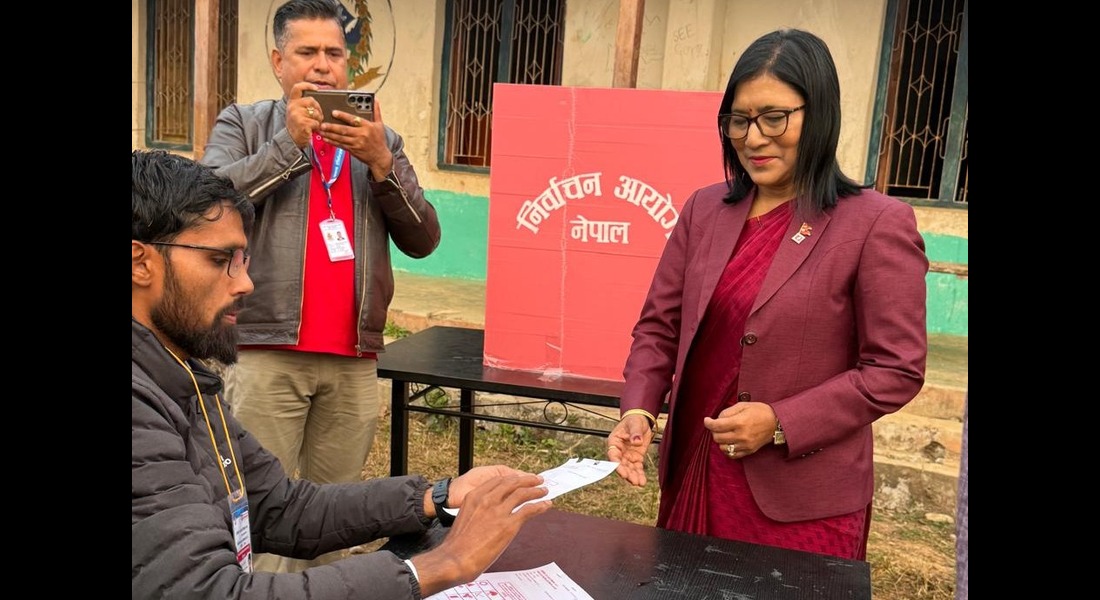

Kathmandu: Voting was underway across Nepal on Thursday in the country’s first general election since mass protests led to the resignation of former prime minister KP Sharma Oli earlier this year. More than 18 million voters are eligible to cast ballots to elect the 275-member House of Representatives.
Polling began at 7 am and is scheduled to continue until 5 pm. Of the total parliamentary seats, 165 will be decided through direct voting while the remaining 110 will be filled through a proportional representation system based on the overall vote share secured by political parties. Ram Prasad Bhandari, acting chief commissioner of the Election Commission of Nepal, has stated that the conducive atmosphere has been created for confident voting, the Himalayan Times reported.
The elections come nearly six months after widespread protests forced the resignation of Oli following public anger over a government decision to ban several social media platforms. Although the ban was lifted within days, the demonstrations expanded into broader protests against alleged corruption and governance failures, eventually leading to the government’s collapse.
Some polling disruptions were reported during the voting process. According to Nepalnews.com, polling did not begin at two centres in Darchula district after residents boycotted the vote. In Apihimal Rural Municipality and Nauged Rural Municipality, voters refused to participate, continuing a no-vote campaign launched earlier this year to press for administrative reforms and ward restructuring. The two centres together have nearly 950 registered voters.
Security arrangements have been tightened nationwide to ensure smooth polling. Nepal’s Home Minister Om Prakash Aryal, Home Secretary Raj Kumar Shrestha and chiefs of various security agencies monitored the electoral process from the Home Ministry’s control room, according to officials.
Logistical measures have also been taken to ensure voting access in remote areas. The Himalayan Times reported that helicopters were used to transport election materials to isolated mountainous regions and are expected to help deliver ballot boxes from dozens of remote polling stations to counting centres.
Security forces have been deployed in multiple layers around polling centres and ballot transport routes. The Nepal Army will provide outer-layer security for ballot boxes, with the Armed Police Force and Nepal Police handling inner security responsibilities.
The election is being closely watched as a key test of Nepal’s political stability following months of unrest and calls for governance reforms.