
Escalating US-Israel actions, Iran’s calibrated response and shifting global diplomacy shape an uncertain regional trajectory
More than five weeks into the ongoing West Asia conflict, the situation remains volatile, layered and deeply uncertain. What began with coordinated US-Israeli strikes on Iran on February 28 has now evolved into a wider regional confrontation marked by direct military exchanges, economic disruptions and a fragmented diplomatic response.
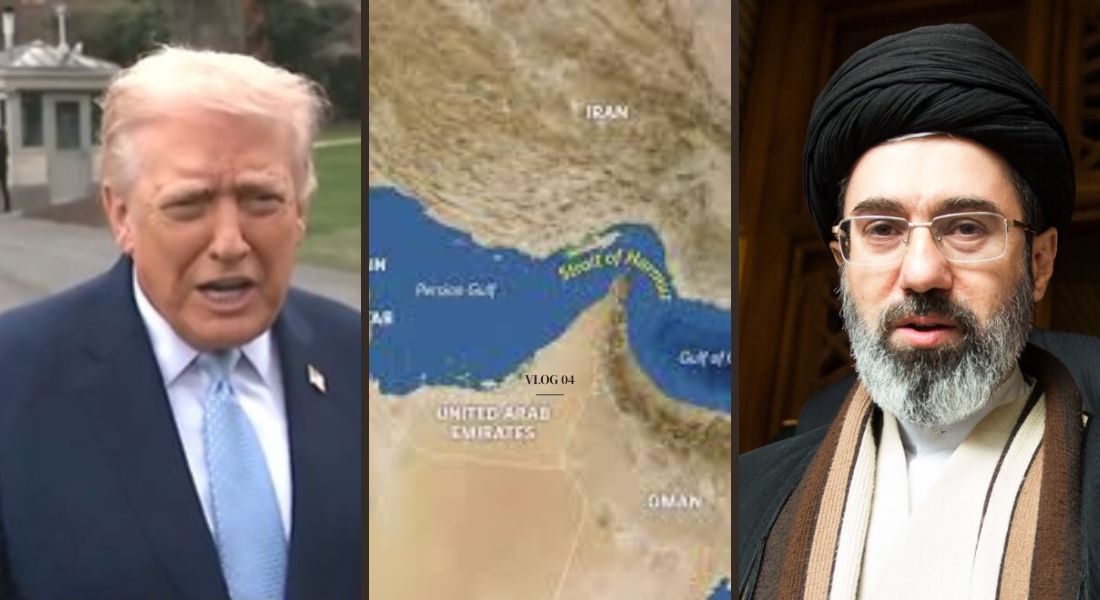
At the centre of the crisis lies the Strait of Hormuz, a critical global energy corridor through which nearly a fifth of the world’s oil supply passes. Iran’s effective control over the passage has disrupted maritime flows, contributing to global price volatility and raising concerns over energy security.
Despite sustained military pressure from the United States and Israel, Iran has not shown signs of strategic collapse. Instead, Tehran has adopted a calibrated approach that combines controlled escalation with selective restraint. While it has restricted access through Hormuz, it has allowed limited movement of essential shipments, signalling an attempt to maximise pressure without triggering a full-scale global backlash.
Military Escalation Outpaces Diplomatic Efforts
Experts suggest that the conflict has entered a phase where military actions are clearly dominating over diplomacy. “Since the onset of the conflict, hostilities have continued to escalate unabated. At present, there are hardly any discernible indications of de-escalation from either side,” says Dr Prashant Kumar Pradhan, Research Fellow and Coordinator, West Asia Centre at Manohar Parrikar Institute for Defence Studies and Analyses, New Delhi.
“While the intensity of the conflict continues to rise, diplomatic efforts remain inadequate and disproportionate to the scale and urgency of the crisis,” he adds, highlighting the widening gap between battlefield developments and diplomatic efforts.
Echoing this assessment, Animesh Roul, Executive Director of the Society for the Study of Peace and Conflict, a New Delhi–based policy research group, describes the situation as a “military-dominant posturing by the US and Israel,” with Iran relying on “retaliatory and proxy-led actions.” He further points out that “the Strait of Hormuz is largely disrupted” and that Iran “still holds the dominant position here, restricting global oil shipments,” underlining the strategic influence Tehran currently enjoys.
From Strategic Ambiguity to Controlled Resistance
A defining feature of this phase of the conflict has been the inconsistency in messaging from Washington. US President Donald Trump has alternated between issuing severe threats, including warnings of bringing Iran “back to the Stone Age” and even using expletives, and signalling openness to negotiations. Deadlines have been announced and extended, even as military posturing has intensified. This dual approach has created strategic ambiguity, with the US simultaneously projecting coercion and conciliation.
Iran, however, has rejected negotiations under pressure, dismissing US ultimatums while warning of strong retaliation. This reflects what Dr Pradhan characterises as “steadfast and inflexible” positions on both sides, with neither showing willingness to step back.
Roul adds nuance to this contradiction, noting that while public rhetoric seems aggressive, “diplomacy is happening via backchannels,” with mediators attempting to push for talks or temporary slowdown in hostilities.
He suggests that “there could be a peace or truce on the horizon,” although the situation remains fluid and uncertain. Iran’s response has been shaped by its long-standing doctrine of asymmetric warfare and strategic resilience. Instead of matching US military strength, it has relied on measured responses, regional signalling and economic pressure. Expectations that sustained strikes would weaken Iran internally have not materialised in any visible form. As Roul observes, “a resilient regime like Iran may not bend easily… until its major power centres remain intact.”
From Shadow Conflict to Open Confrontation
To understand the present escalation, it is necessary to situate it within a broader historical context. Hostility between the United States and Iran dates back to the 1979 Islamic Revolution and has since been marked by sanctions, proxy confrontations and periodic crises. At the same time, Israel has consistently viewed Iran’s nuclear and missile capabilities as an existential threat. What distinguishes the current phase is the shift from indirect confrontation to overt military engagement.
While the United States and Israel remain aligned in their actions, their strategic objectives appear to diverge in emphasis. Israel’s priority remains the neutralisation of Iran’s long-term military capabilities, while the United States appears to be balancing deterrence, energy security and negotiation outcomes. This divergence helps explain the inconsistency in US messaging, as Washington navigates between escalation and the need for an eventual exit strategy.
The conflict has also raised concerns about regional expansion. Dr Pradhan warns that “if [Gulf states] choose to initiate offensive operations against Iran, the conflict risks expanding into a wider regional war.” He notes that although these countries have so far refrained from retaliation, the risk of escalation remains significant.
Roul, however, argues that the conflict has already moved beyond its initial boundaries, stating that it “has already regionalized into a multi-theatre war,” with both state and non-state actors involved. He highlights the involvement of proxy groups such as Hezbollah and the Houthis, indicating that the conflict’s footprint is expanding even without formal declarations by additional states.
Hormuz Disruption and Global Economic Impact
The disruption of the Strait of Hormuz continues to be a major global concern. Dr Pradhan emphasises that “approximately 20 per cent of global energy supplies transit through the Strait of Hormuz,” and warns that while current disruptions may be manageable in the short term, they could lead to “severe repercussions over the medium to long term.”
Roul reinforces this concern, stating that prolonged disruption “would worsen global energy shortages” and could lead to “industrial slowdown worldwide.” The economic implications of the conflict are thus no longer regional but global in scope.
This emerging stress on global energy systems is already becoming visible. With transit volumes through the Strait significantly reduced, a substantial portion of global oil supply has been temporarily disrupted, tightening markets and pushing crude prices above the USD 100 per barrel mark. According to maritime data firm Lloyd’s List Intelligence, only around 150 vessels, including tankers and container ships, have passed through the strait since March 1, with most linked to Iran as well as countries like China, India and Pakistan. Analysts and international energy agencies have flagged the situation as a major supply shock, warning that sustained disruption could drive inflation, increase transportation and production costs, and place additional strain on energy-dependent economies, particularly across Asia.
India’s Balancing Act in a Volatile Region
Amid these developments, India has adopted a cautious approach. As Dr Pradhan notes, India “maintains cordial relations with Israel, Iran and the Arab states” and has pursued “a nuanced and balanced approach… while avoiding being perceived of overt alignment.”
Roul similarly observes that India is “playing a cautious and balancing game,” prioritising energy security and strategic autonomy. He adds that India is engaging multiple stakeholders to ensure oil tanker safety and support de-escalation efforts, while also safeguarding its diaspora and strategic assets.
The trajectory of the conflict remains uncertain. While a negotiated pause remains a possibility, both experts suggest that a full de-escalation is unlikely in the immediate term. As Roul puts it, “a full de-escalation is unlikely, and the situation is still fluid.”
At its core, the conflict in West Asia today highlights a complex and ongoing geopolitical shift. The mix of US policy contradictions, Iran’s calculated defiance, and a divided international response has resulted in a fragile and uncertain balance. What makes the situation particularly concerning is not just the intensity of the conflict, but the lack of a clear and credible pathway to resolution.
***
Saroj Pattnaik is a communications practitioner working at the intersection of media, storytelling, and social change. He focuses on shaping narratives around underreported issues and advancing discourse on development and equity. The views expressed are personal.