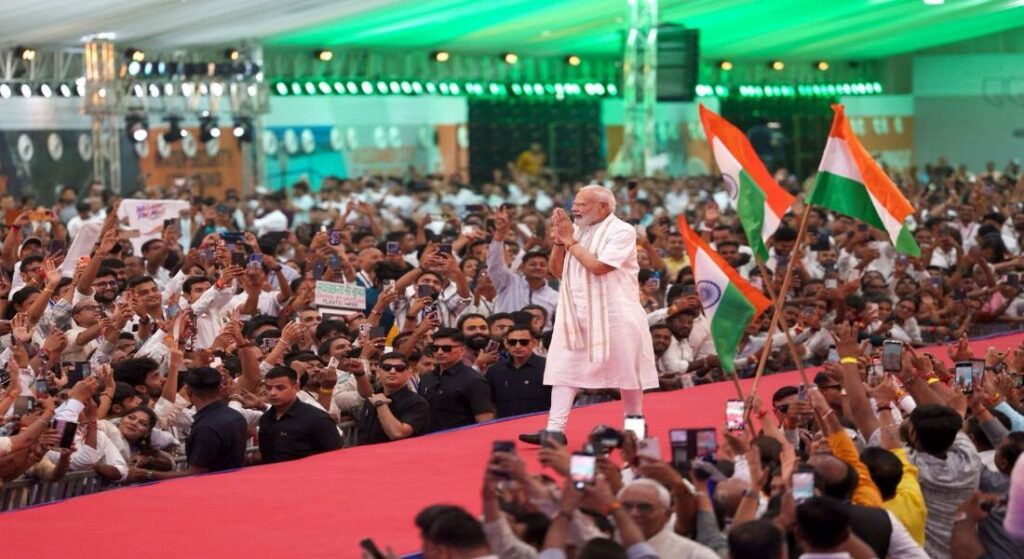
New Delhi: Prime Minister Narendra Modi on Saturday said he felt deep sorrow over the inability of the proposed Nari Shakti Vandan Adhiniyam Amendment to move forward, describing it as a setback for efforts aimed at strengthening women’s representation in governance.
He made the remarks while addressing the nation, according to an official statement.
He said he regretted the development and extended an apology to women across the country, noting that the legislation had been designed to significantly enhance their participation in political and decision-making processes. According to him, the proposal was intended to create long-term structural changes to ensure greater inclusion of women in legislative institutions.
In a series of posts on X, Modi said the government had undertaken sustained efforts to advance the proposed amendment, adding that the intent behind the legislation was reform-oriented and aimed at expanding democratic participation. He maintained that national interest remained paramount and should not be overshadowed by political considerations.
The PM also criticised certain political parties, alleging that they had prioritised partisan objectives over a reform meant to benefit women. He said such resistance had come in the way of what he described as an important initiative for empowering half the population.
Explaining the intent of the proposal, the prime minister said the amendment was designed to increase women’s representation in legislative bodies through a structured and equitable expansion of seats across states. He said the objective was to ensure that representation grows in a balanced manner without disadvantaging any region.
Modi further said that women across the country were closely observing political developments and would take note of those responsible for blocking empowerment-related measures. He added that grassroots participation of women in local governance structures had already demonstrated their growing role in public life.
Addressing concerns related to delimitation, he clarified that no state would lose representation under the proposed framework and that the intention was to ensure fair and proportionate expansion of seats across all states.
Referring to earlier reforms such as digital payments, the Goods and Services Tax, and the law against Triple Talaq, he said that several major policy decisions in the past had faced resistance before eventually being accepted as transformative measures.
The prime minister reiterated that his government remained committed to the broader goal of women’s empowerment and said efforts would continue to advance the objectives of the proposed legislation in the future.