New Delhi: India marked its 77th Republic Day with a sweeping showcase of heritage, technological progress and defence capability, as Kartavya Path in the national capital transformed into a grand stage of colour, rhythm and power.
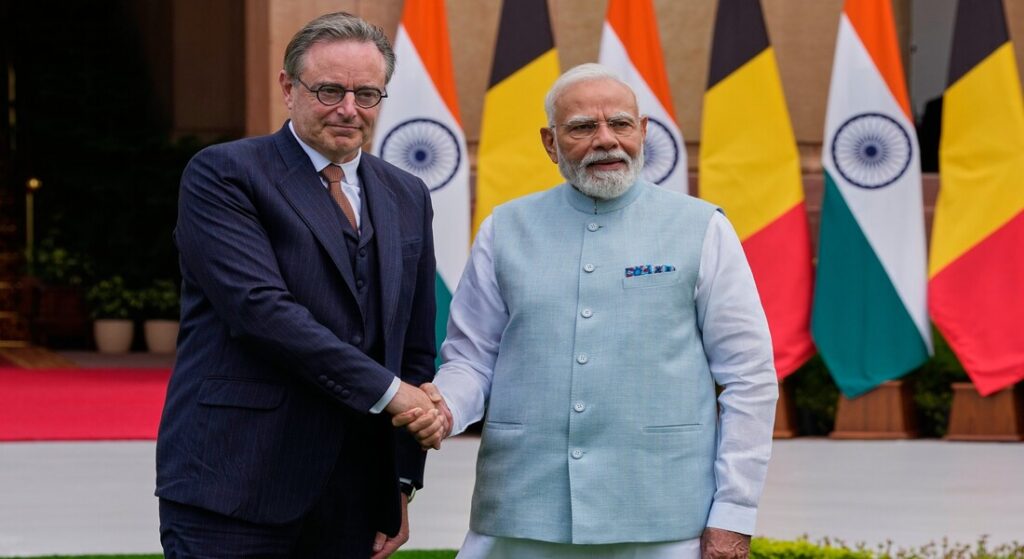
The celebrations revolved around the theme of 150 years of “Vande Mataram”, while also drawing attention to the Indian military’s recent operational achievements under ‘Operation Sindoor’. European Council President Antonio Costa and European Commission President Ursula von der Leyen attended the event as chief guests, lending a strong diplomatic dimension to the occasion.
President Droupadi Murmu led the ceremony, arriving at the boulevard in a ceremonial buggy and taking the salute, accompanied by the visiting dignitaries. Prime Minister Narendra Modi, Defence Minister Rajnath Singh, senior ministers, service chiefs and foreign diplomats watched the spectacle unfold.
The parade opened with a vibrant cultural presentation titled “Vividata Mein Ekta”, as over a hundred performers displayed a wide range of musical traditions symbolising unity in diversity. The marching columns were led by Parade Commander Lieutenant General Bhavnish Kumar, General Officer Commanding of the Delhi Area.
Military strength formed a central theme of the event. A tri-services tableau recreated key elements of Operation Sindoor, featuring replicas of advanced weapon systems. A glass-enclosed operational centre rolled past, depicting coordinated battlefield action using platforms such as BrahMos and S-400 missiles.
For the first time, the Army demonstrated a phased “Battle Array” format, beginning with reconnaissance elements in combat attire, followed by high-mobility vehicles. Indigenous helicopters, including the Dhruv and its armed variant Rudra, flew in formation overhead, simulating battlefield support. Armoured columns followed with T-90 Bhisma tanks and the Arjun main battle tank, backed by Apache and Prachand combat helicopters. Mechanised units such as BMP-II infantry combat vehicles and the Nag missile system added to the display.
Among the systems showcased were the Suryastra universal rocket launcher, BrahMos supersonic cruise missiles and Akash air defence platforms. The Defence Research and Development Organisation presented its hypersonic glide missile LR-AShM, designed for precision strikes on both static and moving targets using indigenous avionics and sensors.
A military contingent from the European Union made history by participating in the parade, carrying the grouping’s operational flags. It marked the EU’s first appearance in such a ceremonial event outside Europe.
The Navy contingent, led by young officers, was followed by a tableau themed “Strong Navy for a Strong Nation”. It traced India’s maritime journey from a reconstructed fifth-century vessel, now named INSV Kaundinya, through Maratha-era warships to modern indigenous platforms such as aircraft carrier INS Vikrant and destroyer INS Udayagiri. The display also highlighted the circumnavigation route of INSV Tarini, symbolising women’s growing role in maritime exploration.
The Air Force contingent marched in step as fighter jets roared overhead in a dramatic “Spearhead” formation, popularly termed the Sindoor Formation. Rafale, Su-30, MiG-29 and Jaguar aircraft cut across the sky, followed by transport planes and helicopters, culminating in a fly-past of 29 aircraft.
Thirty tableaux from States, Union Territories, ministries and departments reflected the blend of cultural legacy and modern development. Motorcycle teams from central forces thrilled spectators with daring formations, bringing energy and spectacle to the finale.
Together, the parade painted a portrait of an India rooted in tradition yet confidently stepping into the future, where cultural pride, technological ambition and national security marched side by side.