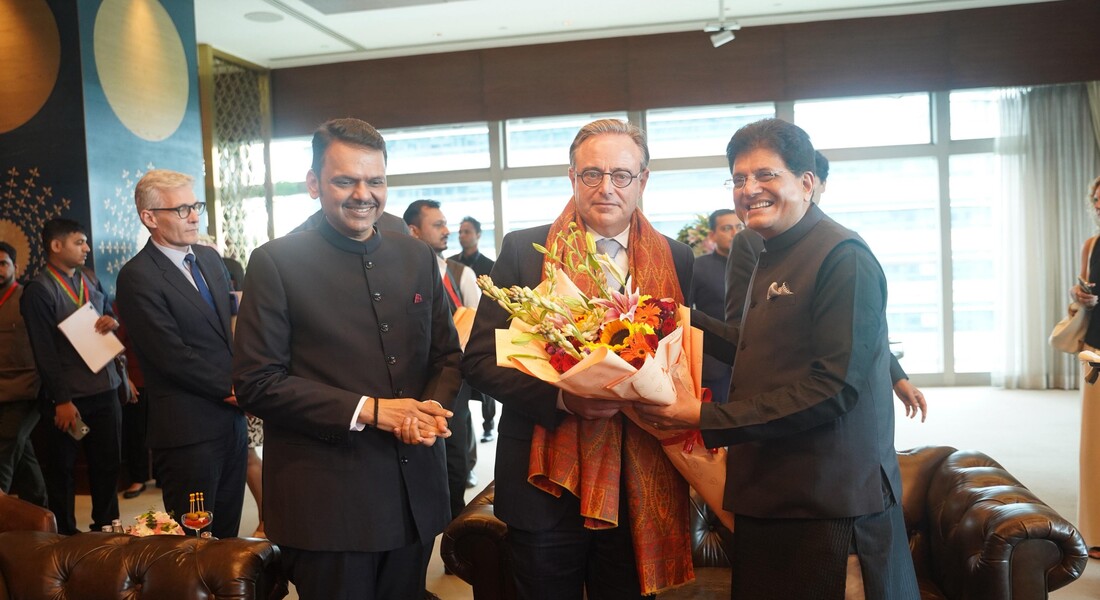

New Delhi: The India-EU Free Trade Agreement (FTA) will open major opportunities for farmers, fishermen, MSMEs, startups, manufacturers and service providers, Union Commerce and Industry Minister Piyush Goyal said.
Addressing the India-Belgium High-Level Dialogue on the India-EU FTA in Mumbai, Goyal said the agreement had been negotiated while protecting sensitive sectors on both sides.
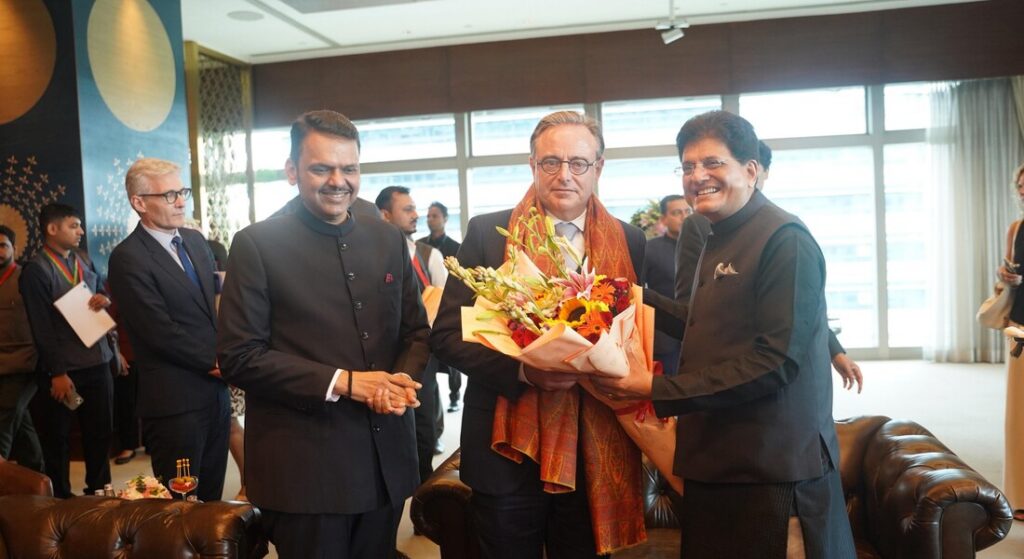
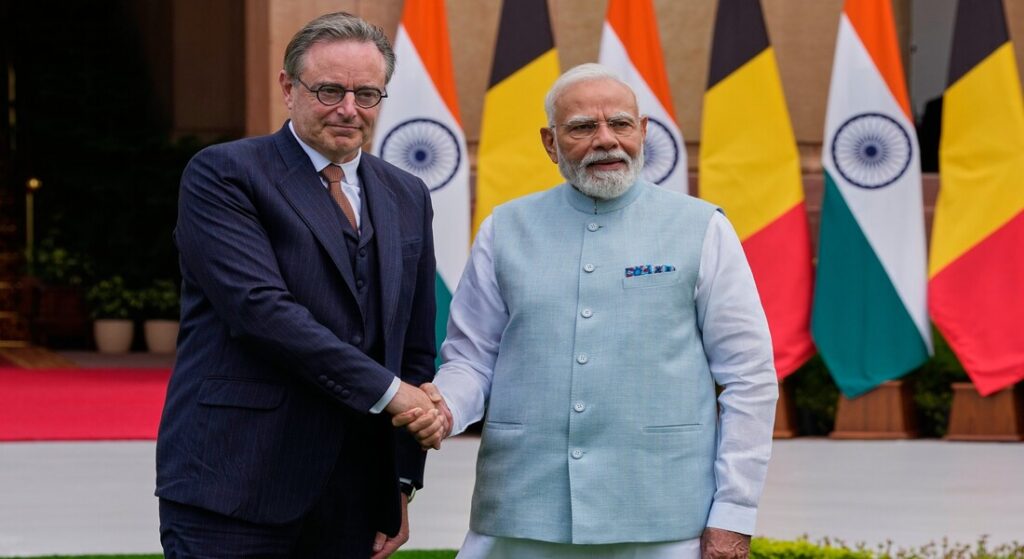
Belgian Prime Minister Bart De Wever and Maharashtra Chief Minister Devendra Fadnavis were present at the dialogue, according to an official statement.
Goyal said the India-EU FTA had taken 25 years to conclude and now brings together a market of 2 billion people. He said the combined market represents a quarter of global GDP, a third of world trade and an economy valued at USD 24 trillion.
The minister said all 27 EU member states were supportive of the agreement and wanted the remaining formalities completed so that it could come into force at the earliest. He added that the agreement had also received broad support across India.
De Wever said the FTA would strengthen trade and create new opportunities for companies, young talent and investment. He also said it would make the Indian and European economies more resilient to disruptions.
The Belgian PM highlighted the Port of Antwerp-Bruges as a key logistical link between India and Europe. He said the agreement would create opportunities in diamonds, food processing, pharmaceuticals, maritime services, green hydrogen and infrastructure.
De Wever said tariffs on more than 95% of Indian and European goods exports would be scrapped or reduced.
Goyal said India and Belgium could significantly expand cooperation in gems and jewellery, including lab-grown diamonds. He called for greater collaboration in technology and certification, with Antwerp, Mumbai and Surat serving as major centres for the sector.
Semiconductors were another area identified for deeper cooperation. Goyal said Belgium’s micro-electronics research could be combined with India’s scale, skills and talent to develop a design-to-fabrication ecosystem.
He also highlighted green hydrogen as a promising area. According to Goyal, India’s Green Hydrogen Mission could complement Antwerp-Bruges’ bunkering and green shipping infrastructure and help supply clean energy to Europe.
Defence and advanced manufacturing could also see greater cooperation between the two countries. Referring to the memoranda of understanding exchanged with John Cockerill, Goyal identified counter-drone systems, electronic warfare, precision munitions and export corridors for India-designed BrahMos and Pinaka missiles as potential areas.
Goyal also pointed to opportunities in agriculture and food processing, including potato processing, cold chains and sustainable agricultural value chains.
The minister described the Port of Antwerp-Bruges as an important gateway for Indian exporters seeking access to European markets. He highlighted its inland barge, rail and road networks along with deepwater and automotive capabilities.
India’s trade with the EU has nearly doubled over the past decade to around USD 140 billion, Goyal said.
Against the backdrop of protectionism, disrupted supply chains and geopolitical uncertainty, he said India and Belgium could choose to build greater trust and predictability in their economic relationship.
Goyal also outlined India’s growing capabilities in technology and innovation. He said Semicon India 2.0 had been launched with an outlay of USD 14 billion and that India’s wider semiconductor programme could catalyse nearly USD 70 billion in investments.
He said India’s AI Mission was operational and the country was also advancing its Critical Minerals Mission.
Goyal further said India’s nuclear energy programme had been opened to private participation after 60 years. The country plans to build 100 GW of nuclear power capacity over the next 20 years, he said.
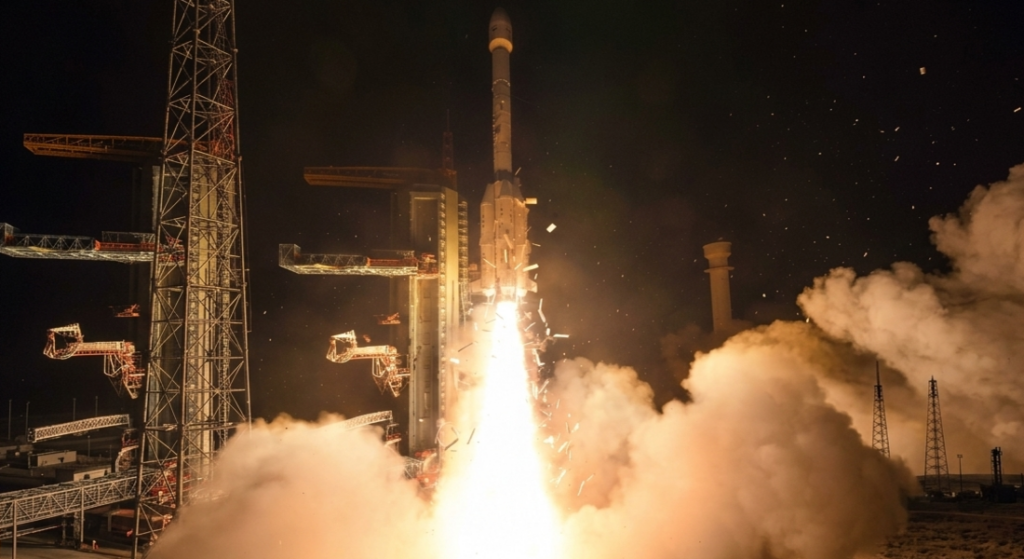
India’s space technology sector, currently valued at around USD 8.5 billion, could grow to USD 44 billion over the next eight years, Goyal said. He attributed much of the expected growth to private companies, startups, innovators and designers.
The minister also highlighted India’s USD 12 billion research and development fund for innovation and invited Belgium and the EU to partner with India by combining Belgian technology, innovation and capital with India’s scale and talent.
Goyal called for stronger workforce mobility between India and Belgium, along with mutual recognition of qualifications, joint skills development and dual-degree education programmes.
He said such cooperation would be particularly useful in sectors where Belgium faces shortages of skilled workers and young talent.
Goyal also highlighted the longstanding India-Belgium relationship, noting that Belgium was among the first European countries to establish diplomatic relations with independent India in 1947.
He thanked De Wever for his role in strengthening Belgium-India and EU-India relations and said the two countries could create a strong partnership by combining Belgium’s technology, innovation and capital with India’s scale, talent and young workforce.
Concluding his address, Goyal drew an analogy with diamonds and said India and Belgium could turn the pressures and uncertainties facing the world into an opportunity to build something enduring.
He said the partnership could create something valuable not only for India and Belgium, but also for Europe and the wider world.