
New Delhi: Prime Minister Narendra Modi on Saturday inaugurated the CG Semi Outsourced Semiconductor Assembly and Test (OSAT) facility in Sanand, Gujarat, and dedicated, inaugurated, and laid the foundation stone for development projects worth around Rs 1.06 lakh crore in Rajasthan.
He underscored the Centre’s focus on semiconductor manufacturing, infrastructure development and self-reliance.
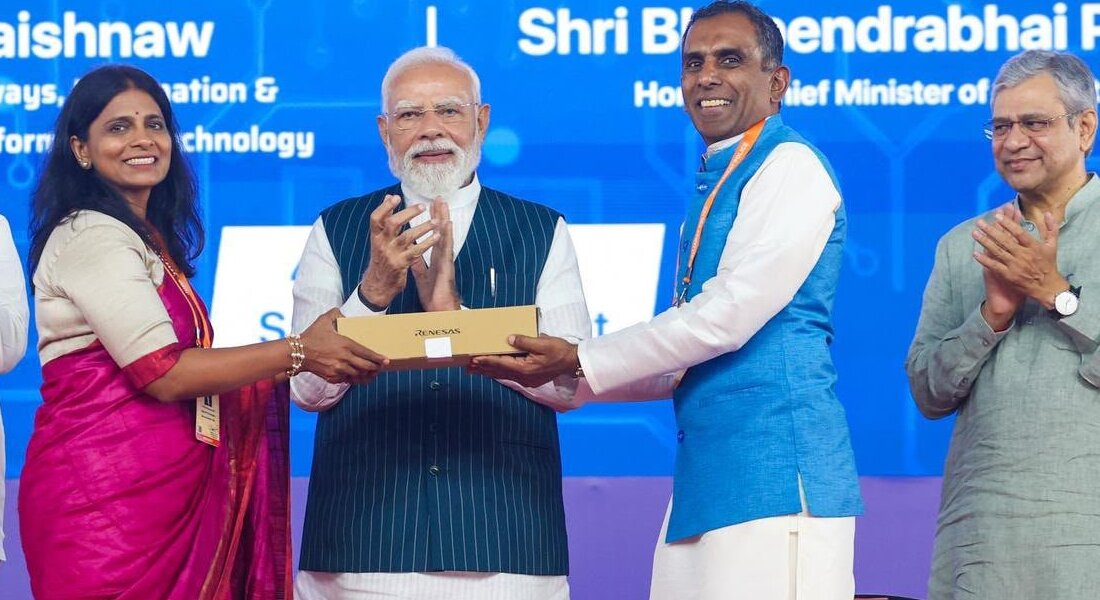
In Gujarat, Modi described the launch of the semiconductor facility as a major milestone in India’s technological journey. He said the project reflected the country’s commitment to turning its vision into reality through the ‘Design in India’ and ‘Make in India’ initiatives.
Recalling that the foundation stone for the facility was laid in 2024, the PM said chip testing had begun in August 2025 before commercial production commenced. He credited the rapid progress to the dedication and hard work of the teams involved in the project.
He said the facility, developed through collaboration between Indian, Japanese, and Thai partners, would strengthen India’s semiconductor ecosystem. The plant has an annual production capacity of 20 crore chips, with plans to scale up to 500 crore units in the future.
Modi further said India had emerged as the world’s second-largest producer and exporter of mobile phones, with electronics production increasing nearly seven-fold and exports rising eleven-fold since 2014. He said semiconductor manufacturing marked the next phase of the Make in India programme, with the government working towards building a complete domestic value chain from chip design to packaging.
Modi also stressed the importance of developing integrated semiconductor clusters comprising testing laboratories, design centres, chemical manufacturers, and startups. According to him, such ecosystems would create employment opportunities, strengthen regional economies and enable India’s youth to drive future innovations in artificial intelligence and robotics using domestically manufactured chips.
Earlier, addressing a public gathering in Balotra, Rajasthan, the PM dedicated, inaugurated, and laid the foundation stone for development projects worth around Rs 1.06 lakh crore. He said the initiatives would accelerate infrastructure development, boost industrial growth, and generate employment in the state.
Among the key projects was the Rajasthan Refinery, which Modi said would create employment opportunities for thousands of people. He also inaugurated the new airport terminal in Jodhpur, announced a new phase of the UDAN scheme, expansion of the Jaipur Metro network, and measures to address the water shortage in the Shekhawati region. He said these projects would strengthen tourism, trade and connectivity across Rajasthan.
The PM also noted that appointment letters had been distributed to around 54,000 young people in Rajasthan. He expressed confidence that the recruits would contribute to public service and the state’s development.
Referring to the conflict in West Asia, Modi said the global situation had triggered a severe energy crisis and disrupted fuel supplies in several countries. However, he maintained that India’s timely policy decisions, diplomatic engagement and strategic planning had helped minimise the impact on the country’s energy security despite its dependence on LPG imports from the Gulf region.
He also criticised those spreading rumours during the crisis, saying coordinated policy and diplomatic efforts had enabled India to manage the situation effectively.