Bhubaneswar: President Droupadi Murmu on Friday said that India’s fintech growth should be remembered not only as a story of technological advancement but also as one of gender justice and social inclusion. She was addressing the Black Swan Summit, organised by the government of Odisha in collaboration with the Global Finance and Technology Network (GFTN) in Bhubaneswar.
Speaking at the event, the president noted that technology is evolving at an unprecedented pace, bringing both opportunities and challenges. While rapid innovation has driven growth and transformation, she cautioned that it has also created risks such as cybersecurity threats, deepfakes, misinformation, and excessive dependence on digital systems. She said platforms like the Black Swan Summit provide an important space to explore how emerging technologies can be used responsibly to enhance skills, generate employment, and accelerate digital and financial transformation.
Highlighting India’s financial transformation over the past decade, President Murmu said digital payments and direct benefit transfers have become integral to everyday life for farmers, small traders, and women. For millions of citizens, she said, fintech is no longer a technical concept but a vital support system enabling financial access and security.
The president, according to an official release, underlined that women must be placed at the centre of India’s fintech ecosystem. She said fintech platforms and policies should not view women merely as end users but also as leaders, professionals, and entrepreneurs.
“India’s fintech story should be remembered not only as a tale of technology but also as that of gender justice. Women constitute an important segment that requires focused attention for the promotion of fintech. Fintech must view them not only as end users but as leaders, professionals, and entrepreneurs,” she said, adding that “an inclusive fintech ecosystem is one in which women are visible at every level, from village entrepreneurs and banking correspondents to engineers, founders, and board members”.
However, President Murmu cautioned that technology alone does not guarantee inclusion. She said many citizens, particularly in rural, tribal, and remote areas, remain unfamiliar with digital tools. Skilling such populations is essential to ensure they become participants in the development process. Only then, she said, can fintech truly serve as an engine for inclusion, entrepreneurship, and employment generation.
Calling upon entrepreneurs and innovators, the President urged them to ensure that technology becomes a tool for social justice and inclusion rather than exclusion. She said technological progress should be guided by ethical responsibility and a commitment to equitable growth.
President Murmu also drew attention to the misuse of technology for financial fraud. She stressed the importance of public awareness and vigilance to prevent such crimes. Referring to steps taken by the Government of India, she mentioned initiatives such as the Indian Cyber Crime Coordination Centre, the Citizen Financial Cyber Fraud Reporting and Management System, and the Cyber Fraud Mitigation Centre. She emphasised that digital and financial literacy are critical deterrents to online fraud and should be integrated into school curricula so that young citizens understand both the benefits and risks of technology from an early age.
The president said investments in skill development, global capability centres, and innovation capacity are ultimately investments in human capital. She welcomed the Odisha government’s BharatNetra initiative, which aims to build a future-ready workforce and foster innovation in digital, financial, and insurance technology sectors.
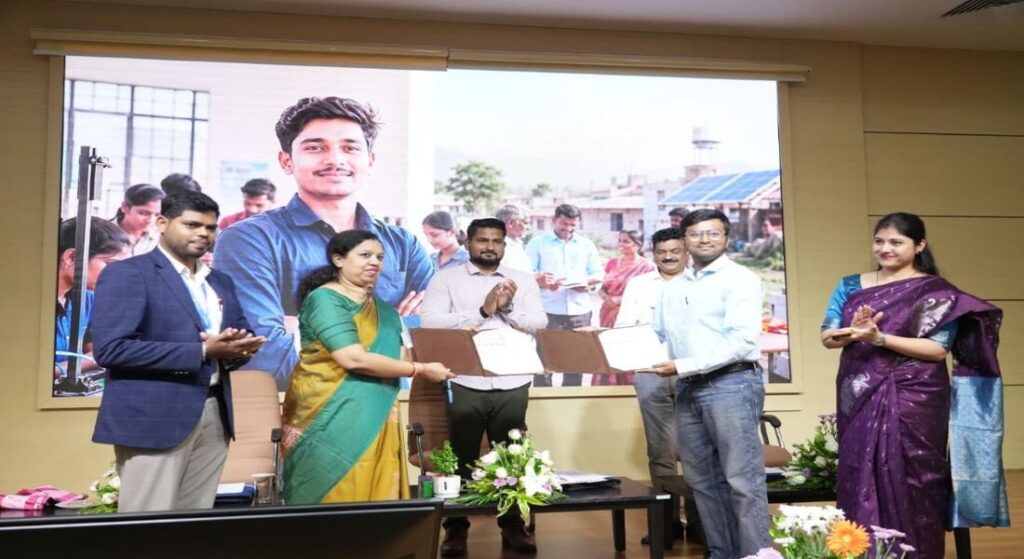
Appreciating the government of Odisha and the GFTN for jointly organising the summit as part of the BharatNetra initiative, President Murmu expressed confidence that the ideas and collaborations emerging from the Black Swan Summit would have a transformative impact not only on Odisha but also on India and the global fintech landscape.