
What began with a five-day community camp in a remote Gadaba village has grown into a story of collective action, changing livelihoods and one woman’s determination to keep returning.
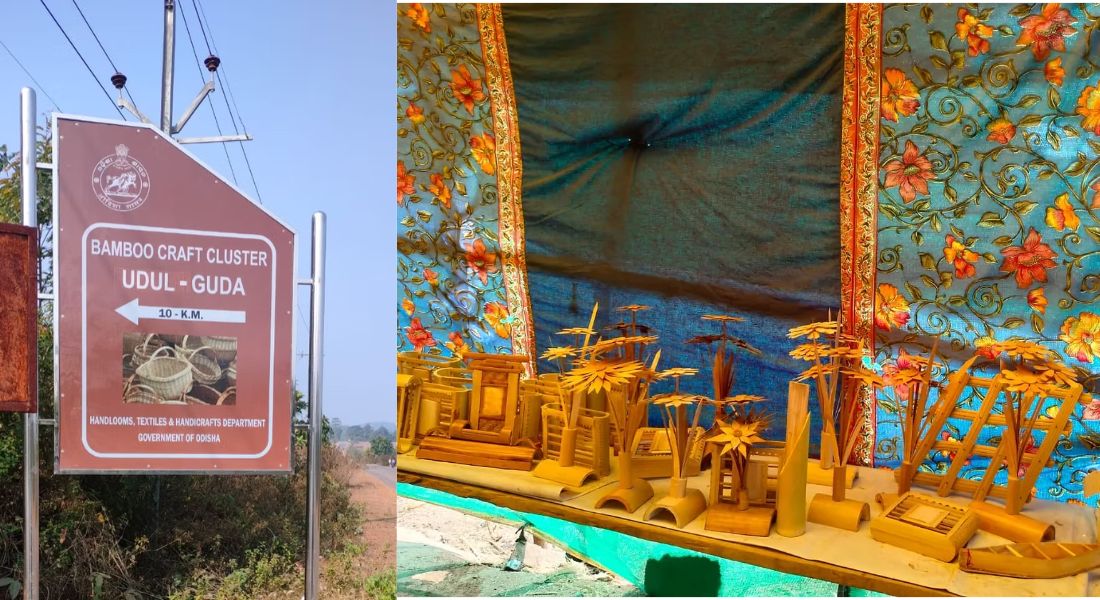
It was a roadside signboard that made me stop. Marked ‘Bamboo Craft Cluster’, it pointed towards Udulguda, a small village tucked away in the forested hills of Odisha’s Koraput district. I had no particular reason to expect more than a glimpse of its bamboo craft. But what I discovered beyond that signboard was a story of persistence, collective action and a community gradually taking charge of its future.
Home to around 40 Gadaba households, Udulguda is one of the many Adivasi villages in southern Odisha where everyday life has long been shaped by difficult terrain and limited access to basic facilities. Yet, the bamboo craft cluster that now identifies the village is only the most visible outcome of a transformation that began nearly a decade ago.
The story goes back to 2017, when Mamata Mishra, a resident of nearby Jeypore, decided to work with the village. A teacher associated with the Art of Living, the spiritual and service organisation founded by Sri Sri Ravi Shankar, she first arrived with two colleagues. What she encountered was far removed from the village that visitors see today: poor road connectivity, no electricity, acute water scarcity and widespread dependence on locally brewed country liquor.
When I later met her, she recalled those early days vividly. The hardships were not limited to infrastructure. Many children were not attending school, theft was reportedly common, and the surrounding area was affected by the presence of Naxalite groups. For a woman travelling regularly to a remote village in such circumstances, the decision to continue was not an easy one. Her husband, son and in-laws were particularly concerned about her safety. But Mamata, whom villagers fondly call Mamata Didi, kept returning.
Five days that began a larger journey
Her first intervention was a five-day Navchetna Shivir, a community awareness camp organised with her two colleagues. Rather than simply prescribing solutions, the team encouraged villagers to discuss the problems confronting their community and consider what they could do themselves.
The conversations covered everyday concerns, including personal discipline, changing lifestyles, water scarcity, rainwater harvesting and the need to conserve water from the village stream. By the fifth day, the discussions had drawn a sizeable gathering. People from neighbouring hamlets brought dal, rice and vegetables, and the camp concluded with a community feast.
Then Mamata did something deliberate. She returned to Jeypore and stayed away for nearly two months. She wanted the villagers to reflect on the discussions and take the initiative themselves, rather than become dependent on her presence.
The response surprised her. Nearly two months later, a group of villagers travelled to Jeypore to meet her. They said they had acted on some of the suggestions and wanted her to return to see what they had accomplished.
When she visited Udulguda again, she found that people had begun drawing water from the stream and cultivating vegetables such as brinjal, okra and potato on land that had previously remained unused. The community had taken the first steps on its own. From then on, Mamata began visiting the village every week.
When trust became the foundation
Her growing involvement did not go unchallenged. Some people in neighbouring villages suspected that she was attempting to convert tribal families to Christianity and began opposing her presence. According to Udulguda residents, there was even talk of filing a police complaint against her, and concerns arose about her safety.
But the villagers stood by her. The relationship had begun with Mamata reaching out to a community in need; it had gradually developed into one in which the community was also looking out for her.
That trust became important as the work moved from awareness-building to addressing the practical challenges of everyday life.
From water scarcity to new livelihoods
Agriculture was an obvious place to begin. Mamata encouraged households to dig small wells near their cultivated plots. These provided access to water and also helped conserve rainwater during the monsoon. The villagers subsequently came together to dig a larger community pond.
Over time, the improved availability of water began to change farming practices. Farmers who had traditionally grown a single paddy crop annually were able to harvest two. With Mamata’s assistance, three borewells were installed and drip irrigation introduced.
The changes also encouraged diversification. Around 10 acres of previously unused land are now under broom grass cultivation, while another 10 acres are being used to grow turmeric. Villagers have also taken up flower cultivation, including marigold and chrysanthemum.
For a community that once struggled with water availability, the ability to cultivate more crops and make better use of its land has opened up new possibilities.
The effort also extended beyond farming. Many families were unaware of the government schemes and entitlements available to them. Working with the Gram Panchayat, Mamata helped residents obtain farmer identity cards, labour cards and job cards, enabling them to access government benefits and employment opportunities.
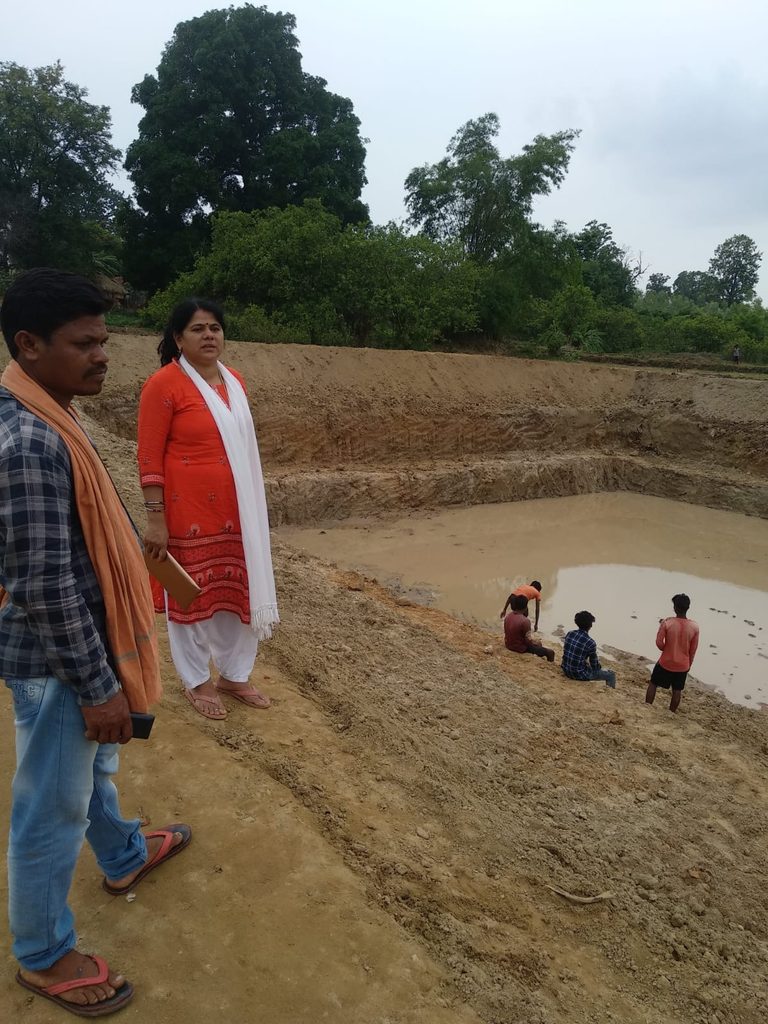
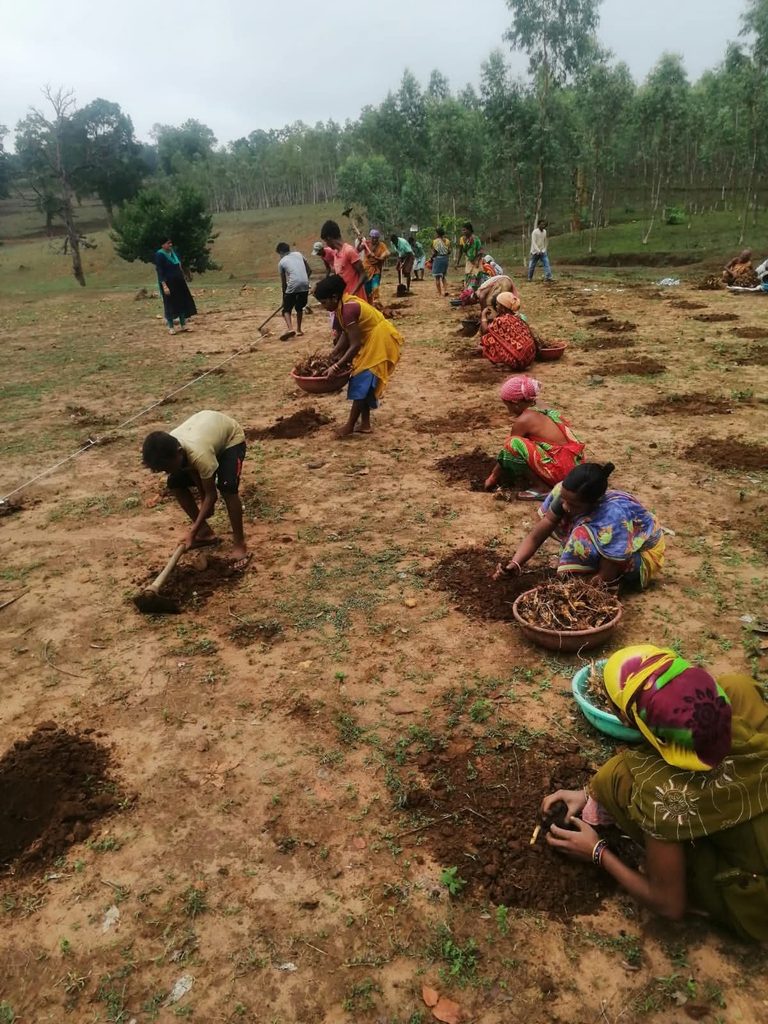
There have also been changes in the village’s social life. Residents say that almost the entire community has given up country liquor, which had once consumed a substantial share of household earnings. They say festivals and community gatherings are now celebrated without a return to the old drinking habits. Plantation drives, too, have become a regular community activity rather than an occasional exercise.
Discovering the value of bamboo
The roadside signboard that first drew me to Udulguda points to another important chapter in this journey.
Bamboo grows abundantly around the village, but it had largely remained an underutilised resource. Mamata began exploring how it could be turned into a source of income and approached the Odisha Government’s Handlooms, Textiles and Handicrafts Department for support.
The department arranged for a trainer to stay in the village for a month and teach bamboo craft to 10 selected residents. What began as a small training initiative has since grown into a cluster of 32 artisans.
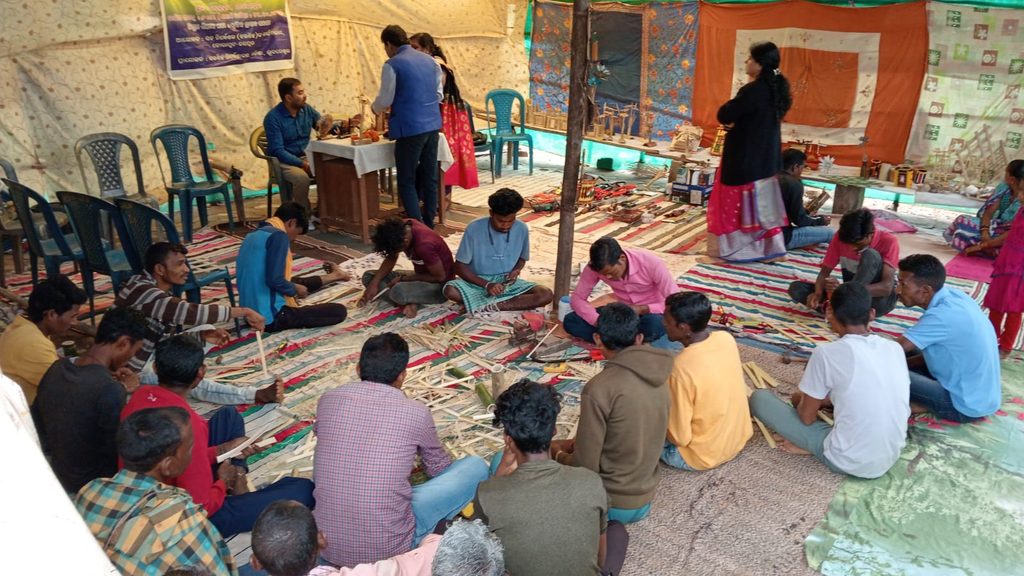
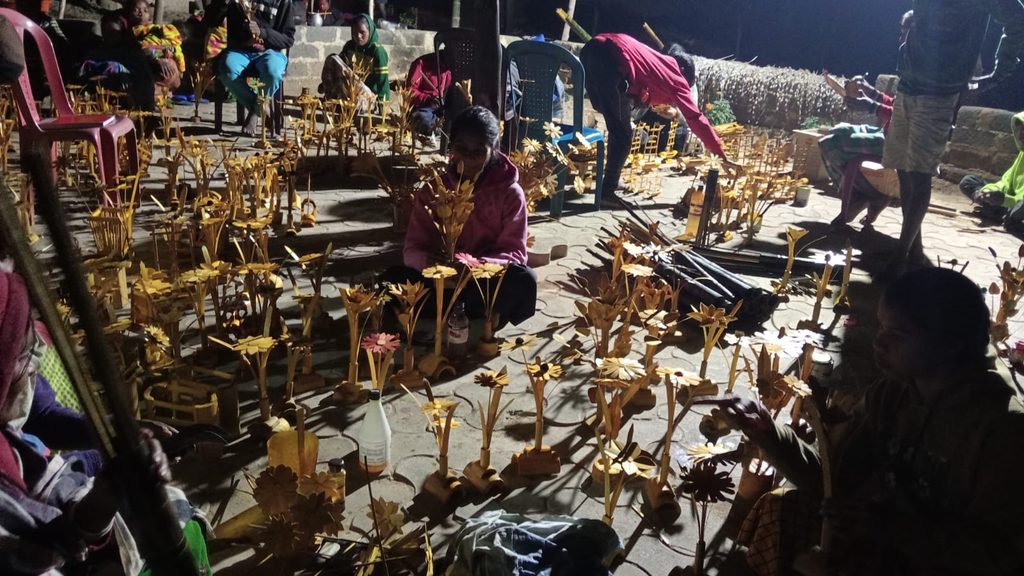
The products have found markets beyond the village. Bamboo crafts made in Udulguda are sold online, reaching buyers in cities including Bengaluru and Hyderabad. Logistics for these orders are facilitated through e-commerce company outlets in Jeypore. Artisans also display and sell their work at state- and national-level trade fairs organised by various government departments.
The products, some featuring hand-painted tribal motifs, reflect how a resource available in the village has been transformed into an opportunity for local enterprise.
Beyond Udulguda
The impact of the bamboo initiative has extended to a neighbouring village. In Dhalapur, under Mathapada Panchayat, a government bamboo unit built at an estimated cost of around Rs 1 crore had remained non-functional. Mamata took up the issue with the Forest Department and the Panchayat and also wrote to the District Collector.
The unit has now been operational for around six months, providing work to 20 women engaged in making bamboo products. Its reopening has created another avenue for livelihoods in the area.
Back in Udulguda, villagers say migration in search of work has come to a halt. Young people who once had to leave the village for employment are increasingly finding opportunities closer to home.
The village also appears to have found a renewed sense of community. Plantation activities are undertaken collectively, while children and young people participate in local activities, including sports. These may seem like small changes, but together they point to a community investing in its own future.
The story behind the signboard
When I first stopped at the signboard, I thought I had found a village known for its bamboo craft. By the time I left Udulguda, I understood that the craft was only one part of a much larger story.
Behind it were years of patient engagement, households working to secure water, farmers experimenting with new crops, artisans discovering the value of a local resource and a community gradually taking ownership of its development.
Development is often measured through project timelines, targets and outputs. Udulguda’s experience suggests that meaningful change can begin well before any of these can be measured. It can start with a conversation, grow through trust and take shape when people begin to believe that they can improve their own circumstances.
Mamata Mishra may have helped set that process in motion, but the village’s transformation has depended on the willingness of its people to participate and carry it forward.
The signboard announces a Bamboo Craft Cluster. What it cannot tell a passing traveller is how much collective effort, patience and persistence lie behind it.