At IndiaVerve, we go beyond the noise to bring you meaningful stories of change, resilience and progress—from India to the world stage. Our mission is to bring readers credible, wide-ranging coverage across politics, business, sports, culture, society and more.

Odisha Cabinet approves key irrigation, energy and welfare measures

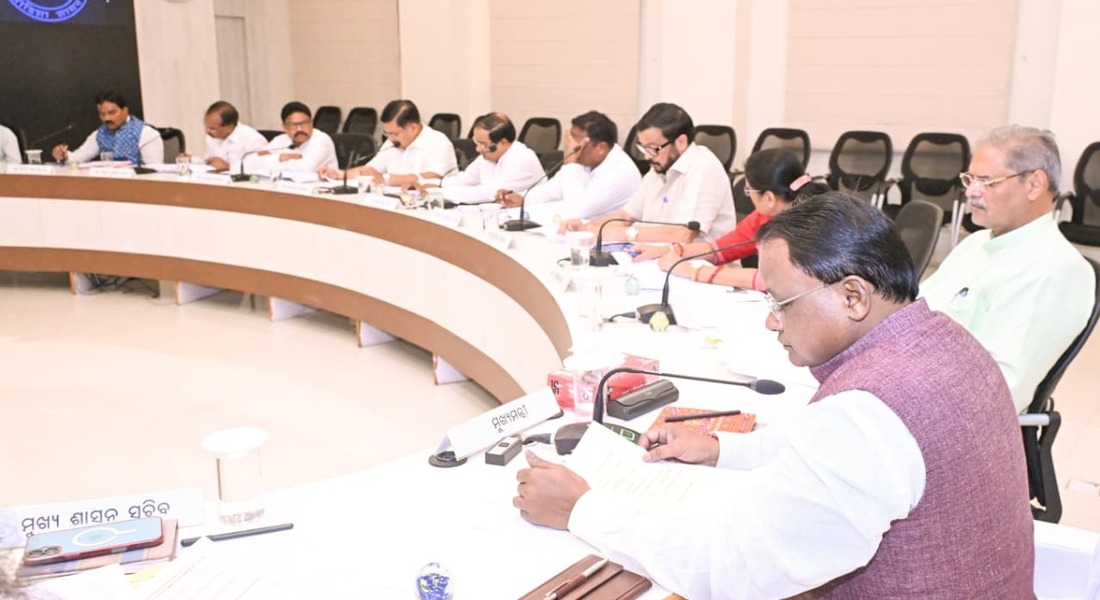
Bhubaneswar: The Odisha Cabinet today approved a series of measures covering irrigation, renewable energy storage, child welfare, early childhood care and compassionate appointments in government service. Among the key decisions are the ₹12,458.04-crore Parbati Giri Mega Lift Irrigation Project, amendments to the Odisha Pumped Storage Projects (PSP) Policy, 2025, and the revival of 680 minor irrigation projects across the state.

The Cabinet approved the amended Odisha PSP Policy, 2025 and Operational Guidelines, which will remain in force until March 31, 2030. The policy seeks to promote pumped storage projects as a long-duration energy storage option to support the increasing share of renewable energy. Pumped storage projects can store surplus electricity during off-peak periods and release it during periods of high demand or low renewable energy availability.

The amended policy provides a range of incentives, including infrastructure support, exemption from electricity duty, cross-subsidy surcharge, wheeling charges and STU charges, along with exemption from water cess, provision of free power and benefits under the Local Area Development Fund. Odisha has set a target of adding around 11,000 MW of renewable energy capacity by 2030.

In irrigation, the Cabinet approved the Parbati Giri Mega Lift Irrigation Project with an outlay of ₹12,458.04 crore, to be implemented over five years from FY 2026-27 to FY 2030-31 using state resources. The project will comprise 161 schemes across all districts and is expected to create an additional irrigation potential of 2,62,275 hectares.

The project will use pressurised underground pipeline distribution systems compatible with micro-irrigation technologies. According to the government, the initiative is intended to improve water-use efficiency, reduce dependence on rainfall, facilitate multiple cropping and encourage farmers to diversify towards high-value cash crops.

The Cabinet also approved Improvement to Tanks & MIPs – Phase-III, with an outlay of ₹389 crore over four years from FY 2026-27 to FY 2029-30. The scheme will cover 680 Minor Irrigation Projects, including spillover works from Phase-II, and aims to revive irrigation potential over approximately 15,700 hectares. Works will include desilting reservoirs, strengthening embankments, repairing spillways and head regulators, and improving canals.

In the social welfare sector, the Cabinet approved continuation of the Jashoda scheme and its sub-scheme Ashirbad for another five years, from FY 2026-27 to FY 2030-31, with a total budget of ₹296.99 crore. The schemes provide financial, educational and social support to vulnerable children, including those without biological parents, those with incapacitated parents, children affected or infected by HIV, and children who lost their primary breadwinner during the COVID-19 pandemic.

The Cabinet also approved continuation of the Malati Devi Prak Vidyalaya Paridhan Yojana for five years, with a total outlay of ₹586.51 crore. The scheme will benefit around 14.76 lakh preschool children aged three to six years annually. Revised provisions include two pairs of uniforms, one pair of shoes, two pairs of socks and a sweater for each beneficiary, with different unit costs for boys’ and girls’ uniforms.

Finally, the Cabinet approved the Odisha Civil Services (Rehabilitation Assistance) Rules, 2026, replacing the 2020 rules. The revised framework abolishes the 100-point evaluation system, removes the 50% ceiling on filling base-level Group-D posts through the Rehabilitation Assistance Scheme, and provides for nomination of another eligible family member in specified circumstances. Pending cases, including those rejected solely under the earlier 100-point evaluation system, will also be considered under the new rules.
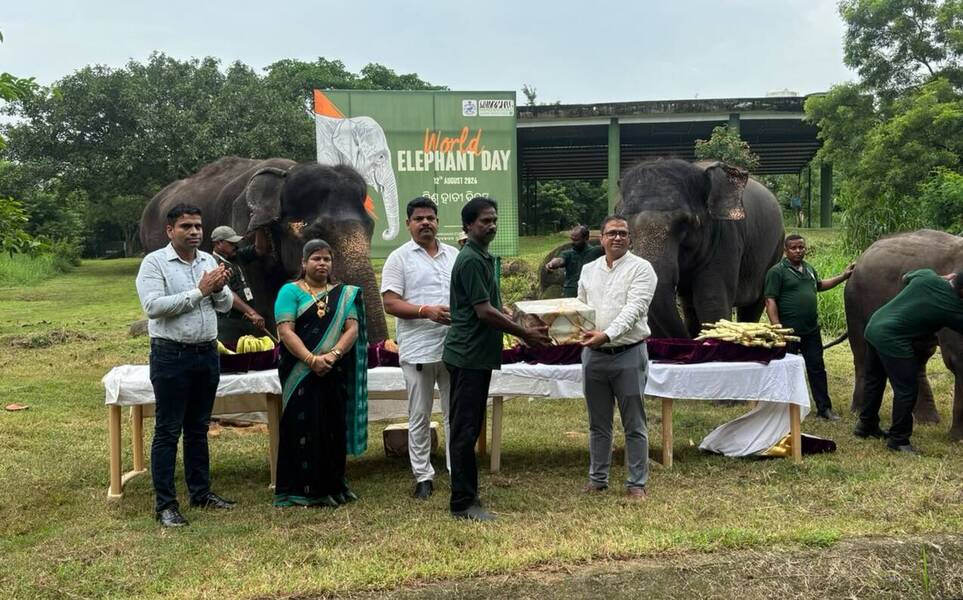
World Elephant Day observed with conservation awareness activities at Nandankanan Zoo

Bhubaneswar: Nandankanan Zoological Park observed World Elephant Day 2026 with a series of activities aimed at promoting elephant conservation, welfare and public awareness.

The programme was attended by Tapan Chakravarty, Sarpanch of Daruthenga, Khulana Majhi, Sarpanch of Raghunathpur, and Pradeep Mirase, Deputy Director of Nandankanan Zoological Park.

As part of the celebration, elephants Basanti, Hira, Asha and Lisha were given fruit treats during a special feeding enrichment activity. The activity was designed to encourage natural feeding behaviour among the elephants.

The zoo also felicitated its mahouts for their contribution to elephant care and management. A Keepers’ Talk, an on-the-spot quiz and a signature campaign were organised for visitors and students, with the activities focusing on elephant behaviour, welfare and conservation.

The Zoo Library and Digital Hub hosted several activities, including storytelling, performances by schoolchildren dressed as Asian and African elephants, elephant origami, a screening of a film on elephant conservation and hand-painting activities featuring elephant themes.

A special Elephant Frame photo session was also organised for visitors.

The participating school students were later taken to the viewing area of the elephant enclosure, where they observed the animals and learned about their biology, care and management as part of ex-situ conservation.

The World Elephant Day activities were aimed at strengthening conservation awareness among visitors and students and encouraging greater understanding of elephant welfare and the need to protect elephants and their habitats.

CM Majhi reviews Puri Govardhan Peeth development, security

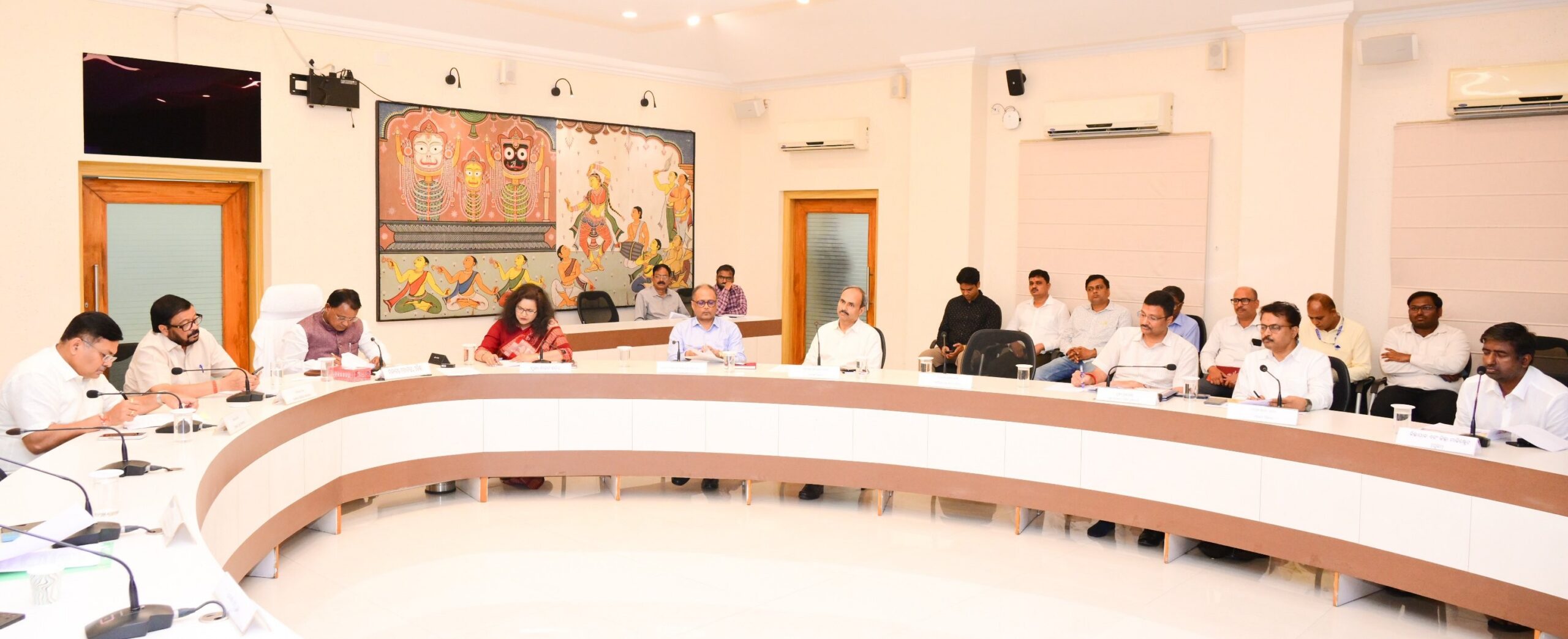
Bhubaneswar: Chief Minister Mohan Charan Majhi on Wednesday chaired a high-level meeting at Lok Seva Bhavan to discuss the all-round development, security and propagation of Shri Jagannath culture at the Puri Govardhan Peeth.

The CM held discussions with representatives of the Peeth aimed at enhancing Puri’s spiritual grandeur and securing the Peeth’s properties.

During the meeting, Majhi laid special emphasis on the sacred “Sandhya Mahodadhi Aarti,” held daily on the beach facing Puri’s Swargadwar. He said the aarti site would be beautified and the evening aarti conducted more grandly going forward. He directed the administration to develop the entire Puri beach as a grand spiritual destination.

The CM also called for a fresh and complete verification of old land settlement documents to permanently resolve land-related issues concerning the Govardhan Peeth. He directed officials to strengthen security arrangements for Jagadguru Shankaracharya as well as within the Peeth premises.

Special measures will be taken to protect and preserve the sacred samadhi sites of former acharyas of the Govardhan Peeth, the meeting decided. Discussions were also held on the development of the Math’s surroundings and on providing necessary facilities for the proper management of the “Shri Govardhan Goshala” located within the Math premises.

Revenue Minister Suresh Pujari, Law Minister Prithviraj Harichandan, saints and seers of the Govardhan Peeth, and senior state government officials attended the meeting and held detailed discussions on the Peeth’s development.

Chief Secretary Anu Garg, Development Commissioner D.K. Singh, Additional Chief Secretary Hemant Sharma, Shree Mandir Chief Administrator Arabinda Padhee, Law Secretary Pabitra Mohan Samal, Puri Collector Divyajyoti Parida, and Puri SP Prateek Singh were among those present. Govardhan Peeth’s administration chief Praphulla Chaitanya Maharaj, Aditya Bahini chief and Peeth representative Matru Prasad Mishra, and other senior officials also attended the meeting.

Odisha Governor calls for deeper entrepreneurship push in villages, tribal areas

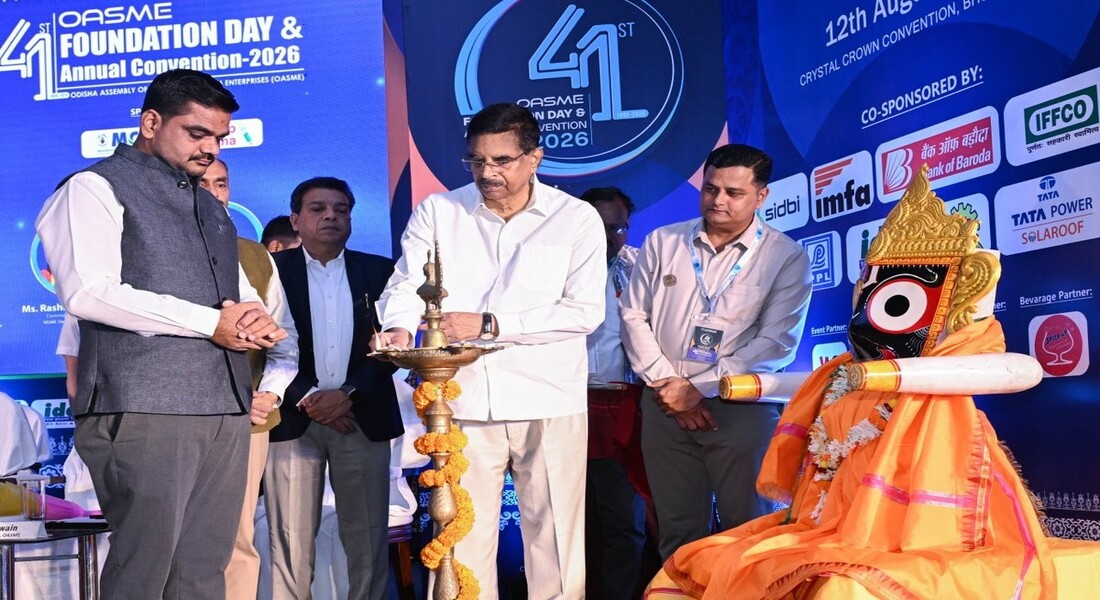
Bhubaneswar: Odisha Governor Dr. Hari Babu Kambhampati on Wednesday emphasised the need to take entrepreneurship deeper into the state’s villages and tribal regions, creating opportunities for youth, women, artisans and first-generation entrepreneurs.

The governor was addressing the 41st Foundation Day Celebration and Annual State Level Convention 2026 of the Odisha Assembly of Small and Medium Enterprises, held in Bhubaneswar. He was joined at the event by Revenue and Disaster Management Minister Suresh Pujari and Minister of State for Industries, Skill Development and Technical Education Sampad Chandra Swain.

Kambhampati said Micro, Small and Medium Enterprises (MSMEs) could connect Odisha’s traditional strengths with modern opportunities, driving local enterprise, innovation, employment and inclusive growth as the state moves towards the vision of a Viksit Odisha.

Speaking at the same event, Swain said Odisha was advancing rapidly in the industrial sector under the guidance of Prime Minister Narendra Modi and the leadership of Chief Minister Mohan Charan Majhi. He spoke on the theme “Leveraging Odisha’s Emerging Ecosystem for Manufacturing Innovation and Start-ups – Vision 2036.”

In a detailed post on X, Swain said Odisha had attracted large-scale investment across sectors including renewable energy, semiconductors, electronics, aerospace and defence, chemicals and petrochemicals, textiles and apparel, food processing, pharmaceuticals, medical devices, automotive components, shipbuilding, logistics and the digital economy.

He further said the state had emerged as a progressive investment destination and had secured a place among the country’s top five states in NITI Aayog’s Investment Friendliness Index 2026.

Over the past two years, the state had inaugurated or laid the foundation stone for 151 industrial projects worth nearly Rs 3,12,000 crore, Swain said, adding that this was expected to create close to 2,40,000 employment opportunities. The minister noted the Industrial Policy Resolution, the Odisha MSME Development Policy, the Food Processing Policy and Start-up Odisha were accelerating growth in the MSME sector and encouraging innovation and enterprise across the state.

Swain further said that “Odisha Food Pro 2026” had brought investment proposals worth Rs 66,392 crore to the state, which was expected to generate more than 54,000 jobs and strengthen local value chains. He said the state’s goal was not limited to attracting large industrial projects but extended to building an inclusive, locally enterprise-friendly ecosystem.

Inquiry panel finds ex-judge Yashwant Varma guilty in cash-at-home case

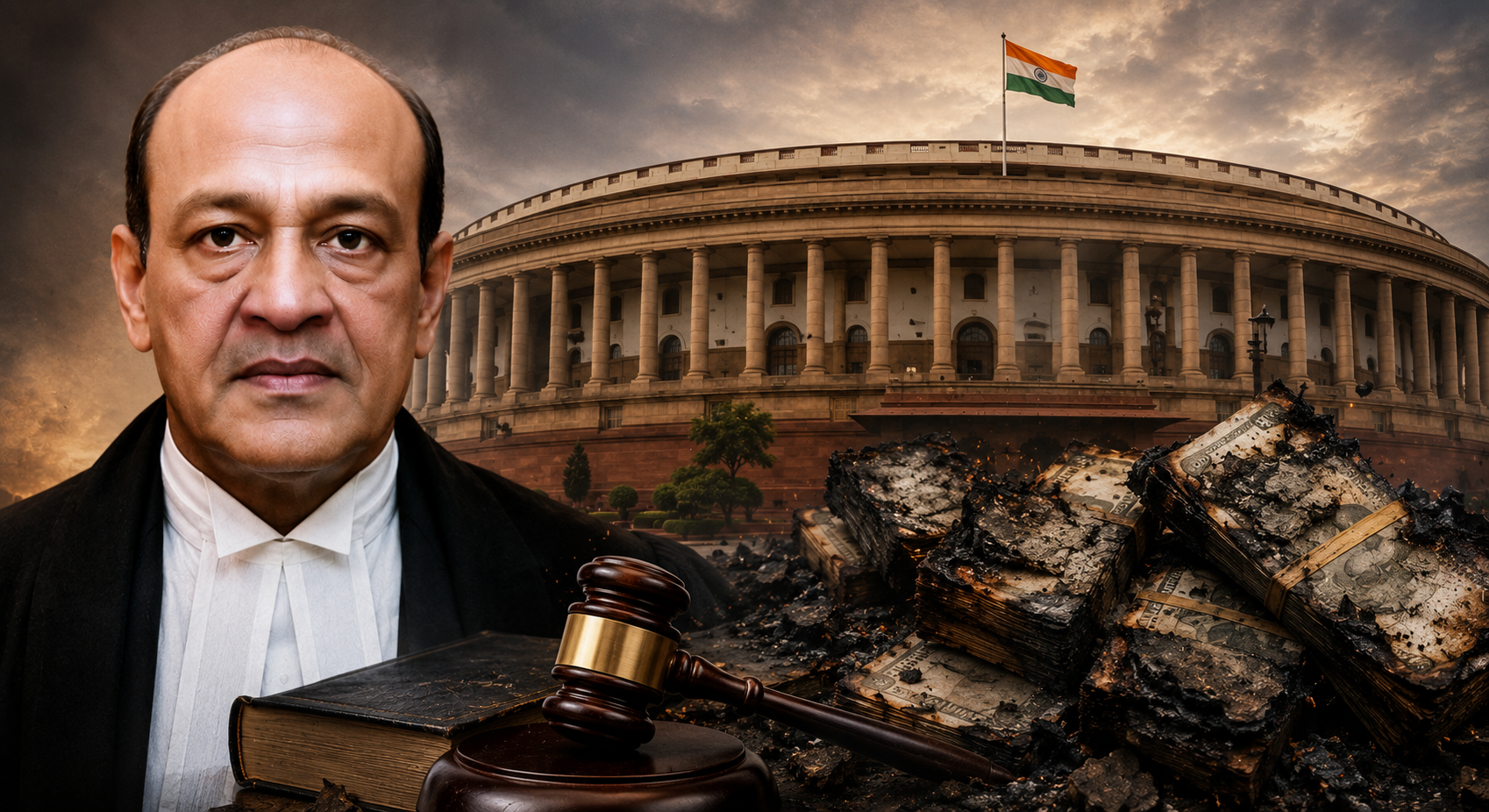
New Delhi: A three-member inquiry committee has found all three charges against former Delhi High Court judge Justice Yashwant Varma proved in connection with the discovery of a substantial quantity of unexplained cash at his official residence in Delhi.

The committee, constituted by Lok Sabha Speaker Om Birla under the Judges (Inquiry) Act, 1968, concluded that substantial cash in Rs 500 denomination was found in a storeroom at Varma’s official residence at 30 Tughlak Crescent after a fire on March 14, 2025. It also found that material evidence relating to the incident was not properly preserved and that Varma’s explanations about the cash, its source and ownership were inadequate.

The committee, whose report was tabled in the Lok Sabha today, examined three charges framed against Varma. However, the findings did not establish in criminal-law terms that the cash personally belonged to him. Instead, the panel concluded that substantial unexplained cash was found on premises under his control and that he failed to satisfactorily explain its presence, source or ownership.

One of the charges concerned the cash found in the storeroom following the fire. The panel found that the evidence indicated the presence of bundles, heaps and stacks of currency rather than a small quantity of loose notes. It rejected Varma’s contention that the storeroom was completely outside his control, holding that it formed part of his official residential premises and remained under his institutional control.

The exact amount of cash could not be established. According to the findings, the money was never formally seized, counted, inventoried or preserved at the site. The committee therefore concluded that a substantial quantity of Rs 500 notes had been present but could not determine the precise value.

The second charge related to the handling of the site after the fire. The committee found that the storeroom was not immediately sealed and that cleaning took place after first responders had left. By the time a formal inspection was conducted, the cash was no longer available.

The panel referred to the presence of Justice Varma’s Private Secretary Rajinder Singh Karki and household staff member Mohd Rahil near the storeroom during the cleaning. However, it did not conclude that Varma himself had removed the cash.

The third charge concerned Varma’s explanations regarding the incident. The committee found his responses inadequate and said they did not satisfactorily address questions concerning the presence, source and ownership of the cash, as well as the actions taken after the fire. The panel described the explanations as “evasive, incomplete and misleading in effect” and said they fell short of the level of candour and institutional responsibility expected in the circumstances.

Justice Varma denied the allegations and maintained that no cash had been recovered from his residence. He argued that he was not present when the fire broke out and was not among the first responders. His defence also raised possibilities including conspiracy, planting of currency, fake notes and removal of money by first responders.

The committee said these claims were not supported by defence evidence. It noted that no defence witnesses or affidavits had been submitted and rejected the argument that the storeroom was entirely outside Varma’s control. Varma subsequently withdrew from further participation in the proceedings after the presenting side completed its evidence and cross-examination.

The controversy began on March 14, 2025, when a fire broke out at Varma’s official residence. Cash was reportedly found during firefighting operations, triggering a major controversy and an in-house inquiry ordered by then Chief Justice of India Sanjiv Khanna. Varma was subsequently transferred from the Delhi High Court to the Allahabad High Court and his judicial work was withdrawn pending the inquiry.

The parliamentary inquiry was constituted in September 2025 after the Lok Sabha Speaker admitted a motion seeking Varma’s removal. The committee held its first meeting on September 17 and framed the charges on November 26. Varma challenged the constitution of the committee, but the Supreme Court dismissed his challenge on January 16, 2026.

The committee’s findings are relevant to the parliamentary process for removal of a judge and do not by themselves constitute a criminal conviction. Its conclusion was that all three charges framed against Varma were proved.

Varma, meanwhile, resigned as a judge of the Allahabad High Court while facing the prospect of removal by Parliament. His resignation rendered the removal proceedings infructuous, according to the report.

The inquiry findings therefore establish the committee’s conclusions for the purposes of the parliamentary process, while leaving the question of criminal liability separate from the committee’s determination.

PM Modi, Union ministers hail India’s elephant conservation efforts

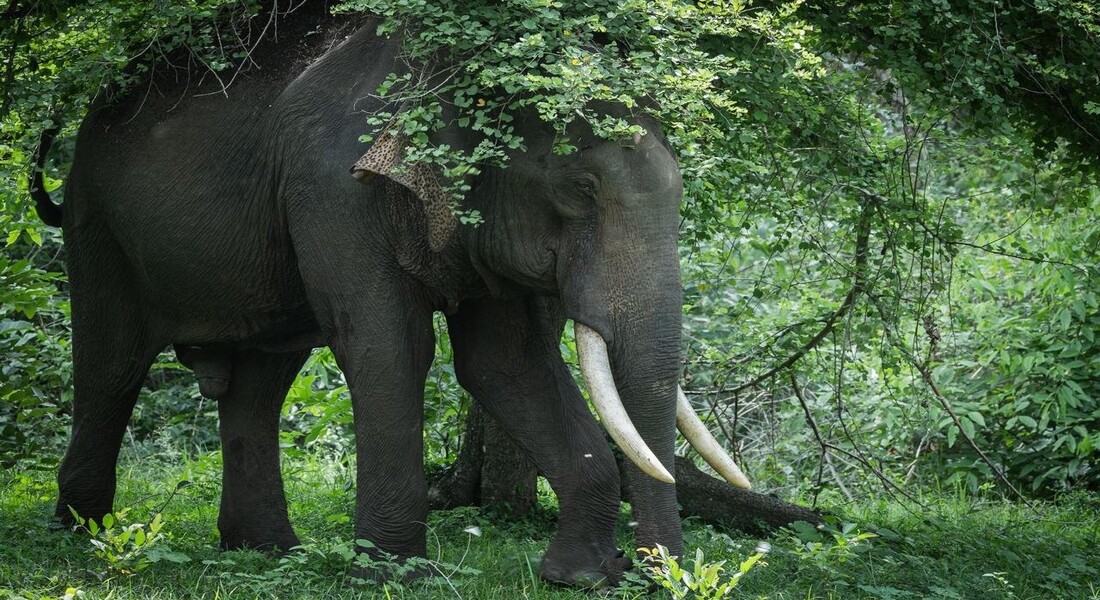
New Delhi: Prime Minister Narendra Modi on Wednesday marked World Elephant Day, stating that the elephant has remained an integral part of India’s ecological heritage.

He expressed happiness that India is home to over 60% of the world’s wild Asian elephants.

The PM noted that the country has 33 Elephant Reserves that provide habitats for elephants and strengthen long-term conservation efforts. He also expressed pride in forest personnel, scientists, veterinarians, mahouts, and local communities who are integral to these efforts, according to an official statement.

In a post on X, the Prime Minister said: “On World Elephant Day, we celebrate the majestic elephant, which has remained an integral part of India’s ecological heritage. It is gladdening that India is home to over 60% of the world’s wild Asian elephants. Our nation has 33 Elephant Reserves, which provide habitats for elephants and strengthen our efforts towards their long-term conservation. We are also proud of all forest personnel, scientists, veterinarians, mahouts and the local communities who are integral to all such efforts.”

Union Minister for Environment, Forest and Climate Change Bhupender Yadav also marked the occasion, reaffirming India’s commitment to securing a shared future for elephants and people. In a social media post, Yadav noted that India has 33 Elephant Reserves across 14 states and 150 scientifically validated elephant corridors. He said advanced population monitoring and stronger measures to mitigate human-elephant conflict are strengthening conservation efforts.

“When we secure the future of elephants, we secure our forests, biodiversity and ecological heritage,” Yadav said, calling for continued action to ensure elephants can walk freely through India’s forests and landscapes for generations to come.

Union Minister of State for Environment, Forest and Climate Change Kirti Vardhan Singh said India is home to one of the richest and most diverse landscapes on Earth. He said nearly 60% of the world’s wild Asian elephants live in India, calling them a living symbol of the country’s ecological heritage. Singh added that under the leadership of Prime Minister Modi, India’s elephant reserves stand as a testament to the country’s commitment to conservation.

Singh also highlighted the role of elephants as “ecosystem engineers,” noting that as they roam, they disperse seeds across long distances, giving rise to new plants, with every step helping keep nature in balance. He called upon everyone to unite to protect and preserve the gentle giants.

Minister Piyush Goyal bats for fair trade, circular economy

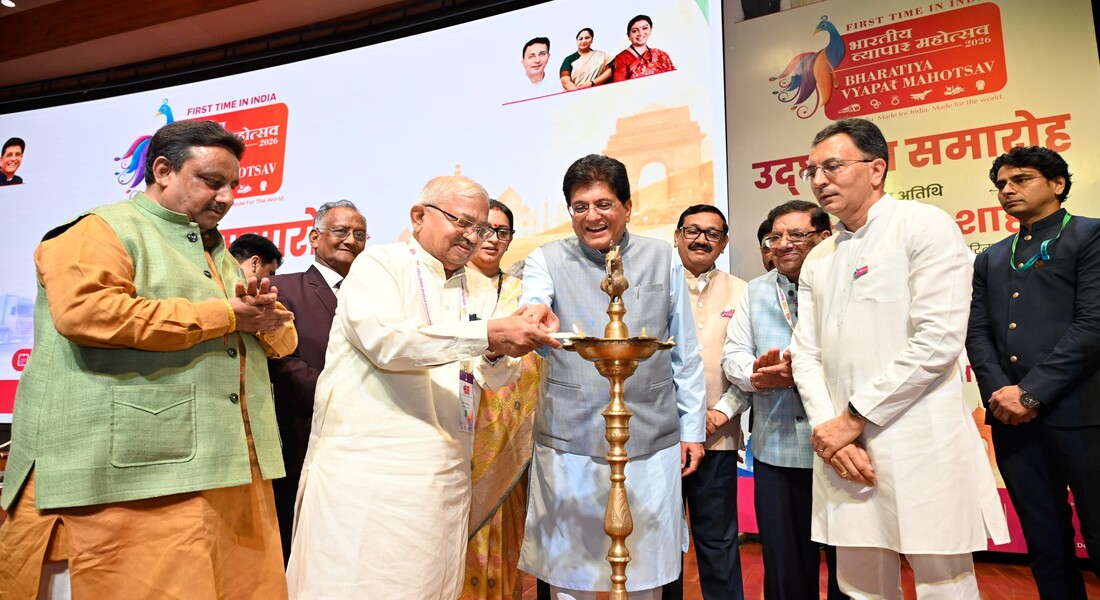
New Delhi: India needs to embrace fair trade, recycling and a circular economy even as it pushes Indian products and services into world markets, Union Commerce and Industry Minister Piyush Goyal said on Wednesday.

Goyal was speaking at the opening of the Bharatiya Vyapar Mahotsav at Bharat Mandapam in the capital, according to an official statement.

He pointed to India’s expanding footprint in global trade, noting that nine free trade agreements have opened new markets for Indian industry. This, he said, has given the country preferential access abroad, with MSMEs, workers, fishermen, farmers, entrepreneurs and the services sector all playing a part in carrying Indian goods and services overseas.

He pressed businesses and citizens to work together to build up the Make in India brand, arguing that the country’s quality and design capabilities deserve greater recognition.

With India’s economy currently valued at roughly USD 4 trillion, the minister framed this moment as a launchpad toward the government’s 2047 target of a USD 30 trillion economy. Interest in trading with India is rising worldwide, he said, and meeting that opportunity would take businesses, entrepreneurs and ordinary citizens pulling in the same direction.

On the export front, Goyal said India logged record goods and services exports last year, split between merchandise and services shipments. Exports have climbed roughly 73% over the past six years, he said, and the government is now targeting USD 1 trillion in exports this year. Between April and July of the current year alone, exports grew nearly 15%, he added.

Self-reliance, Goyal said, cannot be separated from national development – and citizens themselves need to drive that shift. He traced this back to government initiatives launched since 2014, including Digital India, Startup India and Stand-Up India, alongside a wave of infrastructure building, which he credited with strengthening industry and opening doors for young people.

Describing ‘Swadeshi’ as products built on the labour of Indian citizens, Goyal urged businesses to look past small, familiar markets and sell abroad. More Indians buying Indian products, he argued, would widen opportunities, lift production and trade volumes, unlock economies of scale, and sharpen the competitiveness of Indian businesses.

He praised Indians for repeatedly turning hardship into opportunity, citing travellers, MSMEs, startups, farmers, fishermen, labourers and entrepreneurs as the backbone of that resilience. Development, he said, is a shared responsibility – one built on improvement, transformation and performance – and every stakeholder has a role in carrying India’s name to the world.

Goyal also asked business owners to digitise operations, adopt sound manufacturing standards and stick to fair trade practices. With climate change in mind, he stressed that recycling, reuse and circular-economy principles deserve far more attention going forward.

Make in India, he added, should stand for more than a label – it should build genuine global respect for Indian quality, design and craftsmanship. He said he was confident that sustained collective effort would earn Indian products and natural resources that trust internationally.

GDP growth, Goyal noted, naturally feeds into higher production and job creation. He pointed to young Indians returning home after studying or training at skill development centres as a source of fresh ideas for tackling upcoming challenges. He closed by crediting India’s businesses, entrepreneurs, MSMEs, farmers, fishermen and workers collectively for driving the country’s growth and strengthening its standing in the global economy.

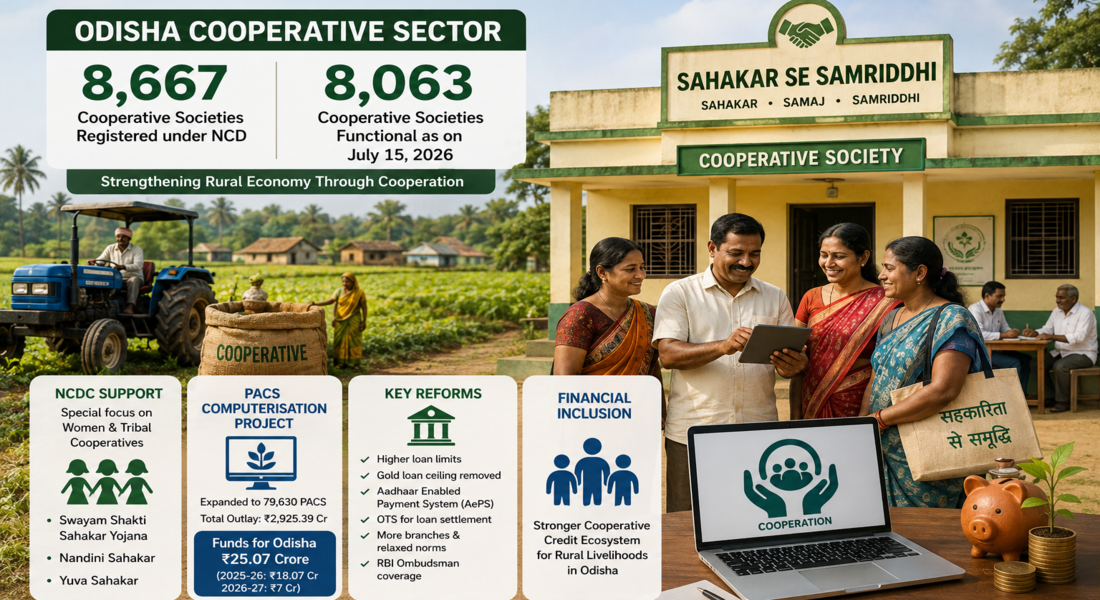
Odisha has 8,667 cooperative societies, 8,063 functional: Centre

Bhubaneswar: Odisha currently has 8,667 cooperative societies registered under the National Cooperative Database, of which 8,063 are functional as of July 15, 2026, the Union Ministry of Cooperation has informed.

Union Home Minister and Minister of Cooperation, Amit Shah, informed the Lok Sabha in a written reply.

The disclosure comes amid the Centre’s push to strengthen the cooperative banking and credit network in rural Odisha under its “Sahakar-se-Samriddhi” vision, pursued by the Ministry since its formation on July 6, 2021, according to an official statement.

The National Cooperative Development Corporation (NCDC), a statutory body under the Ministry, extends financial assistance to cooperatives across the country, including Odisha, with special focus on women and tribal cooperatives. The Corporation is encouraging women’s cooperatives to tap into three flagship schemes – Swayam Shakti Sahakar Yojana, Nandini Sahakar, and Yuva Sahakar – to access funding support.

The Centre had launched the Centrally Sponsored Project for Computerisation of Primary Agricultural Credit Societies (PACS) in 2022, aimed at bringing all functional PACS onto a common ERP-based national software platform. The project initially covered 63,000 PACS with a financial outlay of Rs 2,516 crore. It has since been expanded to 79,630 PACS, with the outlay revised upward to Rs 2,925.39 crore.

For Odisha specifically, funds released under the Central share of the PACS computerisation project stand at Rs 18.07 crore for 2025-26 and Rs 7 crore for 2026-27, taking the total to Rs 25.07 crore.

Since its inception, the Ministry has introduced a series of reforms to boost cooperative banking in rural areas nationwide, including Odisha. The monetary ceiling on gold loans for cooperative banks has been removed, and cooperative banks have been permitted to carry out One-Time Settlement of outstanding loans. The individual housing loan limit for Rural Cooperative Banks has been enhanced to Rs 75 lakh, while the Aadhaar Enabled Payment System is being promoted for doorstep banking services.

State Cooperative Banks and District Central Cooperative Banks have been notified as Member Lending Institutions under the CGTMSE Scheme, and the Priority Sector Lending limit for Dairy Cooperative Societies has been raised from Rs 5 crore to Rs 10 crore. The Ministry has also set up Sahakar Sarathi to provide technology services to Rural Cooperative Banks, and Rural Cooperative Banks have been brought under the RBI Integrated Ombudsman Scheme.

Odisha leaders meet Shivraj Chouhan, push faster PMAY housing

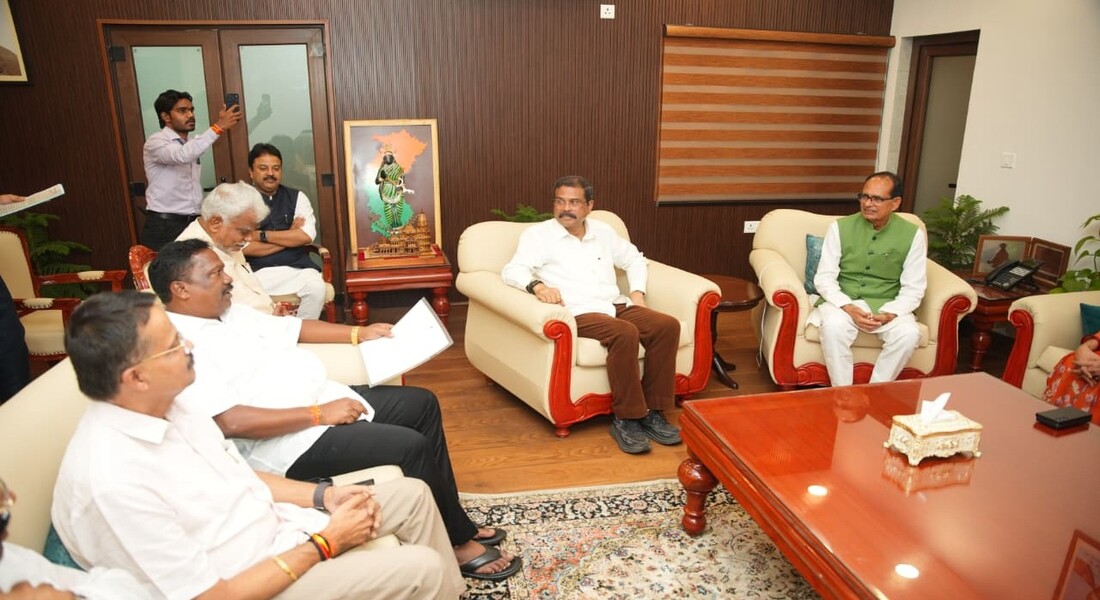
Bhubaneswar: Senior BJP leader and Sambalpur MP Dharmendra Pradhan and Odisha’s Rural Development Minister Rabi Narayan Naik met Union Agriculture and Rural Development Minister Shivraj Singh Chouhan in New Delhi to discuss early provision of pucca houses to eligible beneficiaries of the Pradhan Mantri Awas Yojana (PMAY) in Odisha.

The state’s parliamentary delegation was also present at the meeting.

The leaders discussed expediting the entire PMAY process so that no eligible beneficiary in the state is deprived of getting a pucca house. The meeting also covered the progress of various rural development schemes being implemented across Odisha.

Naik said houses under PMAY could not reach poor people earlier due to the previous government’s negligence. He said the survey to identify genuine homeless persons in the state is now being carried out with great transparency and diligence under the current government.

Chouhan wholeheartedly appreciated the steps and efforts being taken towards rural development and welfare of the poor in Odisha. The leaders reiterated their commitment to ensuring that every poor and helpless section of the state receives the rightful benefits of government schemes.

Providing housing to every poor family and ensuring a dignified life, as envisioned by Prime Minister Narendra Modi, remains a priority for the double-engine government, the leaders said.

Odisha CM Majhi reviews Finance Department performance

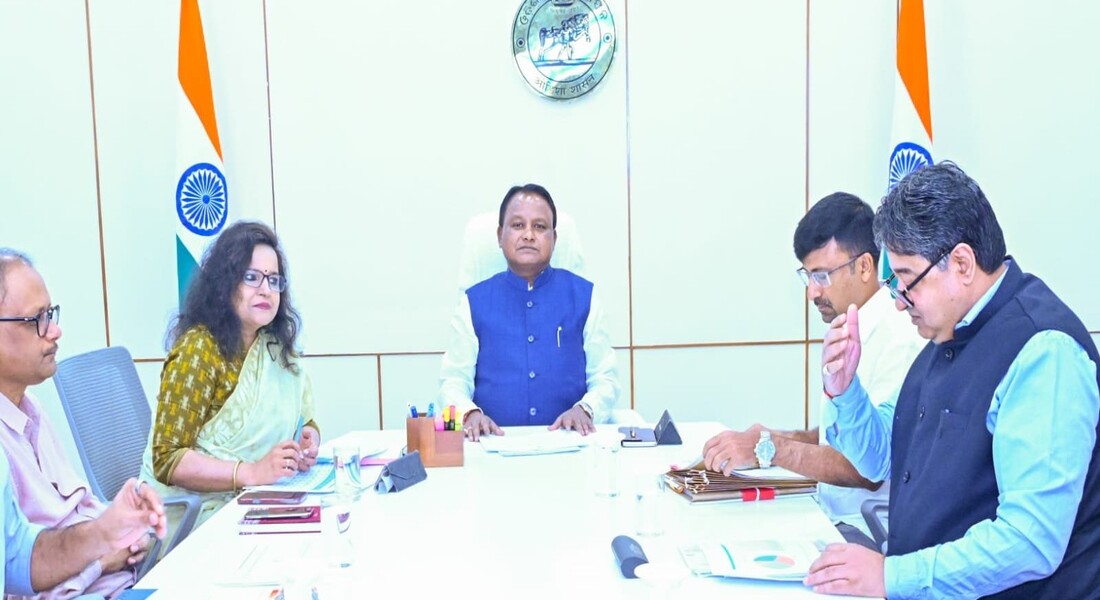
Bhubaneswar: Chief Minister Mohan Charan Majhi on Tuesday reviewed the Finance Department’s performance at Lok Seva Bhavan, Bhubaneswar.

He directed officials to make the state’s revenue collection system more efficient. He also asked the department to further step up capital and programme expenditure.

The Finance Department gave a detailed presentation on revenue receipts and expenditure during the meeting. Officials informed the CM that the state government draws its revenue from multiple sources. Central government grants contribute 10% of this revenue. Odisha’s share in central taxes accounts for 31%. The state’s own tax revenue makes up another 31%. Own non-tax revenue contributes the remaining 28%.

The presentation showed that total revenue collection from all sources touched Rs 61,593 crore till July of the current financial year. This marks a 7.3% rise compared to the same period last year.

The state’s total own revenue grew by 11.9% till July this year over the corresponding period last year. Own tax revenue rose by 9.3% during the same period. Non-tax revenue recorded the sharpest jump, growing by 14.8% compared to last July.

Officials noted that programme expenditure and capital expenditure both increased alongside the strong revenue growth. Programme expenditure till July this financial year stood 19.1% higher than the same period last year.

Capital expenditure, or capex, also registered a significant jump. Total capital expenditure reached Rs 11,300 crore by the end of July 2026. This amount stood at Rs 9,399 crore during the same period last year. Overall capex spending thus grew by 20.2 percent year-on-year till July.

CM Makhi asked the Finance Department to sustain this momentum and improve efficiency further in revenue mobilisation, officials said.