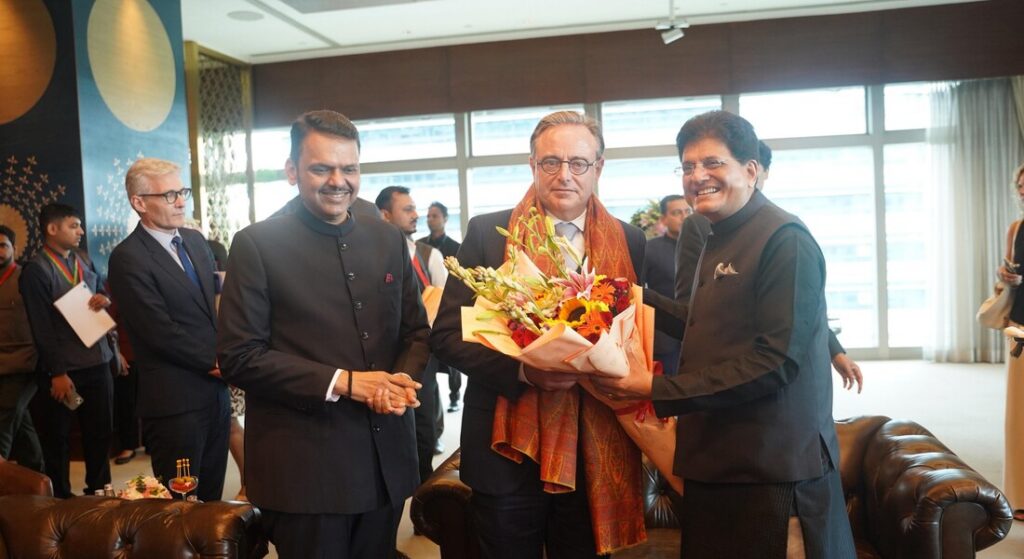

New Delhi: India needs to embrace fair trade, recycling and a circular economy even as it pushes Indian products and services into world markets, Union Commerce and Industry Minister Piyush Goyal said on Wednesday.
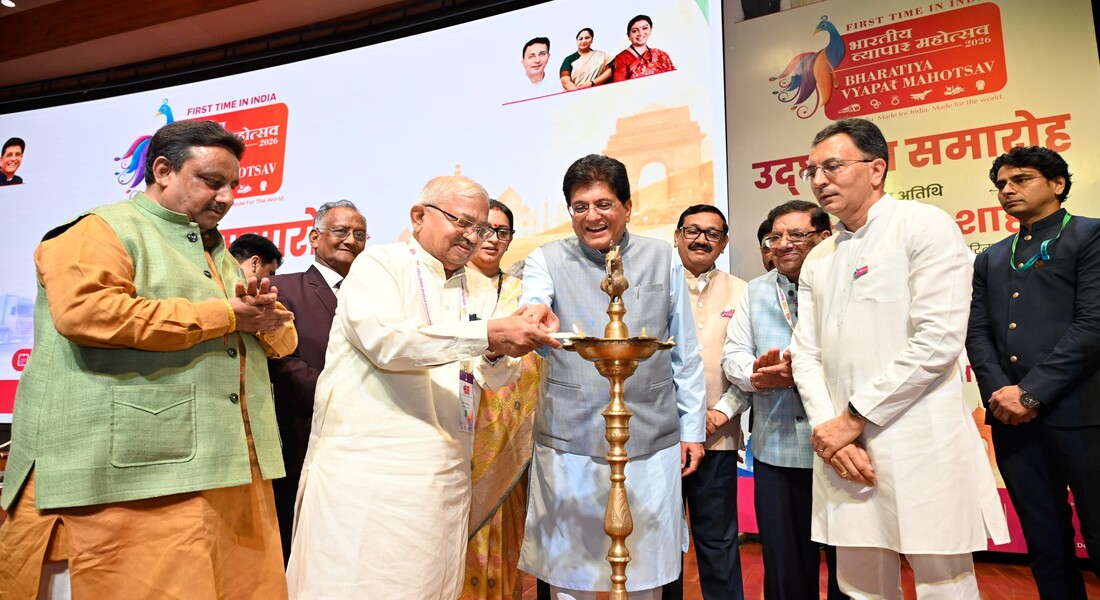
Goyal was speaking at the opening of the Bharatiya Vyapar Mahotsav at Bharat Mandapam in the capital, according to an official statement.
He pointed to India’s expanding footprint in global trade, noting that nine free trade agreements have opened new markets for Indian industry. This, he said, has given the country preferential access abroad, with MSMEs, workers, fishermen, farmers, entrepreneurs and the services sector all playing a part in carrying Indian goods and services overseas.
He pressed businesses and citizens to work together to build up the Make in India brand, arguing that the country’s quality and design capabilities deserve greater recognition.
With India’s economy currently valued at roughly USD 4 trillion, the minister framed this moment as a launchpad toward the government’s 2047 target of a USD 30 trillion economy. Interest in trading with India is rising worldwide, he said, and meeting that opportunity would take businesses, entrepreneurs and ordinary citizens pulling in the same direction.
On the export front, Goyal said India logged record goods and services exports last year, split between merchandise and services shipments. Exports have climbed roughly 73% over the past six years, he said, and the government is now targeting USD 1 trillion in exports this year. Between April and July of the current year alone, exports grew nearly 15%, he added.
Self-reliance, Goyal said, cannot be separated from national development – and citizens themselves need to drive that shift. He traced this back to government initiatives launched since 2014, including Digital India, Startup India and Stand-Up India, alongside a wave of infrastructure building, which he credited with strengthening industry and opening doors for young people.
Describing ‘Swadeshi’ as products built on the labour of Indian citizens, Goyal urged businesses to look past small, familiar markets and sell abroad. More Indians buying Indian products, he argued, would widen opportunities, lift production and trade volumes, unlock economies of scale, and sharpen the competitiveness of Indian businesses.
He praised Indians for repeatedly turning hardship into opportunity, citing travellers, MSMEs, startups, farmers, fishermen, labourers and entrepreneurs as the backbone of that resilience. Development, he said, is a shared responsibility – one built on improvement, transformation and performance – and every stakeholder has a role in carrying India’s name to the world.
Goyal also asked business owners to digitise operations, adopt sound manufacturing standards and stick to fair trade practices. With climate change in mind, he stressed that recycling, reuse and circular-economy principles deserve far more attention going forward.
Make in India, he added, should stand for more than a label – it should build genuine global respect for Indian quality, design and craftsmanship. He said he was confident that sustained collective effort would earn Indian products and natural resources that trust internationally.
GDP growth, Goyal noted, naturally feeds into higher production and job creation. He pointed to young Indians returning home after studying or training at skill development centres as a source of fresh ideas for tackling upcoming challenges. He closed by crediting India’s businesses, entrepreneurs, MSMEs, farmers, fishermen and workers collectively for driving the country’s growth and strengthening its standing in the global economy.