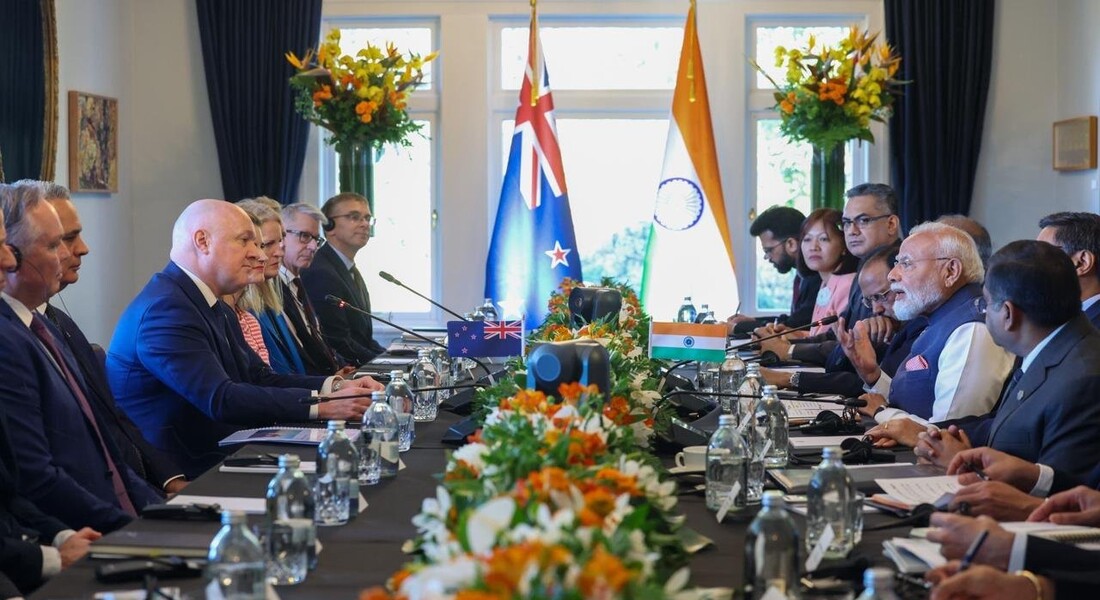

New Delhi: India and New Zealand have elevated their bilateral relationship to a Strategic Partnership and adopted a roadmap to guide cooperation until 2030, marking a major milestone during Prime Minister Narendra Modi’s first visit to the country in four decades.
During the visit, Prime Minister Modi and his New Zealand counterpart, Christopher Luxon, held bilateral talks and reviewed progress made since Luxon’s visit to India in March 2025. They also endorsed the India-New Zealand Strategic Partnership: Roadmap to 2030, which outlines cooperation across political, economic, defence and people-to-people sectors.
The two countries also welcomed the signing of a comprehensive India-New Zealand Free Trade Agreement (FTA). They agreed to work towards its early implementation and set a target of doubling two-way trade in goods and services to NZD 7 billion (around Rs 35,000 crore) by 2030.
India and New Zealand agreed to deepen defence and maritime cooperation through new arrangements on maritime security, hydrography and logistics support. They also decided to establish an annual Maritime Security Dialogue and strengthen cooperation in counter-terrorism, cyber security, and law enforcement, according to an official statement.
The leaders also agreed to expand collaboration in agriculture, education, science, clean energy, innovation, and disaster management. They welcomed new agreements in tourism, animal husbandry, and dairying, while encouraging the launch of direct non-stop flights between the two countries.
On maritime cooperation, both sides discussed efforts to strengthen the recognition of seafarer competency certificates. They said enhanced recognition would improve seafarer mobility, boost cooperation between maritime authorities and support the resilience of the maritime industries in both countries.
The two prime ministers reaffirmed their commitment to a free, open and rules-based Indo-Pacific and supported reforms of the United Nations Security Council. New Zealand also reiterated its support for India’s permanent membership of a reformed and expanded UNSC.
The leaders condemned terrorism in all its forms and agreed to strengthen cooperation against terrorism and violent extremism through a Joint Working Group on Counter-Terrorism. They also called for greater international action against terror financing and safe havens.
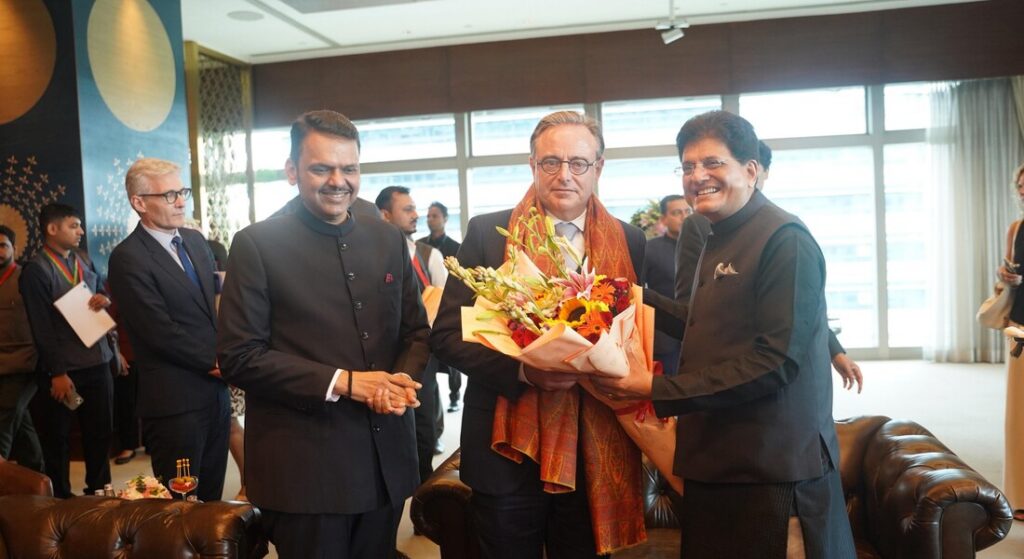
Modi thanked the government and people of New Zealand for the warm hospitality extended during the visit. Both leaders agreed to maintain the momentum of high-level engagements and ensure timely implementation of the initiatives outlined in the Roadmap to 2030.