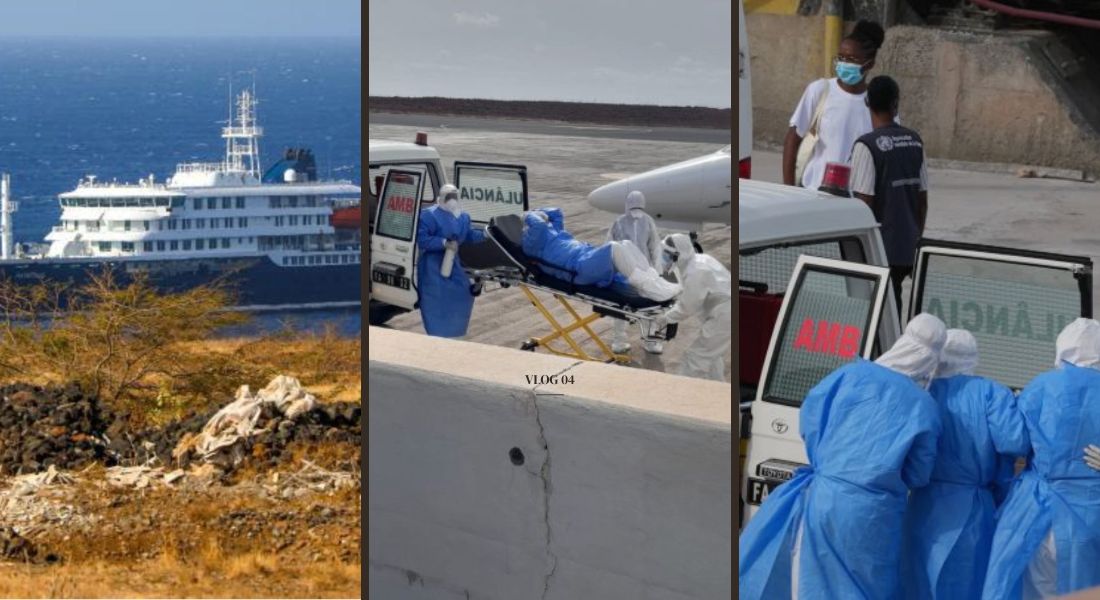

New Delhi: Two Indian crew members are among those aboard a luxury expedition cruise ship at the centre of a rare hantavirus outbreak that has already claimed three lives and triggered international contact tracing efforts across multiple countries.
The Dutch-operated expedition vessel MV Hondius, carrying passengers and crew from 23 countries, remains under strict health precautions in the Atlantic Ocean following confirmation of infections linked to the Andes strain of hantavirus — one of the few variants known to spread between humans through close contact.
According to The BBC, Dutch polar travel company Oceanwide Expeditions confirmed that two Indian nationals are part of the crew aboard the vessel. However, the company has not disclosed their health condition, duties on the ship or whether they had contact with infected passengers.
The outbreak has drawn global attention due to the virus’s high fatality rate and the movement of passengers across countries before the infections were fully understood.
So far, eight cases of #hantavirus have been reported, including three deaths.
— Tedros Adhanom Ghebreyesus (@DrTedros) May 7, 2026
While this is a serious incident, @WHO assesses the public health risk as low.
WHO will continue to work with all relevant governments and partners to provide care for those who are affected, protect… pic.twitter.com/NEBHXrqurT
The World Health Organization (WHO) said five confirmed hantavirus infections linked to the vessel have so far been identified, while three passengers — a Dutch couple and a German national — have died.
International health agencies are now monitoring passengers and contacts across Europe, North America, Asia and Africa as authorities attempt to contain any further spread.
According to CNN, the first suspected patient, a 70-year-old Dutch passenger, developed fever, abdominal pain and gastrointestinal symptoms aboard the ship before dying on April 11. Several others later fell ill during the voyage.
The ship, which departed from Ushuaia in Argentina on April 1, had travelled through parts of South America before the outbreak emerged. WHO officials believe the initial infections may have occurred before boarding, possibly during visits to areas in Argentina and Chile where rodent species known to carry hantavirus are found.
The Andes strain of hantavirus differs from most other hantavirus variants because it can spread between humans through prolonged close contact, including caregiving and shared living spaces. However, WHO has stressed there is currently no evidence of large-scale community transmission comparable to Covid-19.
Speaking to CNN from onboard the vessel, US physician Stephen Kornfeld, who was travelling as a passenger, said he stepped in to assist after the ship’s doctor also became ill.
“Over 12 to 24 hours, it became clear that there were a number of people sick and that they were getting sicker,” Kornfeld told the network.
Authorities in several countries, including the United States, the United Kingdom, Switzerland, Singapore, Canada and France, are currently monitoring passengers and close contacts linked to the ship.
Oceanwide Expeditions said it is reconstructing the travel and embarkation details of all passengers and crew members since March 20 to support international contact tracing efforts.
The WHO has said more cases may emerge in the coming days because hantavirus symptoms can take between one and six weeks to appear after exposure.
The ship is expected to arrive in Tenerife in Spain’s Canary Islands, where remaining passengers are likely to be flown back to their home countries under medical supervision.
Meanwhile, Argentina has launched an investigation into the travel route of the deceased Dutch couple, including visits to regions where hantavirus is known to be endemic. Argentine health authorities are also conducting rodent testing in areas linked to the couple’s travel history.
Despite growing concern, WHO Director-General Tedros Adhanom Ghebreyesus said the organisation does not currently anticipate a global epidemic linked to the outbreak.