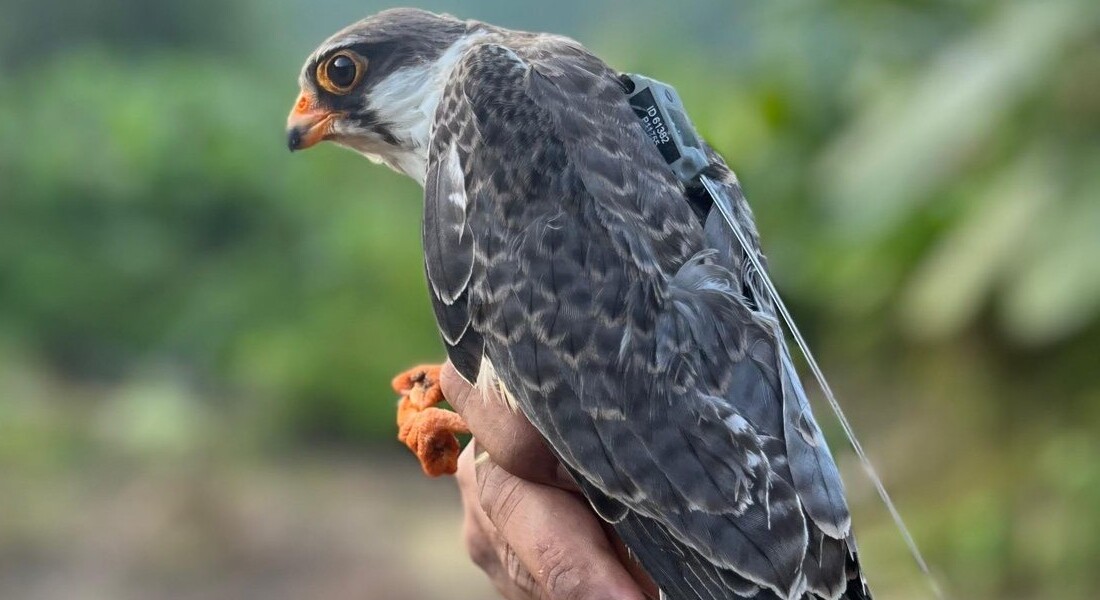

New Delhi: Union Cabinet Minister for Environment, Forest & Climate Change Bhupender Yadav on Saturday highlighted ongoing conservation efforts for the Amur falcon in Northeast India, sharing new tracking details from a satellite-tagging initiative conducted in Manipur.
In a post on X, the minister noted that as part of a long-running conservation programme, three Amur falcons were satellite-tagged in November 2025 at Chiuluan in Tamenglong district. The initiative has been supported by the Ministry of Environment, Forest and Climate Change, and has been running as a community-led conservation effort over the past decade.
According to the tracking data, after spending more than four months in their non-breeding grounds in southern Africa, two of the tagged birds have begun their spring migration back towards their breeding regions in Far East Asia, passing through India along their route.
Yadav stated that the birds undertake an extraordinary non-stop flight of nearly 6,000 kilometres in around six days while crossing from Somalia towards Northeast India during their migration.
One of the tagged falcons, a young female named “Alang,” is currently reported to be moving towards India’s west coast and is undertaking a transoceanic crossing over the Arabian Sea after departing Somalia early in the morning of the previous day.
With favourable tailwinds assisting the journey, the sea crossing is expected to continue as a multi-day non-stop flight, reflecting the species’ long-distance migratory capability, the minister noted.
Yadav further stated that the satellite-tagging project has provided valuable scientific insights into the movement patterns of Amur falcons, a small raptor known for its trans-hemispheric migration between breeding and non-breeding regions.
The minister added that the data generated from the project is being used to support conservation planning and strengthen protection measures along migratory routes, while also reinforcing community participation in wildlife conservation efforts in Northeast India.