
New Delhi: A day after the Delhi Police’s crackdown on the Cockroach Janta Party’s (CJP) “Sansad Chalo” march, the student-led organisation on Tuesday vowed to continue its agitation, accusing the police of using excessive force against peaceful protesters, even as the Delhi Police maintained that its personnel had come under attack during the protest.
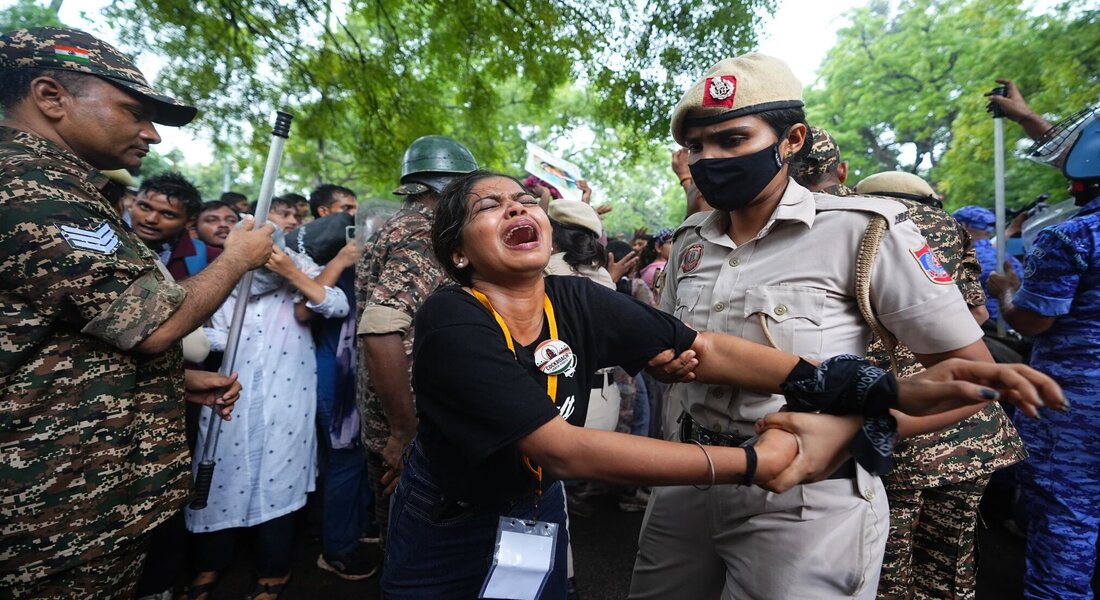
The protest, which began as a march towards Parliament demanding the resignation of Union Education Minister Dharmendra Pradhan over the alleged NEET-UG paper leak, witnessed scenes of violence on Monday after police used lathi-charge and tear gas to disperse demonstrators who attempted to breach security barricades despite prohibitory orders.
Videos widely shared on social media showed injured students, many with bleeding head injuries, alleging that they were beaten by police personnel. The visuals triggered widespread criticism from opposition leaders, activists and civil society groups.
In an emotional post on X, CJP founder Abhijeet Dipke on Tuesday apologised to the protesters who were injured during the police action, particularly women participants.
“I apologise to all our supporters, especially the girls who were brutally beaten by male police officers. We could have done better. I could have done better to protect you from the inhumane actions of the Delhi Police,” Dipke wrote.
He further alleged that “to protect one Dharmendra Pradhan, who is responsible for the deaths of more than 20 students, the government was willing to spill the blood of many more young students.” Dipke appealed to injured protesters to contact him personally, promising that the movement would continue.
The CJP also alleged that several students sustained injuries during the crackdown and claimed that activist Sonam Wangchuk’s wife, Gitanjali J. Angmo, was pushed and manhandled by police while attempting to protect protesters. The organisation has continued its sit-in near Kerala House after police dismantled the protest stage at Jantar Mantar.
BJP Government choose Violence and Dictatorship,
— Cockroach is Back (@Cockroachisback) July 20, 2026
We will choose Peace and Constitution! pic.twitter.com/aUOy0EDCMA
Delhi Police rejected the allegations and maintained that “no individuals were subjected to targeted assault” during the operation.
Meanwhile, Sonam Wangchuk, who remains admitted to Safdarjung Hospital after being shifted there following a deterioration in his health during his indefinite hunger strike, said he would continue his fast despite the Centre initiating talks with CJP representatives.
In a handwritten note, Wangchuk accused the police of “brutality” against peaceful protesters and said, “Seeing the brutality with which peacefully protesting youth are being dealt with, I have decided to continue my fast until the youth leaders are allowed to meet the Parliamentarians at the Sansad Bhawan or I am allowed to meet them here at the hospital.”
Day #23
— Sonam Wangchuk (@Wangchuk66) July 20, 2026
I'll continue my fast……….. pic.twitter.com/rfohA8iMkx
“I am touched and moved by how the youth have held on to peace despite provocation. I appeal to the Government and Police force to resolve the issue by simply allowing the students to present their grievances before the Parliament,” he wrote further.
The Delhi Police, however, presented a sharply different account of Monday’s events. In an official statement, it said more than 118 police personnel, including several senior officers, were injured and around 70 protesters were detained after the demonstration turned violent.
According to the police, protesters displayed “unruly, aggressive and violent behaviour”, attacked security personnel, damaged government vehicles and public property, and repeatedly violated prohibitory orders despite repeated warnings to disperse.
The CJP has disputed the police’s version, insisting that the demonstration was peaceful until security personnel intervened. The organisation alleged that excessive force was used against unarmed students and youth protesters exercising their democratic right to protest.
The protest movement has now entered a new phase, with CJP leaders including Dipke, Ashutosh Ranka and Saurav Das continuing their sit-in near Kerala House. The organisation has reiterated that it will not withdraw its agitation until its key demands—including the resignation of Education Minister Dharmendra Pradhan, the release of Sonam Wangchuk and accountability for the alleged NEET-UG paper leak—are addressed.
As competing narratives continue to emerge over Monday’s violence, demands for an impartial inquiry into the police action have also gained momentum, with opposition leaders and rights activists questioning the use of force against students, while the police maintain that their actions were necessary to enforce prohibitory orders and restore public order.