
New Delhi: Union Railways Minister Ashwini Vaishnaw on Tuesday announced eight more structural reforms under the ‘Reform Express’ initiative, taking the total number of reforms implemented so far to 17.
The measures are aimed at modernising freight transportation, improving logistics, simplifying project execution, promoting innovation and strengthening the railway ecosystem, according to an official statement.
Addressing a press conference at Rail Bhawan, Vaishnaw said the reforms are part of the Ministry’s target of implementing 52 reforms in 52 weeks to build a future-ready railway system.
He said the reforms introduced earlier under the initiative have already started delivering encouraging results.
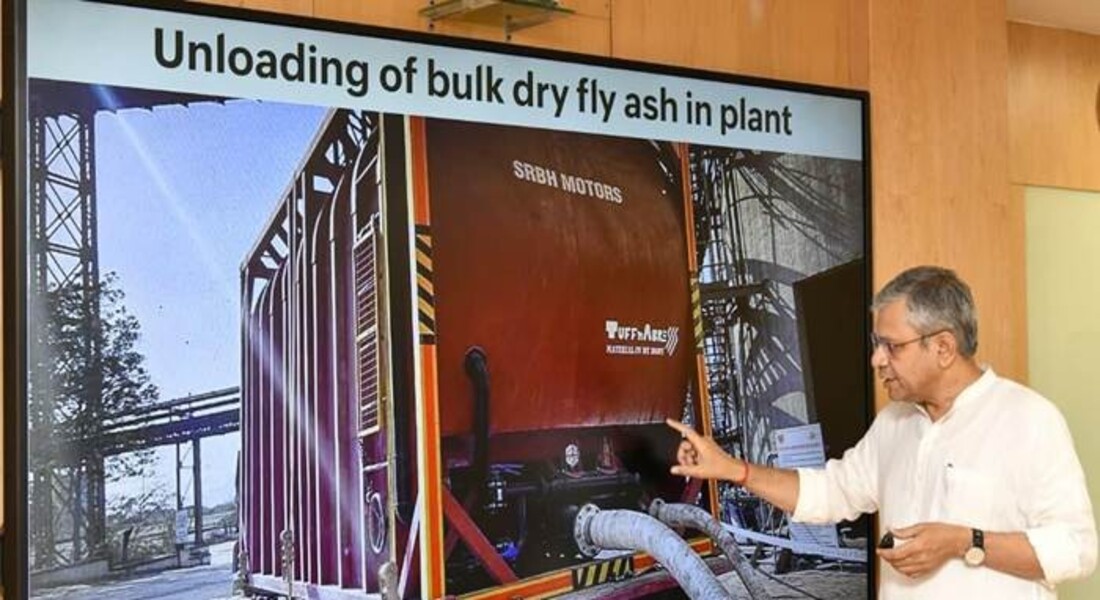
One of the major reforms focuses on fly ash transportation. India generates around 340 million tonnes of fly ash every year, while Indian Railways transported about 13 million tonnes during 2025-26.
To reduce dust pollution and improve logistics, the Railways has introduced a containerised transportation system using specially designed ISO-standard containers. The closed-container system will enable pollution-free loading, transportation, and unloading while improving storage and handling at cement plants.
Another reform simplifies the licensing framework for Container Train Operators. The existing four-category system has been replaced with a single Pan-India licence. Operators will now be able to run container trains across the railway network without category-based restrictions. A uniform non-refundable registration fee of Rs 25 crore has also been introduced. The Ministry expects the move to improve ease of doing business, encourage private participation, increase container traffic, and reduce logistics costs.
The government has also announced reforms in fertilizer transportation. Indian Railways currently handles nearly 85% of fertilizer movement in the country. Freight charges have been simplified with a per-tonne-per-kilometre tariff structure. Fertilizers can now also be transported through containers.
The move will allow phased unloading based on demand instead of detaining an entire rake until complete unloading. It is expected to improve wagon turnaround, protect fertilizers from weather damage, and strengthen distribution.
To improve the quality of railway infrastructure projects, Indian Railways has introduced a policy for skilling artisans engaged in railway works. Workers involved in specialised trades such as welding, fitting and masonry will undergo practical and oral assessments before receiving QR code-enabled skill certificates.
The programme will begin with major projects, including bridges and tunnels, before being expanded across all Zonal Railways and Production Units over the next 24 months.
The Ministry has also introduced another set of construction reforms to improve project execution. Contractors will now have to provide 10% Performance Security at the beginning of a project instead of deductions being made from running bills. Contractors with pending litigation exceeding 50% of their net worth will not be eligible to participate in railway tenders.
The reforms also introduce Contractor’s All Risk Insurance and Professional Indemnity Insurance to strengthen risk management during project execution. Indian Railways has also established a sequential land handover mechanism to reduce disputes and ensure timely execution of projects.
Vaishnaw also highlighted Rail Bhoomi, a web-based platform developed by the Centre for Railway Information Systems. The platform integrates several railway applications to streamline land acquisition, improve workflow management, and enable real-time monitoring of projects.
The final reform relates to wagon design approval. Under the new policy, designers, manufacturers, and industries will be allowed to develop specialised freight wagon designs based on specific commodities and operational requirements.
The Research Designs and Standards Organisation will evaluate the proposed designs before permitting prototype development. The prototypes will undergo detailed testing, field trials, safety certification, and approval by the Railway Board before being inducted into service.