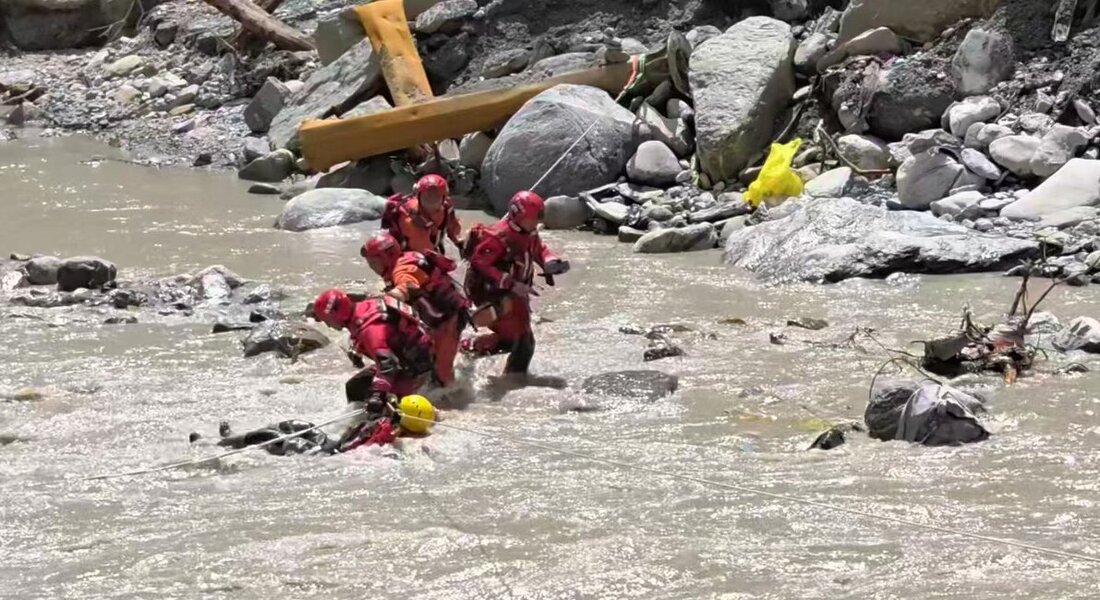

New Delhi, August 29: The death toll from the devastating flash floods and landslides along the Nepal-Tibet border has risen to at least 586, while 2,478 people remain missing, as rescue teams race to reach survivors and authorities confront the threat of another flood from a newly formed lake.
Nepal has confirmed 579 deaths and 1,924 missing people, while Chinese authorities have reported seven deaths and 554 missing in Tibet, according to the latest figures available on Saturday. The combined number of missing people stands at 2,478. The figures remain fluid as rescue teams continue to reach areas that were cut off by mud, debris and damaged infrastructure.
The immediate concern is now a potential secondary disaster. China has warned Nepal that a debris-dammed lake formed after the initial catastrophe could breach its banks, with officials monitoring changes in the lake and warning downstream communities to remain alert. Rescue operations were briefly suspended after the lake began overflowing, although search efforts have since resumed.
The lake formed after a massive ice-and-rock collapse in the Himalayas sent debris into the river system near the Nepal-China border. The resulting surge swept through communities in Nepal, particularly along the Lhende Khola and Trishuli river systems, destroying roads, bridges, homes and other infrastructure.
Chinese state media has shown extensive destruction around Gyirong Port in Tibet, a key border crossing between Nepal and China. Rescue teams reaching the area reported thick layers of mud and debris, while satellite imagery indicated that parts of the border complex had been severely damaged.
The scale of the disaster has made rescue operations particularly difficult. Roads and bridges have been washed away, communication networks disrupted and large areas remain inaccessible except by helicopter. More than 3,700 people have been rescued in Nepal, while authorities continue searching for thousands of people whose whereabouts remain unknown.
A large number of foreign nationals are also among those missing. Nepalese authorities have reported 517 missing foreigners, while Chinese officials have reported another 260 missing foreigners in Tibet, taking the combined figure to at least 777. The missing include tourists, pilgrims and workers from several countries.
India has intensified its humanitarian and consular response. According to the Ministry of External Affairs, 320 Indian nationals in Nepal remained uncontactable or missing as of Friday, while around 100 people of Indian origin holding other nationalities were also uncontactable. Sixty-three Indians working at the Trishuli-1 hydropower project have been rescued, while 96 Indians stranded on the Chinese side have crossed into Nepal.
India has also sent emergency relief supplies to Nepal. More than 47 tonnes had been dispatched in two flights by Friday, with a third flight carrying around 13 tonnes of additional supplies, including generators, food, water-purification tablets and medicines. India has also deployed an 11-member medical and tunnel-rescue team as part of the assistance.
International relief efforts are expanding as the humanitarian situation worsens. The United Nations has said tens of thousands of households need food and emergency drinking water. The European Union, Canada, the United States and other countries have announced financial or material assistance for Nepal.
The disaster, believed to have been triggered by a massive glacial collapse and subsequent landslide, has left authorities dealing with both the immediate humanitarian crisis and the continuing threat posed by unstable mountain terrain and newly formed water bodies.
With another potential flood threatening downstream areas, authorities in Nepal and China remain on high alert as rescue teams continue the search for survivors and missing people.