
Bhubaneswar:,The Odisha Cabinet on Tuesday approved 13 proposals across seven departments, with a major focus on rural development, including a combined outlay of Rs 1,900 crore for improving connectivity in difficult and remote areas and strengthening water conservation infrastructure across the state.
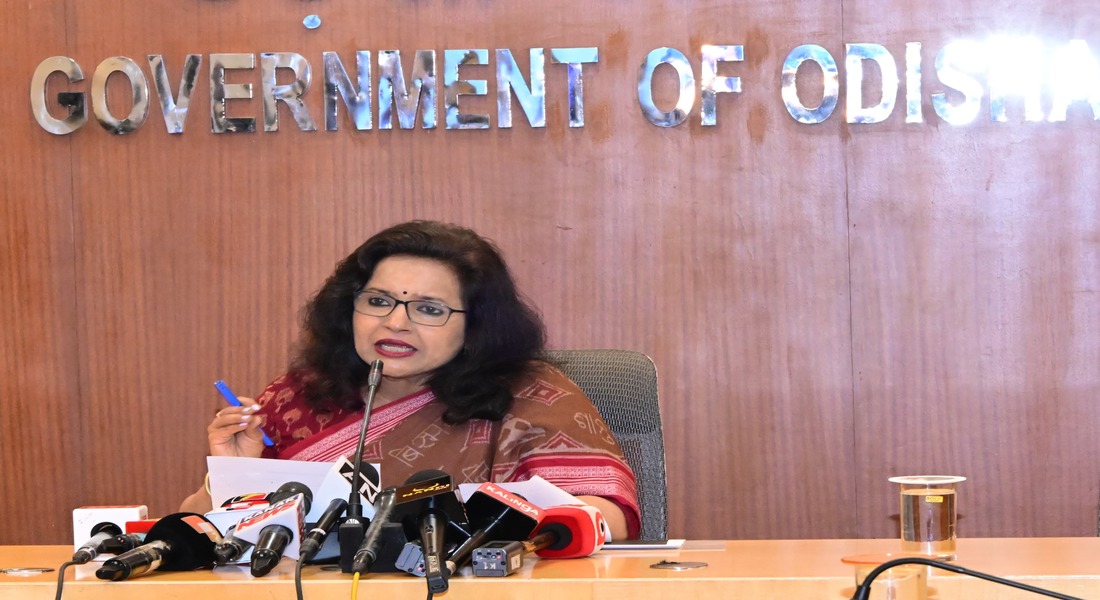
The decisions were taken at the 44th meeting of the State Cabinet, chaired by Chief Minister Mohan Charan Majhi at Lok Seva Bhawan in Bhubaneswar. Chief Secretary Anu Garg briefed the media on the decisions after the meeting.
Of the 13 proposals approved, seven were from the Rural Development Department — the highest among all departments. The Cabinet also cleared one proposal each from the Water Resources; Fisheries and Animal Resources Development; Cooperation; Agriculture and Farmers’ Empowerment; Food Supplies and Consumer Welfare; and Revenue and Disaster Management departments.
Among the key decisions, the Cabinet approved Rs 1,300 crore for the implementation of the Mukhyamantri Sadak Yojana (MMSY)-Connecting Unconnected Villages in Difficult Areas (CUVDA) for five years from 2026-27 to 2030-31. The scheme seeks to provide improved all-weather connectivity to villages in Left-Wing Extremism-affected districts, difficult hilly regions and remote islands, improving access to healthcare, education, markets, tourist destinations and other essential services.
Around 1,150 km of new road projects are targeted under the scheme, while ongoing projects covering approximately 949 km will also be completed during the five-year period. Bridges will be constructed wherever required to provide new or improved connectivity.
The Cabinet also approved an outlay of Rs 600 crore for the Bridge-cum-Weir scheme for 2026-27 to 2030-31. The initiative seeks to conserve water in streams and upstream areas of bridges during the monsoon for minor irrigation, domestic use and livestock. As many as 508 new bridge-cum-weir projects will be taken up, while 162 ongoing projects are targeted for completion.
In another significant decision, the Cabinet approved a proposal to repeal the Odisha Agricultural Produce Markets Act, 1956, and introduce a new comprehensive agricultural marketing law. The proposed legislation seeks to establish Odisha as a unified agricultural market by removing geographical restrictions on the sale and purchase of agricultural produce and livestock and providing for direct marketing, e-trading, electronic auctions and a statewide single trading licence.
The Cabinet also approved three lift irrigation schemes in Balangir district under the Parbati Giri Mega Lift Irrigation Scheme. The projects will create an additional irrigation potential of about 4,330 hectares by lifting water from the Tel and Undar rivers and will benefit farmers in 25 villages. With an execution cost of about Rs 121.81 crore, excluding GST, the works are scheduled for completion within 36 months.
In the revenue administration sector, amendments to the Odisha District Revenue Service Rules, 1983, were approved to introduce two new intermediate cadres — Assistant Revenue Inspectors (Level-II) and Amins (Level-II) — to address career stagnation and improve promotional opportunities for field-level personnel.
The Cabinet further approved the Odisha State and District Commission Stenographers’ (Method of Recruitment and Conditions of Service) Rules, 2026, to regulate recruitment and service conditions for stenographers in the State and District Consumer Disputes Redressal Commissions.