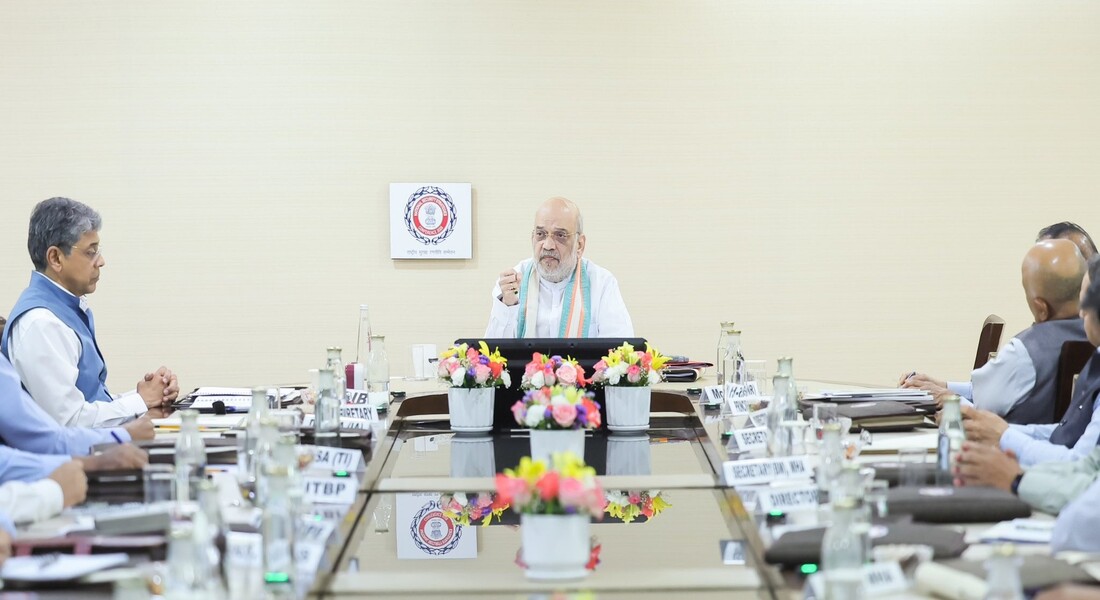

New Delhi: If earlier governments had anticipated the challenges of narcotics, Naxalism and the Northeast before they became acute, India would not have had to bear their impact for decades, Union Home Minister Amit Shah said.
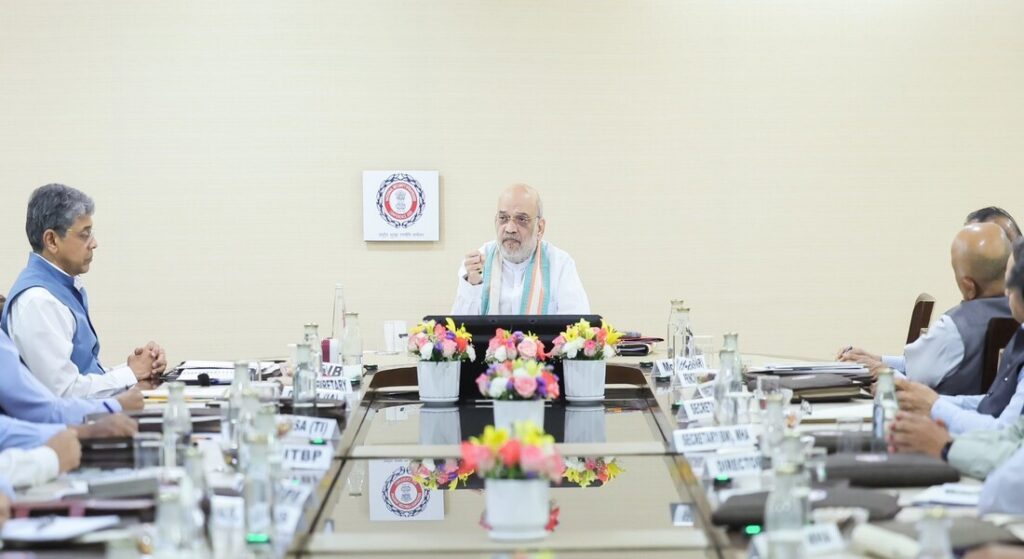
Addressing the valedictory session of the Intelligence Bureau’s National Security Strategies Conference in New Delhi on Wednesday, Shah said emerging security threats must be identified and tackled while they are still at an early stage.
The two-day conference brought together senior police officers from across the country, Directors General of Police of all states and representatives of central security agencies. Participants attended the conference both physically and virtually, according to an official statement.
Shah said India’s ambition of becoming a developed nation by 2047 depends on a strong internal security framework. As the country moves forward, he said, new challenges will emerge from within India and across the world, making advance assessment and preparedness essential.
He said the National Security Strategies Conference should focus on security trends over the next 15 to 20 years and identify potential threats before they become major challenges.
Shah credited state police forces, central agencies and Central Armed Police Forces with helping the country overcome three major internal security hotspots. He said the next priority should be to build an internal security framework without loopholes.
On criminal justice, Shah said the government’s three new criminal laws, expansion of forensic infrastructure and technological upgrades are aimed at improving the justice delivery system. He said 37,000 young graduates are graduating every year from the National Forensic Sciences University.
Shah said 100% implementation of the three new criminal laws is expected within the next year. He said this would help enable the disposal of criminal cases up to the Supreme Court within three years and contribute to a 25% increase in the conviction rate.
On counter-terrorism, Shah called for making ‘Prahar’ a daily practice and using it to dismantle terrorist networks through a 360-degree approach. He urged DGPs to establish dedicated mechanisms to ensure implementation and follow-up of measures under the new criminal laws.
Shah also called for effective implementation of the Narcotics Control Vision Document 2026-2029 by state police forces. He outlined the three-pronged approach of ‘Detect, Disrupt and Destroy’ to achieve the goal of a drug-free India.
On border security, Shah said the Ministry of Home Affairs had visited all land-border states over the past eight months and shared a four-pronged approach with them. He said the immediate objective is to make India infiltration-free and asked states to designate nodal officers for border security.
Shah said illegal immigration poses risks to India’s security, economy and demographic stability. He stressed that those seeking to stay in India must follow legal channels and obtain the required permissions.
On fugitives, Shah said around 274 fugitives had been brought back to India from abroad between 2019 and 2026. He said the creation of BHARATPOL has strengthened documentation, translation, legal procedures and training related to international cooperation.
Shah also highlighted the role of technology in strengthening national security. He said the Multi-Agency Centre has been upgraded and its technological capabilities will be further enhanced. An integrated data ecosystem involving CCTNS, ICJS, NATGRID and NAFIS has also been developed to enable communication between different datasets.
The home minister urged young police officers to use artificial intelligence for data integration and analysis, identify criminal modus operandi and generate actionable intelligence to anticipate future threats.
Shah said India’s security strategy must also account for global instability, energy-resource insecurity, supply chain disruptions, radicalisation, cyber threats and misinformation warfare.
He called for greater coordination among the Centre, states and different government departments and asked the Intelligence Bureau to convene a meeting with districts along the maritime border before the next conference.
Concluding his address, Shah said security challenges must be identified and addressed before they grow into major problems. He expressed confidence that continued cooperation between the Centre and states would help build a secure, infiltration-free and drug-free India.