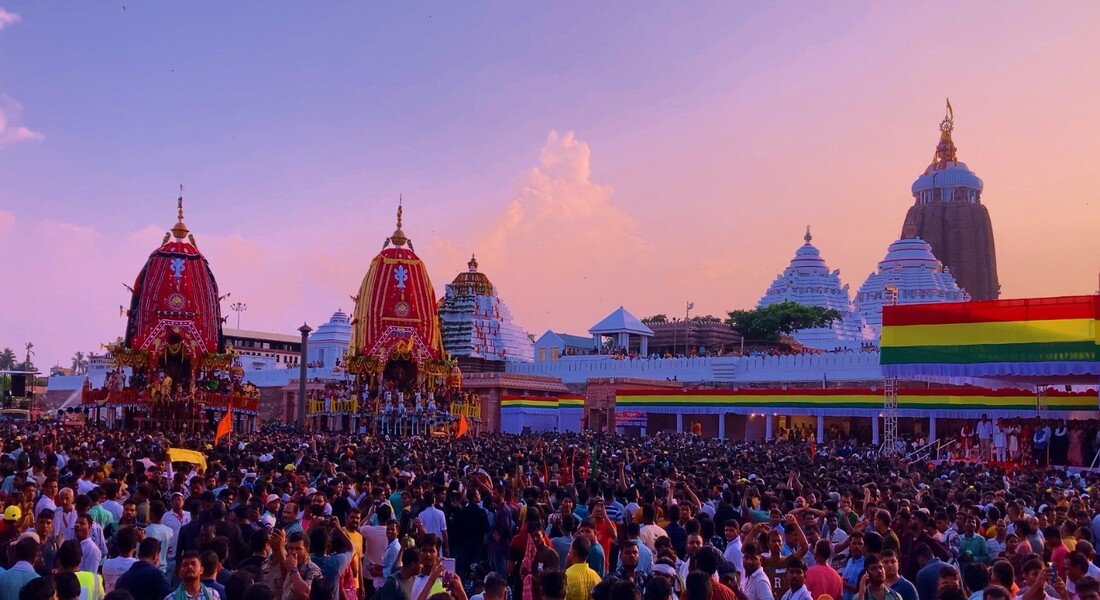

Every year, millions of people gather in the holy city of Puri, Odisha, to witness one of the world’s oldest and most spectacular religious processions—the Jagannath Rath Yatra. But this is much more than a grand festival filled with massive wooden chariots, devotional chants, and endless crowds. It is a celebration of equality, compassion, renewal, and togetherness—values that are perhaps more relevant today than ever before.
Believed to have its origins in ancient Hindu scriptures known as the Puranas, the Rath Yatra marks the annual journey of Lord Jagannath, his elder brother Balabhadra, and his younger sister Subhadra from the Jagannath Temple to the Gundicha Temple, which is lovingly regarded as their aunt’s home. For nine days, the deities leave the sanctum of the temple and come among the people, reminding devotees that divinity belongs to everyone.
A God who welcomes everyone
One of the reasons Lord Jagannath holds such a special place in the hearts of millions is his uniqueness. Unlike many Hindu deities depicted with perfect human features, Jagannath, Balabhadra, and Subhadra have simple wooden forms with large, round eyes that seem to embrace everyone without judgment.
Their appearance sends a powerful message: spirituality is not about perfection; it is about acceptance. In today’s fast-paced world, where people often feel pressured to fit into certain standards, Lord Jagannath reminds us that everyone is welcome just as they are.
The festival that breaks every barrier
Rath Yatra is often called the “Festival of Oneness,” and rightly so.
According to Odia tradition, Queen Gundicha requested King Indradyumna to organise this procession so that even those who were not allowed inside the temple – including people from different religions who were unable to have darshan in the sanctum – could have the opportunity to receive the blessings of Lord Jagannath. The tradition continues to symbolise inclusiveness and equal access to the divine.
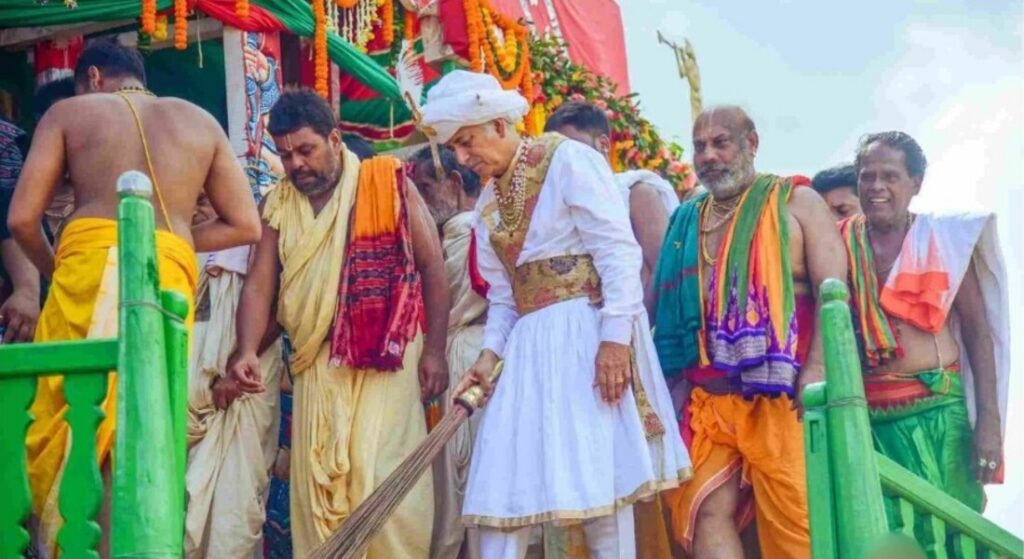
Another powerful moment comes during the ritual of Chhera Pahanra, when the Gajapati King of Puri sweeps the chariots with a golden broom. The message is timeless: before God, not just every individual is equal, regardless of wealth, position, or social status, but also it conveys that true greatness comes from humility and devotion rather than a crown.
A tradition rebuilt every year
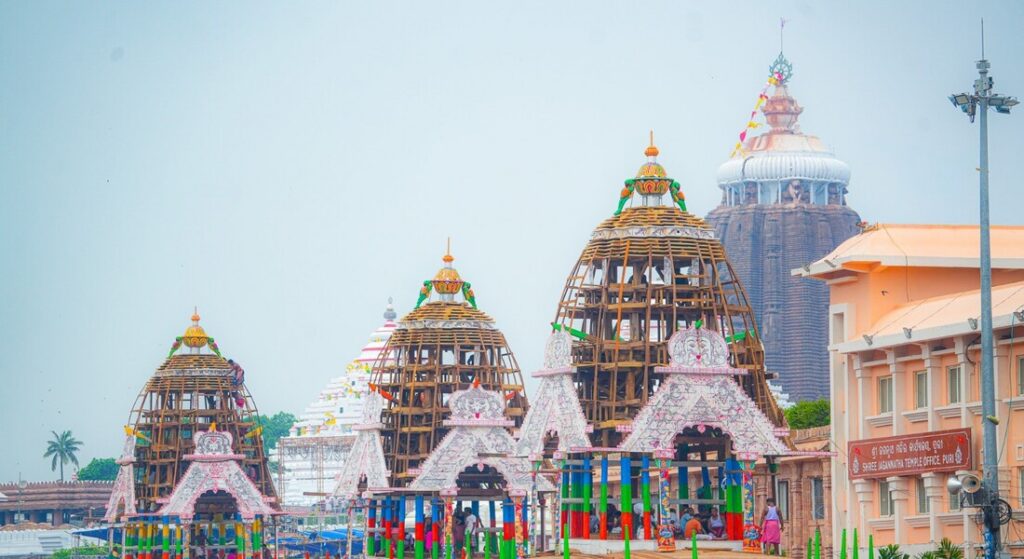
One of the most fascinating aspects of the Rath Yatra is that the three magnificent chariots are built entirely from scratch every year.
Using sacred wood from Odisha’s forests, hereditary craftsmen follow centuries-old traditions and measurements passed down through generations instead of modern engineering drawings. Nandighosa, Taladhwaja, and Darpadalana—each with its own distinctive colours, size, and symbolism—are rebuilt annually before carrying the deities through the streets of Puri.
This tradition teaches a profound life lesson. Nothing is permanent—not even the chariots that carry the gods. Renewal is essential. Every year offers a fresh beginning, a chance to rebuild, improve, and move forward with renewed faith and purpose.
Faith that moves mountains—and chariots
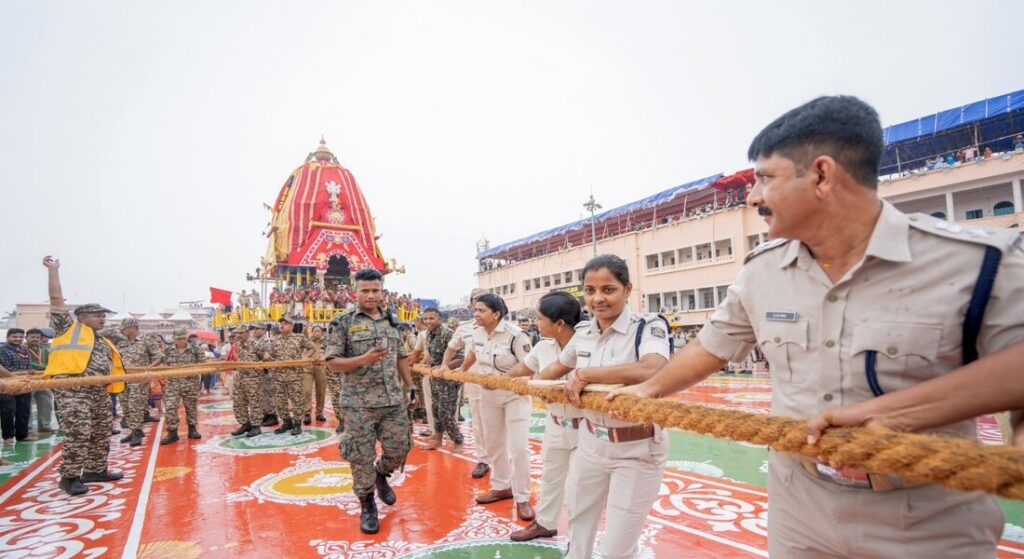
Each chariot weighs hundreds of tonnes, yet thousands of devotees pull them together using thick ropes. It is not simply an act of physical strength; it is a symbol of collective effort.
The image of countless hands pulling in one direction reflects a truth that extends far beyond religion. Families, communities, organisations, and even nations move forward when people work together with a shared purpose.
In a world increasingly divided by differences, the Rath Yatra demonstrates the extraordinary power of unity.
The message the modern world needs
Today’s society faces many challenges – social divisions, climate crises, stress, isolation, and growing inequality. The Jagannath Rath Yatra quietly offers solutions rooted in timeless values.
It reminds us to embrace diversity, serve others with humility, respect traditions while adapting to change, and recognise that no one is above another. It celebrates community over individuality, compassion over discrimination, and hope over despair.
Perhaps that is why the Rath Yatra continues to attract not only devotees but also scholars, travellers, photographers, and people from different faiths across the globe. They come to witness not just a religious event, but a living tradition and the asmita or identity that celebrates humanity itself.
As Lord Jagannath leaves the temple and comes to the streets, he sends a simple yet profound message: the divine is never distant. It walks beside the people, embraces everyone equally, and reminds us that life’s greatest journey is not measured by the distance travelled but by the hearts we bring together along the way.
Devi Prasad Mahapatra is a development communication expert with over 25 years of experience and serves as Knowledge Management & Communications Specialist at the International Rice Research Institute (IRRI) in Odisha, specializing in strategic communication, development storytelling, and knowledge sharing. He can be reached at devimahapatra@gmail(dot)com. The views expressed are personal and do not necessarily reflect those of IndiaVerve.