
New Delhi: India released its first-ever Guide to Grasslands and Other Open Natural Ecosystems (ONEs) at the 17th Conference of the Parties (COP17) to the UN Convention to Combat Desertification (UNCCD), held in Ulaanbaatar, Mongolia, on Monday.
The publication documents the ecological wealth and socio-economic value of India’s grasslands, savannas, deserts and other open ecosystems, and is being seen as a key step towards their conservation and sustainable management, according to an official statement.
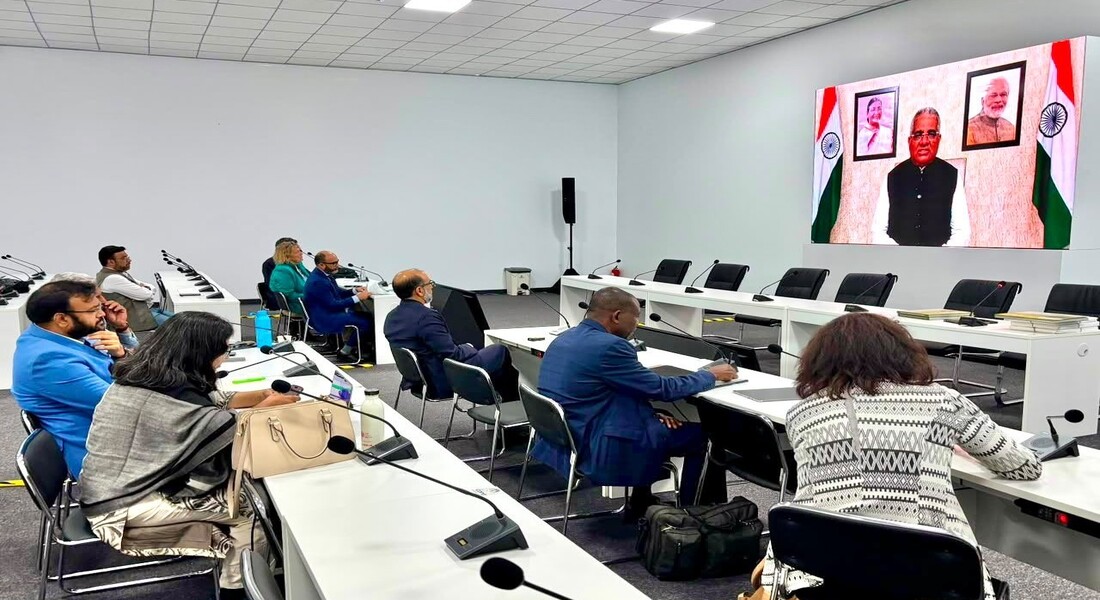
Union Environment Minister Bhupender Yadav addressed the launch through a video message. He said grasslands, scrublands and ravines have long been dismissed for lacking tree cover, even though they support unique species and pastoral communities found nowhere else.
He noted that scientific research is now confirming what local communities have long known – that healthy grasslands are essential for biodiversity, livelihoods and climate resilience.
Yadav said the initiative held personal significance for him, having grown up in Ajmer, Rajasthan, amid grazing lands and desert scrub often labelled as wasteland.
The minister pointed to the traditional Oran or gauchar systems, through which villages have historically protected such lands, as evidence that communities have always recognised the link between land, livestock and survival.
He called the Guide a significant move towards formally acknowledging India’s open ecosystems and said their conservation must be pursued with the same scientific rigour applied to forests.
The launch event was organised by the Ashoka Trust for Research in Ecology and the Environment, under the guidance of the Ministry of Environment, Forest and Climate Change, in partnership with the International Union for Conservation of Nature, the Centre of Excellence on Sustainable Land Management, the Indian Council of Forestry Research and Education, and ISRO’s Space Applications Centre.
It drew participation from government bodies, research institutions, international agencies, and civil society groups.
Sessions at the event examined the spread and ecological role of India’s grasslands and ONEs, and their contribution to meeting the country’s Land Degradation Neutrality goals. Speakers also called for better scientific data, improved degradation assessments and stronger landscape-level planning.
The Guide catalogues India’s major open ecosystems – from Himalayan and Terai grasslands to the Thar and Banni landscapes, Deccan savannas, rocky plateaus, ravines, scrublands, coastal belts and desert regions – detailing their geography, biodiversity and the communities that depend on them.
It also includes dedicated sections on pastoralism, fire ecology and carbon sequestration, noting that these ecosystems store significant amounts of soil carbon and underpin pastoral, livestock and agricultural livelihoods.
Two fireside conversations at the event brought together Indian and international experts, researchers and civil society representatives to discuss dryland restoration, community-led rangeland governance, and the policy and institutional support needed for large-scale conservation of ONEs.